Supreme Court Declines Immediate Intervention in Connaught Place Central Park Shutdown Ahead of Planned March
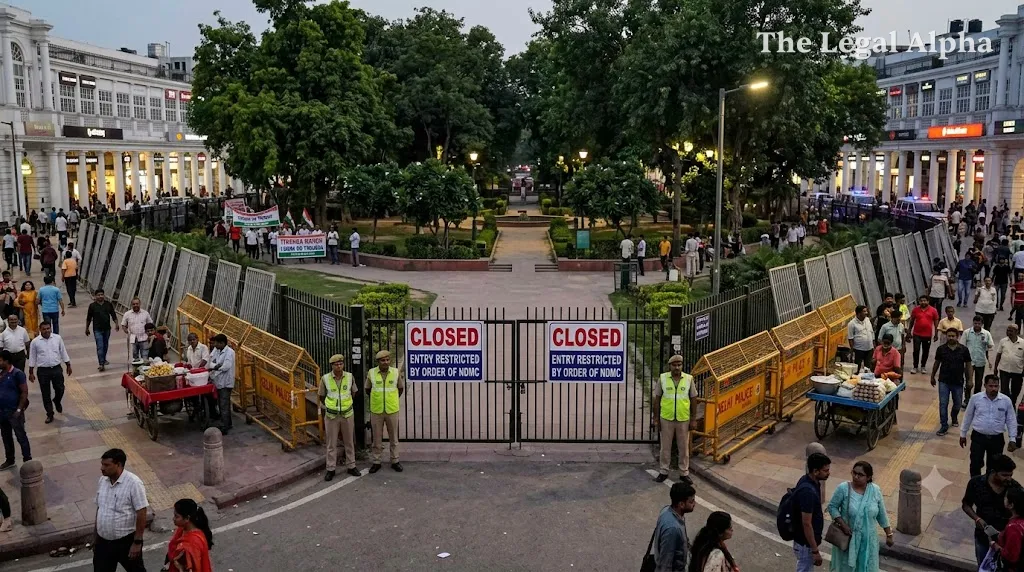
The Supreme Court of India declined an urgent listing and immediate hearing on a plea challenging the New Delhi Municipal Council's (NDMC) late-night decision to shut down Central Park at Connaught Place. The municipal authority ordered the closure following calls by political group Cockroach Janta Party (CJP) for a "Lehra Do Tiranga" demonstration at the commercial hub.
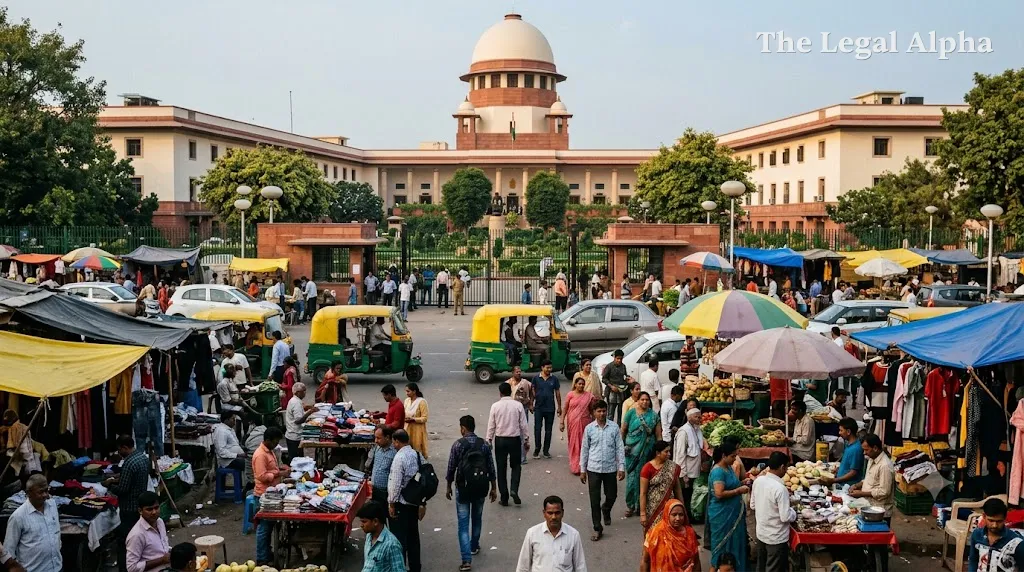
A bench comprising Chief Justice of India Surya Kant and Justice Joymalya Bagchi declined to pass an immediate interim order, remarking that they hope "better sense will prevail" among the authorities and organizers. The development has drawn attention due to the intersection of public protest rights, civic disruption, and the economic toll on small traders and daily-wage vendors during Delhi's peak festive business season.
Legal Topic
Area of Law: Constitutional Law & Administrative Law
Sub-topic: Fundamental Freedoms / Public Order Restrictions & Proportionality of Civic Closures
Core Legal Issue
The controversy turns on the balance between civic authorities' precautionary power to preserve law and order and the protection of fundamental economic and civic rights. Specifically, the issue is whether sudden, preemptive administrative orders shutting down public spaces—thereby affecting commercial livelihoods—warrant immediate judicial intervention under extraordinary constitutional jurisdiction before tangible losses occur.
What Did the Court / Authority Decide?
The Supreme Court refused an out-of-turn or immediate hearing, choosing not to grant emergent interim relief against the NDMC closure notice.
The bench observed that the issues of public assembly, law and order, and local commercial enterprise are intrinsically linked. While Justice Bagchi noted that the apex court would not hesitate to exercise its powers under Article 32 should the administrative measures inflict concrete economic harm or prove disproportionate, the bench adopted a "wait and watch" approach. The petition was listed for hearing through regular course around October 26–27.
Key Legal Points
-
Interconnected Rights: The court recognized that fundamental assembly rights do not exist in isolation and must be reconciled with community interests, public order, and local economic activity.
-
Livelihood Considerations: The bench emphasized the vulnerability of small shopkeepers, street vendors, and daily earners who face hardship when commercial zones are barricaded or shut down.
-
Ripeness and Judicial Restraint: The court indicated it will assess executive excess when concrete injury or business loss arises, avoiding preemptive judicial management of administrative law-and-order decisions.
-
Residual Constitutional Powers: The bench made clear that the apex court retains full authority to step in and test proportionality if regulatory actions overstep necessary policing thresholds.
Relevant Law
-
Article 19(1)(a) and 19(1)(b) of the Constitution of India: Guaranteeing the freedom of speech, expression, and peaceful assembly without arms.
-
Article 19(1)(g) and Article 21 of the Constitution of India: Safeguarding the right to practice any trade or occupation and the right to livelihood.
-
Article 32 of the Constitution of India: The Supreme Court’s writ jurisdiction to enforce fundamental rights against arbitrary state action.
-
New Delhi Municipal Council Act, 1994: Governing municipal control, public spaces, and regulatory maintenance orders.
Arguments of the Parties
Petitioner / Applicant
The counsel for the petitioner submitted that the NDMC’s late-night closure order was arbitrary, sudden, and heavily disruptive. The petitioner argued that shutting down Central Park effectively curtailed trade, created sweeping barriers for local business owners and street hawkers, and imposed a disproportionate restriction on public access.
Respondent / Civic & Law Enforcement Authorities
The administrative authorities maintained that the closure and surrounding security deployments were necessary precautionary measures. The administration pointed to imminent law-and-order concerns, potential crowd congestion, and previous violations involving denotified protest zones in the capital to justify temporary public order controls.
Why Does It Matter?
This development highlights the judiciary’s approach toward administrative "pre-emptive shutdowns" in major metropolitan centers. When civic bodies react to political gatherings by cordoning off public plazas and commercial hubs, small traders, gig workers, and daily vendors often bear the economic brunt.
By indicating that financial injury to local businesses could trigger constitutional scrutiny, the Supreme Court signaled to municipal authorities that maintainability of public order cannot routinely come at the expense of ordinary citizens' commercial sustenance without facing proportionality tests.
Legal Takeaway
The Supreme Court reaffirmed that while municipal authorities hold discretionary leeway to manage anticipated public disorder, preventive administrative closures are not immune from constitutional review. However, the court will exercise procedural restraint and assess the proportionality of economic injury on concrete evidence rather than pre-empting administrative enforcement.
Sources
Primary Source:
Proceedings and oral observations before the Supreme Court of India, Bench comprising Chief Justice of India Surya Kant and Justice Joymalya Bagchi (October 16, 2026).
Additional Sources:
-
The New Delhi Municipal Council (NDMC) Public Closure Orders concerning Central Park, Connaught Place.
-
Reports by the Press Trust of India (PTI) on Supreme Court proceedings (October 16, 2026).