Sub Judice Principle Prevents Judicial Interface on Administrative Side as Opposition Demands CEC Removal
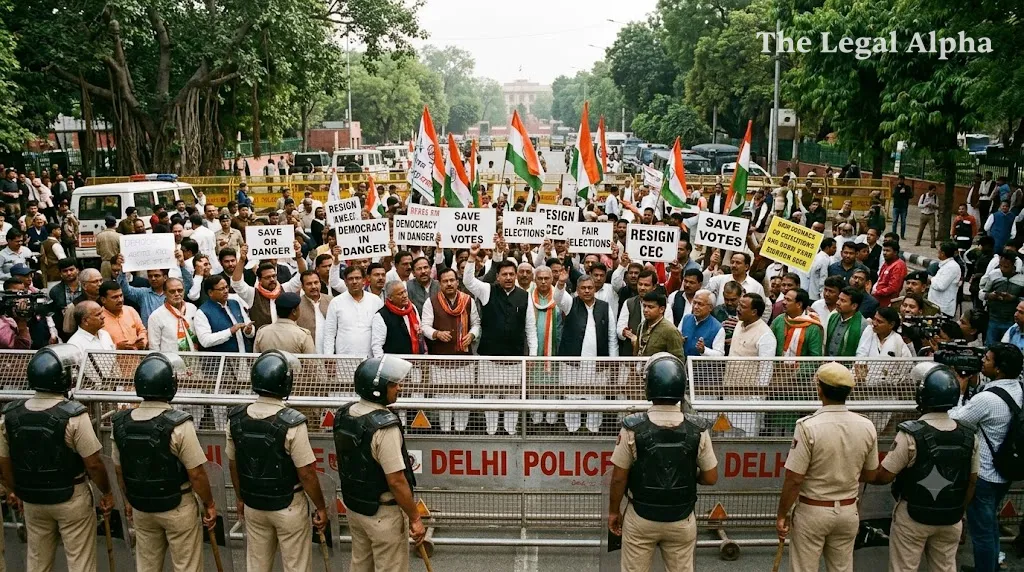
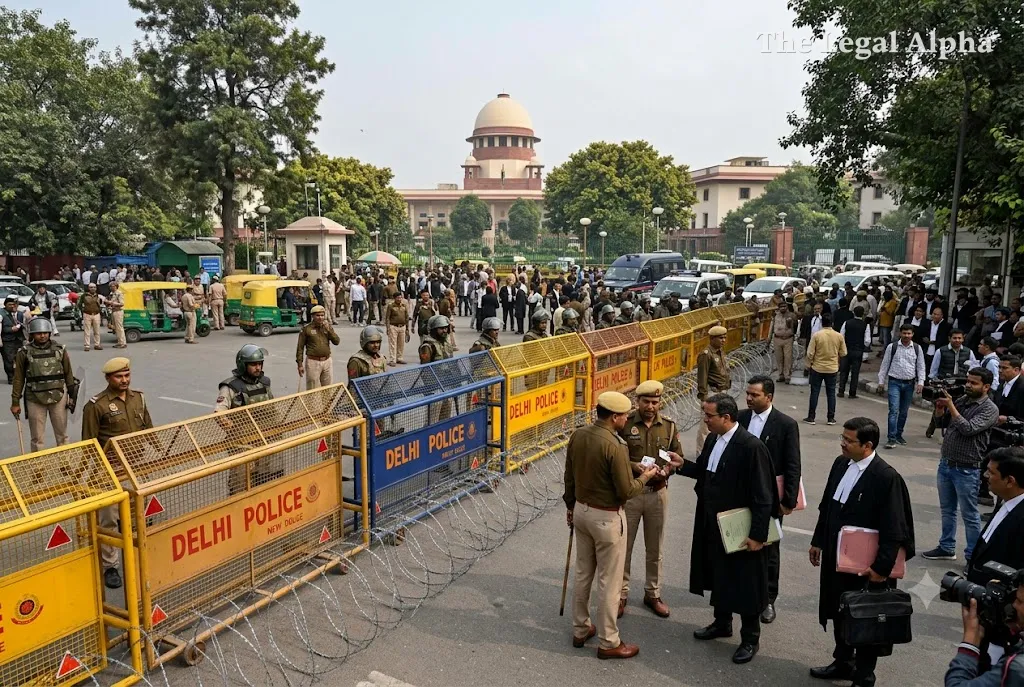
Opposition leaders and political outfits intensified demonstrations in the national capital demanding the resignation of Chief Election Commissioner Gyanesh Kumar over alleged irregularities in the Special Intensive Revision (SIR) of electoral rolls. In a major procedural development, Chief Justice of India Surya Kant declined a formal request by Leader of the Opposition Rahul Gandhi for an administrative meeting, noting that petitions concerning allegations against the Election Commission are already sub judice before the Supreme Court. Concurrently, widespread preventive detentions by the Delhi Police and curbs around Jantar Mantar have triggered urgent legal scrutiny over the fundamental right to peaceful assembly.
Legal Topic
Area of Law: Constitutional & Administrative Law
Sub-topic: Separation of Powers / Independence of Election Commission / Right to Peaceful Assembly
Core Legal Issue
The controversy centres on two interrelated legal questions: first, whether administrative representations by political parties can be entertained by the judiciary when identical questions of law and fact are already under formal judicial review (sub judice); and second, whether preventive detention and blanket denials of protest permissions disproportionately infringe upon fundamental rights under Article 19(1)(b) of the Constitution.
What Did the Court / Authority Decide?
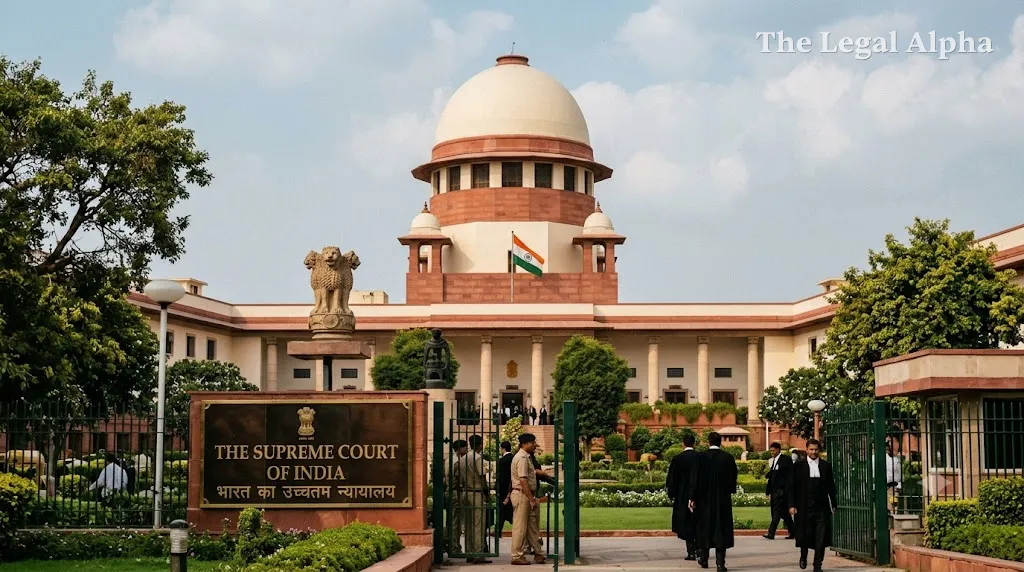
Chief Justice of India Surya Kant refused to entertain the political delegation on the administrative side, affirming that the judiciary cannot intervene in ongoing governance controversies through informal representations while the matters are actively pending on the judicial docket. Parties seeking judicial redress must place their pleadings before open court via appropriate writ petitions.
Earlier, the Supreme Court issued notice to the Election Commission of India and the Union government on petitions challenging the revisions in voter registration rules and statutory immunity granted to election officials, while clarifying that interim relief suspending the Chief Election Commissioner has not been granted. In related urgent proceedings on public gatherings, the Court observed that citizens assembling peacefully must not face arbitrary detention, subject to reasonable public order and traffic regulations.
Key Legal Points
-
Separation of Administrative and Judicial Roles: The Chief Justice of India cannot function as an ombudsman or enter administrative dialogues with political delegations over disputes that are actively pending before the Supreme Court’s judicial benches.
-
Strict Application of the Sub Judice Doctrine: Grievances regarding statutory duties or the functioning of constitutional bodies like the Election Commission of India must be argued through formal pleadings under Article 32 or Article 226.
-
Statutory Immunity Scrutiny: Judicial challenges have brought Section 16 of the Chief Election Commissioner and other Election Commissioners (Appointment, Conditions of Service and Term of Office) Act, 2023 under scrutiny regarding the extent of legal immunity afforded to commissioners for actions taken in good faith.
-
Reasonableness of Protest Restrictions: Executive bans on assemblies at designated sites like Jantar Mantar and large-scale preventive detentions under police powers remain subject to constitutional proportionality tests under Article 19(2) and Article 19(3).
Relevant Law
-
Article 19(1)(a) & Article 19(1)(b), Constitution of India: Freedom of speech and the fundamental right to assemble peaceably and without arms.
-
Article 324, Constitution of India: Superintendence, direction, and control of elections vested in the Election Commission of India.
-
Chief Election Commissioner and Other Election Commissioners Act, 2023: Specifically provisions dealing with the transaction of business and statutory protection/immunity under Section 16.
-
Sections 128 and 170 of the Bharatiya Nagarik Suraksha Sanhita (BNSS), 2023: Statutory powers governing preventive arrest and dispersal of assemblies.
Arguments of the Parties
Petitioners / Protesting Outfits
-
The petitioners and opposition parties argue that unilateral administrative changes to voter registration procedures and roll revisions undermine electoral transparency.
-
They contend that broad preventive custody and refusal of protest clearances violate the core constitutional freedom of peaceful dissent.
-
They assert that expanded statutory protection under the 2023 enactment shields election officials from accountability, demanding immediate judicial oversight.
State / Regulatory Authorities
-
Law enforcement authorities contend that preventive detentions and movement curbs were enacted to maintain public order and prevent disruptions in restricted high-security administrative zones.
-
The administration maintains that regulatory procedures governing voter roll revisions strictly comply with statutory frameworks and established electoral guidelines.
Why Does It Matter?
This development clarifies an essential institutional boundary: political leaders cannot use administrative representations to the Chief Justice as an alternative forum to bypass normal courtroom adjudication on sensitive political questions. It also underscores ongoing constitutional tension over the independence, accountability, and appointment structure of the Election Commission of India following recent legislative reforms. Finally, it establishes that law enforcement agencies cannot use broad public-order mandates to circumvent the Supreme Court's clear instructions protecting peaceful assembly.
Legal Takeaway
Constitutional courts cannot engage in informal administrative consultations regarding matters that are pending judicial adjudication; all legal grievances concerning electoral integrity must be formally petitioned on the judicial side. Furthermore, state measures restricting peaceful assembly must meet the strict test of reasonable restrictions rather than relying on blanket preventive detentions.
Sources
Primary Source:
-
Supreme Court of India proceedings and judicial observations in petitions concerning electoral roll revisions and Chief Election Commissioner accountability.
-
Official administrative communication by the Office of the Chief Justice of India declining administrative representation.
Additional Sources:
-
The Hindu (National Bureau updates on Delhi protests, CEC Gyanesh Kumar, and Delhi Police detentions, October 2026).
-
Economic Times & ETV Bharat reporting on CJP and INDIA bloc demonstrations and Jantar Mantar assembly curbs.