Prima Facie Evaluation In UAPA Bail Does Not Equate To Mini-Trial: Delhi High Court Dismisses NIA Appeal In J&K Conspiracy Case
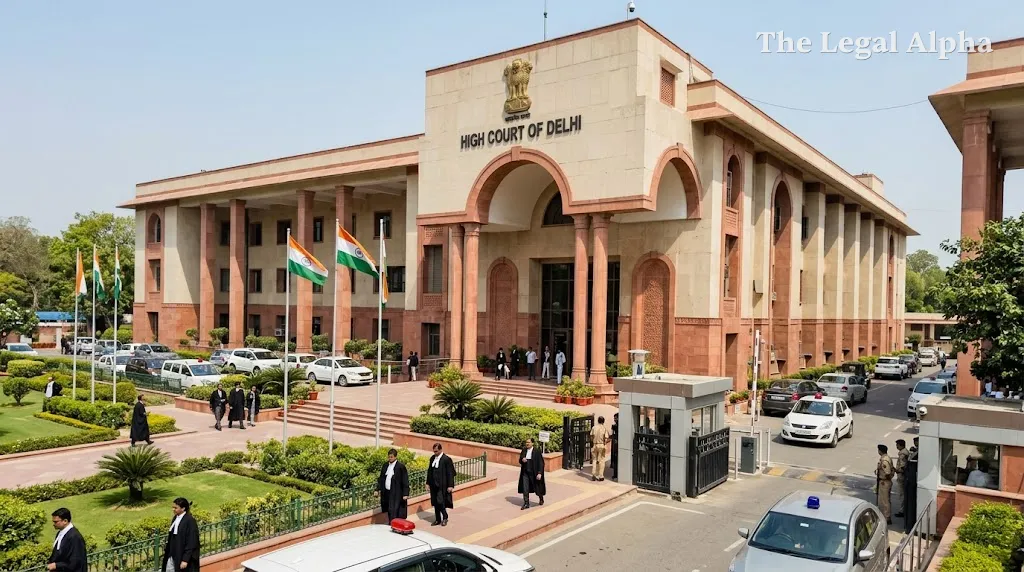
The Delhi High Court upheld a trial court's decision granting bail to Mateen Ahmed Bhat, an accused in an alleged larger conspiracy case investigated by the National Investigation Agency (NIA) concerning unrest and terrorist activities in Jammu and Kashmir. A Division Bench comprising Justice Navin Chawla and Justice Arun Bhardwaj dismissed the NIA’s challenge, ruling that the special trial court had committed no illegality or perversity when it initially released Bhat on bail in May 2023.
The case is legally significant because it delineates the strict appellate boundary for overturning bail under anti-terror statutes: an appellate court will not disturb discretionary bail orders merely because serious allegations exist, especially when the prosecution cannot establish patent illegality or an improper prima facie evaluation.
Legal Topic
-
Area of Law: Criminal Law / Anti-Terrorism Law
-
Sub-topic: Bail Jurisprudence under UAPA / Scope of Appellate Interference
Core Legal Issue
The core legal question before the High Court was whether the trial court exceeded its jurisdiction and conducted an impermissible "mini-trial" while assessing the prima facie threshold under Section 43D(5) of the Unlawful Activities (Prevention) Act, 1967.
Concurrently, the court addressed whether the subsequent framing of formal trial charges against an accused serves as a ground to overturn an already reasoned bail order on appeal.
What Did the Court Decide?
The Division Bench dismissed the NIA's appeal and confirmed Bhat's bail. The court made several key determinations:
-
Interference with a lower court’s grant of bail is restricted to instances where the underlying order is demonstrably illegal, arbitrary, perverse, or founded on irrelevant considerations.
-
The trial court’s scrutiny of the record was within legal bounds and did not constitute an impermissible discharge or a definitive ruling on guilt.
-
Subsequent framing of formal trial charges against the accused does not invalidate or render erroneous a previously granted bail order.
-
While the allegations against Bhat remain serious, their veracity must be tested during trial—a proceeding unlikely to finish soon due to the heavy witness volume.
-
Neither the High Court's observations nor the trial court's bail assessment will prejudice the final trial on the merits.
Key Legal Points
-
Appellate Restraint in Bail Appeals: Appellate scrutiny over discretionary bail orders is narrow; higher benches will not substitute their view unless the trial court ignored statutory bars or acted arbitrarily.
-
Distinction Between Prima Facie Scrutiny and Mini-Trial: Evaluating whether case diary materials genuinely connect an accused to an overt act or specific conspiracy does not equal holding an impermissible mini-trial under Section 43D(5) of the UAPA.
-
Irrelevance of Subsequent Charge Framing: The subsequent formal framing of charges does not automatically trigger the reversal of pre-existing bail orders.
-
Impact of Trial Delay: Prolonged incarceration and an extended trial timeline with numerous witnesses remain critical contextual factors when testing prosecutorial objections.
Relevant Law
-
Unlawful Activities (Prevention) Act, 1967 (UAPA): Section 43D(5) (pertaining to restrictions on granting bail where accusations are prima facie true).
-
Code of Criminal Procedure, 1973 (CrPC) / Bharatiya Nagarik Suraksha Sanhita, 2023 (BNSS): Provisions governing bail, appellate interference with bail orders, and trial procedure.
-
National Investigation Agency Act, 2008: Section 21 (Appeals against interlocutory and bail orders of Special Courts).
Arguments of the Parties
The National Investigation Agency (Appellant): Special Public Prosecutor Amit Tiwari contended that the special court erred by conducting a mini-trial and examining prosecution evidence in isolation. The agency submitted that digital forensic data, call detail records, and witness statements sufficiently demonstrated that Bhat acted as an overground worker assisting proscribed terror groups with logistics, arms movement, and recruitment.
The Respondent Accused: Advocate Kartik Venu, appearing for Mateen Ahmed Bhat, opposed the appeal, submitting that the NIA failed to point out any jurisdictional error or legal perversity in the May 2023 bail order. The defense highlighted that the trial court had meticulously reviewed the case record and correctly identified a complete absence of evidence connecting Bhat to overt terror acts, training camps, or proscribed meetings.
Why Does It Matter?
This ruling reinforces essential guardrails around UAPA prosecutions. While Section 43D(5) of the UAPA creates a high statutory threshold for obtaining bail, it does not bar trial courts from examining whether the state's material actually sustains a prima facie charge.
By ruling that trial courts are entitled to verify the existence of concrete links—and that subsequent framing of charges does not automatically undo bail—the High Court provides critical guidance for lower courts handling complex anti-terror trials involving numerous accused, broad conspiracy allegations, and voluminous witness lists.
Legal Takeaway
A trial court's assessment of whether accusations under the UAPA are prima facie true does not amount to an impermissible mini-trial, provided the court refrains from making final credibility findings. Appellate courts will not revoke bail merely because the underlying allegations are grave or because charges were later framed, absent patent perversity or legal error.
Sources
-
Primary Source: Judgment / Order of the Delhi High Court (Division Bench of Justice Navin Chawla and Justice Arun Bhardwaj), delivered October 2026, in the NIA appeal against Mateen Ahmed Bhat.
-
Additional Sources: Special NIA Court Bail Order (May 2023); National Investigation Agency Charge-Sheet records.