Bombay High Court Stays Population Notification for Goa Assembly ST Quota; Tribal Groups Mobilise Grassroots Drive
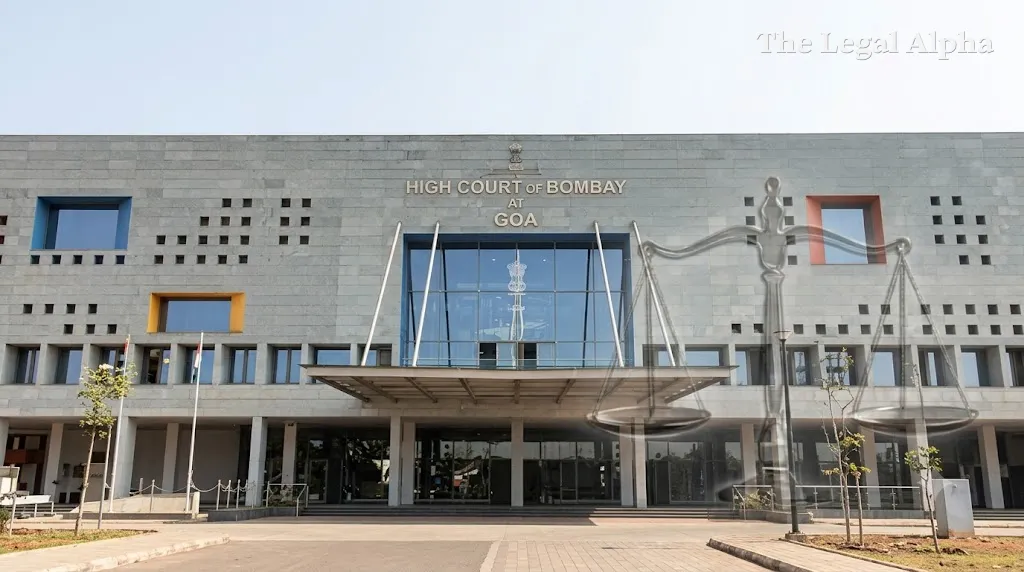
The High Court of Bombay at Goa granted an interim stay restraining the Union Government and the Census Commissioner from publishing the estimated Scheduled Tribe (ST) population figures under Section 3 of the Readjustment of Representation of Scheduled Tribes in Assembly Constituencies of the State of Goa Act, 2025.
The interim order paused a crucial prerequisite needed by the Delimitation Commission to carve out reserved seats for tribal communities ahead of the 2027 Goa Legislative Assembly elections. In response to this judicial roadblock, tribal advocacy groups and community leaders launched grassroots mobilisations across key constituencies—including Priol, Nuvem, Sanguem, and Quepem—vowing to consolidate tribal voter blocs and press both the State and Union governments to resolve the impasse before the upcoming polls.
Legal Topic
-
Area of Law: Constitutional Law / Election Law
-
Sub-topic: Delimitation / Legislative Assembly Seat Reservation / Scheduled Tribes
Core Legal Issue
The primary legal controversy centers on whether Parliament possesses the constitutional competence to enact a special, single-state legislation providing for the interim estimation of ST population figures and the immediate readjustment of assembly constituencies, in light of the constitutional freeze mandated by Articles 82 and 170(3) of the Constitution of India.
The court is examining whether Section 3(1) of the 2025 Act impermissibly bypasses the requirement that delimitation and reallocation of reserved seats must await the publication of the first national decennial census conducted after the year 2026.
What Did the Court Decide?
The Division Bench of the High Court admitted the writ petition challenging the constitutional validity of the 2025 Act and granted an ad-interim stay on the issuance and publication of the notification estimating Goa’s ST population.
While the court did not declare the parliamentary statute unconstitutional at this preliminary stage, it held that allowing the notification to be gazetted pendente lite could create irreversible administrative actions, as notifications finalizing such figures often claim statutory finality. The court directed the respondents to file replies and rejoinders by November 19, keeping the estimation exercise in abeyance pending further hearing.
Key Legal Points
-
Constitutional Freeze under Article 170(3): The delimitation of territorial constituencies in State Legislative Assemblies remains pegged to past census figures until the figures for the first census taken after 2026 are officially published.
-
Statutory Estimation Mechanism: Section 3(1) of the 2025 Act created an exceptional mechanism directing the Census Commissioner to arrive at an "estimated" ST population rather than awaiting an actual decennial census enumeration.
-
Finality of Electoral Notifications: The interim stay was granted to prevent the notification from taking legal effect, which would have triggered subsequent delimitation proceedings and seat readjustments that are notoriously difficult to undo post-issuance.
-
Interim Status: The substantive validity of the parliamentary enactment remains sub judice; the current judicial intervention operates solely as an interim halt against administrative notification.
Relevant Law
-
Constitution of India: Article 170 (Composition of Legislative Assemblies), Article 332 (Reservation of seats for Scheduled Castes and Scheduled Tribes in Legislative Assemblies), and Article 82 (Readjustment after each census).
-
The Readjustment of Representation of Scheduled Tribes in Assembly Constituencies of the State of Goa Act, 2025: Section 3(1) (empowering the Census Commissioner to estimate and notify ST population proportions).
-
Delimitation Act, 2002: Principles governing the demarcation of single-member territorial constituencies.
Arguments of the Parties
Petitioner The petitioner, Edwin Lucio Fernandes, argued that the 2025 Act runs contrary to express constitutional limitations. It was submitted that Articles 82 and 170(3) bar any constituency readjustment prior to the completion and publication of the post-2026 census. Counsel contended that creating a statutory device to bypass this constitutional bar through estimated data is ultra vires the Constitution. Furthermore, the petitioner argued that once an estimated figure is notified under Section 3, it acquires statutory finality, precluding subsequent judicial redress if implementation begins.
Union of India Counsel representing the Union maintained that Parliament enacted the special legislation within its plenary legislative domain to correct historical deficits in political representation for newly recognized tribal communities in Goa. The respondents contended that Article 332 mandates fair and proportionate representation for Scheduled Tribes, and statutory adjustments can be made to give effect to this constitutional guarantee without breaching the broader structure of state assembly compositions.
Why Does It Matter?
This development directly impacts the political landscape of Goa ahead of the 2027 Legislative Assembly elections. Scheduled Tribes constitute over 10 percent of Goa's population, yet the 40-member assembly currently has zero reserved seats for ST communities.
Legally, the challenge tests the boundary between Parliament’s legislative power to correct historical non-representation under Article 332 and the rigid constitutional embargo on delimitation under Article 170(3). If the High Court ultimately strikes down the 2025 statute, the ST community's demand for reserved seats will be stalled until after the delayed national census and subsequent nationwide delimitation exercise conclude.
Legal Takeaway
The interim order demonstrates that statutory frameworks designed to fast-track affirmative action must strictly conform to overarching constitutional restraints, including delimitation moratoria. Until the constitutional validity of the 2025 Act is adjudicated, the administrative machinery for redrawing Goa’s electoral boundaries to provide ST reservations remains on hold.
Sources
-
Primary Source: High Court of Judicature at Bombay at Goa, interim order in Edwin Lucio Fernandes v. Union of India & Ors. (Writ Petition challenging the Readjustment of Representation of Scheduled Tribes in Assembly Constituencies of the State of Goa Act, 2025).
-
Additional Sources: The Readjustment of Representation of Scheduled Tribes in Assembly Constituencies of the State of Goa Act, 2025 (Act No. 21 of 2025); Articles 82, 170, and 332 of the Constitution of India.