Bombay High Court Quashes Directive Halting Nashik Temple Trustee Appointments, Rebukes Registry Official for Misusing Chief Justice’s Name
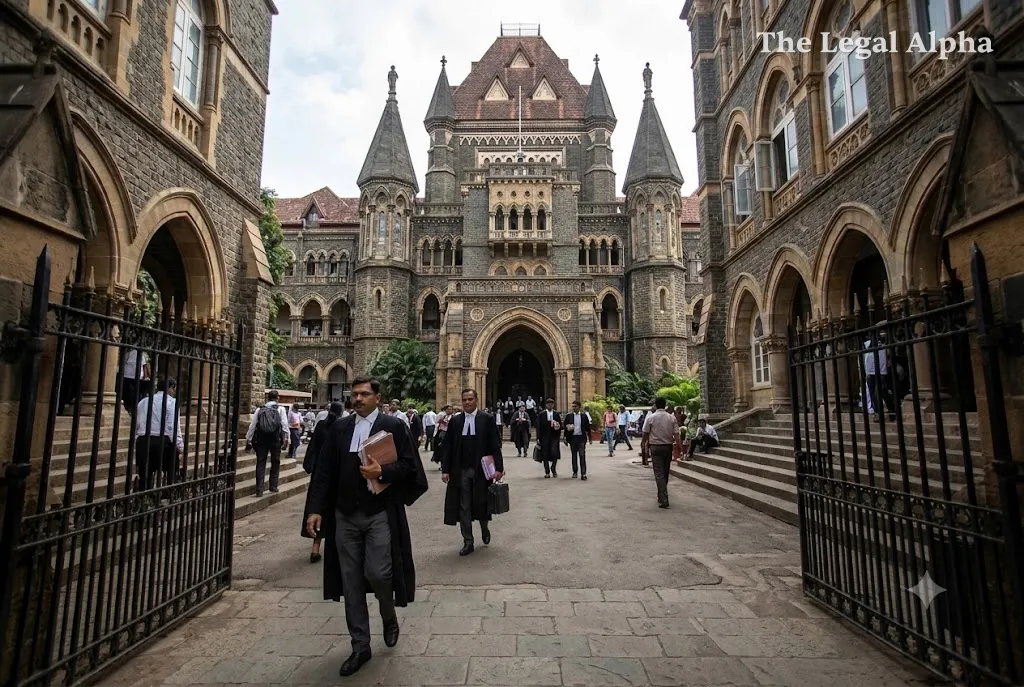
The Bombay High Court has set aside an administrative communication that abruptly halted the ongoing appointment of non-official trustees to the Shree Saptashrung Nivasini Devi Trust in Vani, Nashik. The directive had been issued in the name of the former Chief Justice by his Special Officer, prompting the Nashik District Court to stay the selection process.
A Division Bench comprising Justice G.S. Kulkarni and Justice Dr. Neela Gokhale ruled that the intervention was completely unauthorized. Finding no administrative proposal, file note, or official decision on record from the former Chief Justice, the High Court observed that the officer acted without jurisdiction, terming the misuse of the Chief Justice's office a matter of gross administrative impropriety.
Legal Topic
Area of Law: Administrative Law / Trust Law
Sub-topic: Exercise of Administrative Jurisdiction / Judicial Governance & Public Trusts
Core Legal Issue
The controversy centered on whether an administrative officer attached to the Chief Justice's Secretariat holds any independent authority to issue directions or interdict quasi-judicial and statutory trust proceedings without formal administrative orders on record.
The Bench had to address whether executive communications issued in the name of the head of the judiciary, but unsupported by any official file, proposal, or formal approval, can legally operate to suspend public trustee selection proceedings conducted under judicial supervision.
What Did the Court Decide?
The High Court allowed the writ petition filed by participants in the selection process and quashed the contested communication alongside the consequential orders passed by the District Court.
The Court held that the Special Officer had no lawful authority to draft or transmit such instructions. The Bench clarified that court staff and registry officers cannot exercise administrative prerogatives by invoking the Chief Justice's authority without an explicit administrative order in the file. Following the quashing of the unauthorized directive, the Court cleared the path for the competent authorities to proceed with the appointment of trustees strictly in accordance with law.
Key Legal Points
-
Absence of Delegated Authority: Registry officers and personal secretarial staff cannot author administrative directions or stall quasi-judicial mechanisms without documented approval from the competent authority.
-
Institutional Integrity: Attributing unverified decisions to the Chief Justice undermines judicial discipline and governance, warranting prompt invalidation.
-
Protection of Statutory Selection: Legitimate selection processes initiated under governing trust schemes and judicial monitoring cannot be derailed by informal administrative communications.
Relevant Law
-
Maharashtra Public Trusts Act, 1950: Governing the regulation, schemes, and management of public religious trusts within the State.
-
Articles 226 and 235 of the Constitution of India: Concerning the High Court's extraordinary writ jurisdiction and its administrative superintendence over subordinate judiciary and registry operations.
Arguments of the Parties
The petitioners, represented by Senior Advocate A.Y. Sakhare, argued that they had participated in a lawful selection process for the religious trust. They submitted that the sudden communication issued by the Special Officer was arbitrary, devoid of legal backing, and wrongfully halted an institutional process without an underlying judicial or administrative order.
The High Court administration and the State conceded during the proceedings that the official records of the registry contained no formal note, proposal, or approved minute from the former Chief Justice directing any halt or review of the appointments. Consequently, the directive could not be sustained on record.
Why Does It Matter?
This ruling sets a strict standard of accountability within judicial administration and institutional governance. It underscores that even the highest secretarial offices within a High Court must operate strictly on documented authorizations and transparent bureaucratic records.
For public and religious trusts across Maharashtra, the judgment prevents administrative disruption from informal interventions, ensuring that trustee selection procedures remain bound by statutory regulations rather than discretionary administrative letters.
Legal Takeaway
Registry officers and secretarial staff cannot issue binding administrative directives in the name of the Chief Justice without an explicit, verifiable order on the official record. Any bureaucratic communication that stalls statutory or judicial processes without lawful sanction is ultra vires and liable to be quashed.
Sources
Primary Source: Bombay High Court Judgment / Order in Vishnu Trimbak Warungase and Others v. State of Maharashtra and Others (Division Bench of Justice G.S. Kulkarni and Justice Dr. Neela Gokhale).
Additional Sources: High Court Registry Records and official reporting on the proceedings.