Poland Constitutional Crisis: Stand-Off Erupts Over Leadership of Highest Constitutional Bench
Poland has entered an intense constitutional impasse after the announced one-month suspension of Constitutional Tribunal President Bogdan Święczkowski and his deputy Bartłomiej Sochański. Judge Anna Korwin-Piotrowska, citing her status as the tribunal’s longest-serving judge, assumed administrative control of the court following a motion linked to immunity-lifting proceedings initiated by the Justice Ministry.
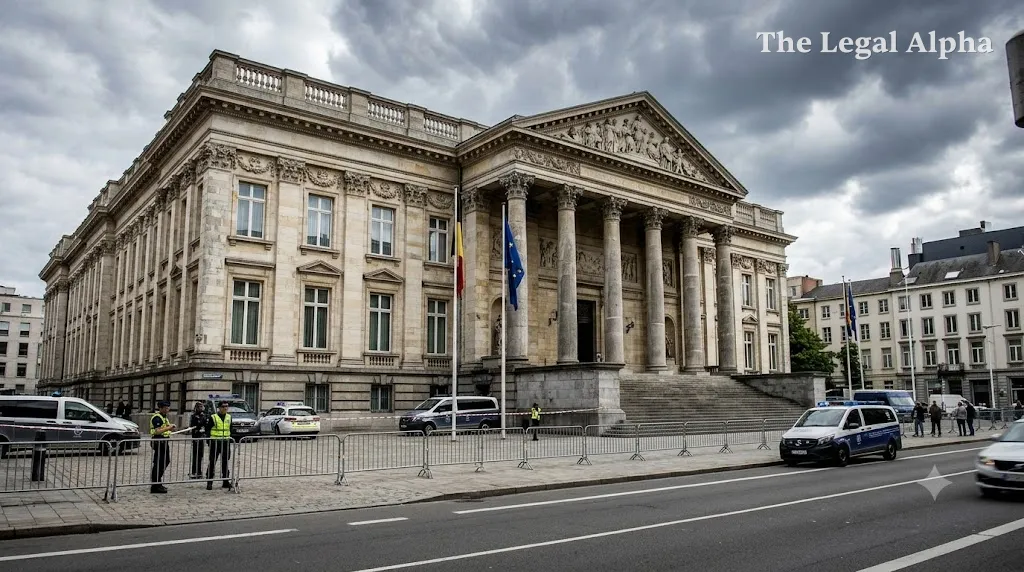
The contested measure led to the deployment of security forces outside the tribunal premises in Warsaw and sparked street demonstrations by opposition figures and supporters. Polish President Karol Nawrocki abruptly abandoned a diplomatic flight to Senegal while mid-air, ordering his aircraft back to Warsaw to challenge the action and meet judicial leadership. The tribunal's established leadership characterized the development via official communication channels as an unlawful coup d'état, while the executive administration maintained that the steps are imperative to re-establish lawful constitutional governance.
Legal Topic
Area of Law: Constitutional Law & Judicial Administration
Sub-topic: Judicial Immunity, Internal Court Governance, and the Separation of Powers
Core Legal Issue
The fundamental legal question centres on whether an individual judge or internal faction within a supreme constitutional organ possesses the statutory authority to unilaterally suspend the tribunal's sitting leadership during ongoing prosecutor inquiries.
Simultaneously, the dispute interrogates the procedural limits of executive and prosecutorial power: specifically, whether requests to lift judicial immunity can justify administrative changes and police interventions within a constitutional court before an authoritative judicial ruling is handed down.
What Did the Court / Authority Decide?
No comprehensive, definitive judicial verdict on the merits has been delivered. Instead, the situation stems from contested interim procedural actions:
-
Judge Anna Korwin-Piotrowska announced a one-month suspension against Court President Bogdan Święczkowski and Vice President Bartłomiej Sochański, assuming interim administrative leadership.
-
The Prosecutor General and Justice Ministry submitted formal applications seeking the lifting of judicial immunity concerning the judges in question.
-
The sitting leadership of the Constitutional Tribunal rejected the validity of the order, stating that Judge Korwin-Piotrowska lacks lawful designation from the President of the Republic and has no legal authority to suspend presiding officers.
-
Full legal adjudication regarding the legality of the administrative suspension and the status of judicial immunity remains pending before relevant bodies.
Key Legal Points
-
Internal Administrative Jurisdiction: The legal framework governing the Constitutional Tribunal dictates strict statutory procedures for disciplinary or supervisory suspensions, which typically do not authorize unilateral assumption of court leadership without formal collegiate or statutory processes.
-
Judicial Immunity Protections: High-court judges benefit from constitutional immunity designed to insulate the judiciary from executive interference; any suspension or removal must adhere to established constitutional mechanisms.
-
Validity of Judicial Appointments: The dispute reflects institutional non-recognition, wherein opposing branches of government dispute the legitimate investiture of judges under the Constitution.
-
Institutional Autonomy: The deployment of law enforcement to execute administrative notices within a constitutional courthouse highlights constitutional boundaries regarding police authority over independent judicial organs.
Relevant Law
-
Constitution of the Republic of Poland: Articles governing the Constitutional Tribunal, judicial independence, the separation of powers, and judicial immunity protections.
-
Act on the Status of Judges of the Constitutional Tribunal: Provisions regulating disciplinary proceedings, the suspension of judges, and the lifting of formal immunity.
-
Act on the Organisation and Proceedings before the Constitutional Tribunal: Rules governing internal administrative succession, the responsibilities of the Tribunal President, and official registry notifications.
Arguments of the Parties
Challenging Faction & Executive Administration
-
Proponents of the change and the Prime Minister’s government contended that judicial bodies must be cleaned of non-compliant appointments inherited from previous administrations to restore constitutional legality.
-
The Justice Ministry submitted that formal motions to lift immunity required urgent interim supervisory management to guarantee institutional integrity.
-
Judge Korwin-Piotrowska argued that operational stability and the safeguarding of citizens' constitutional rights require clear, lawful guidance during active inquiries.
Opposing Leadership & Head of State
-
Tribunal President Bogdan Święczkowski submitted that the alleged suspension constitutes an outright institutional breach without legal basis, insisting that he remains the legitimate head of the court.
-
The President of the Republic argued that unauthorized changes to court leadership bypass the constitutional appointment prerogative of the head of state and violate judicial independence.
-
Opponents of the intervention contended that executive-backed police deployment at a judicial organ breaches the separation of powers and constitutes an unconstitutional takeover.
Why Does It Matter?
This conflict strikes at the foundation of institutional stability and the rule of law in a major European democracy. When two rival factions claim legitimate authority over a supreme constitutional arbiter, the legal system faces acute operational paralysis.
For commercial enterprises, legal practitioners, and individual litigants, a fractured top court undermines legal certainty. Future statutory challenges, regulatory rulings, and constitutional appeals risk being cast into jurisdictional doubt depending on which judicial faction presides over benches, creating significant compliance and enforcement vulnerabilities across Polish law.
Legal Takeaway
A nation's apex court cannot function without universally recognized procedures for judicial suspension and leadership succession. Bypassing standard constitutional and statutory avenues to remove sitting judges introduces legal uncertainty and threatens institutional integrity.
Sources
Primary Source:
-
Official Communications of the Constitutional Tribunal of the Republic of Poland and Ministry of Justice Applications regarding judicial immunity and court administration (Warsaw, October 2026).
Additional Sources:
-
Polish Ministry of Justice procedural notices and public records on Constitutional Tribunal affairs.
-
Official public statements and releases from the Chancellery of the President of the Republic of Poland and the Prime Minister of Poland.