Federal Court Compels Disclosure of Justice Department Voter Challenge Lists
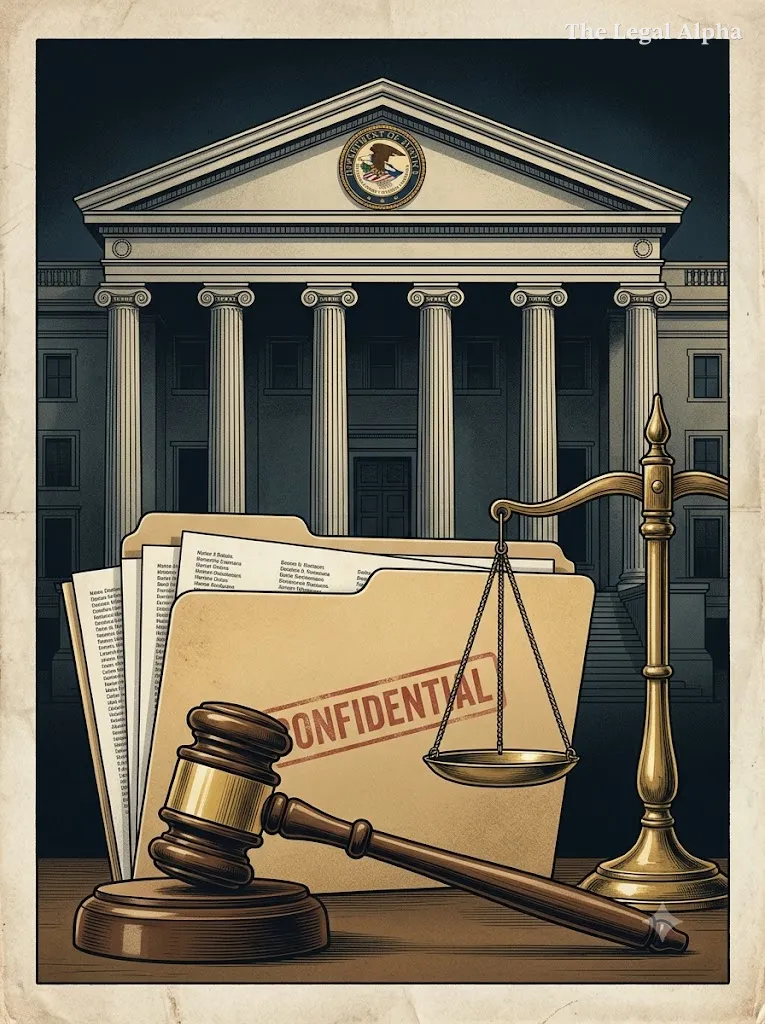
A federal judge has directed the Department of Justice to disclose undisclosed lists identifying individuals targeted in the administration's push to remove voters from state rolls or impound their mail-in ballots. The litigation stems from a legal challenge mounted by voting rights and civil advocacy groups contesting federal efforts to compel state election authorities—including officials in California and Washington—to segregate thousands of ballots based on government claims of noncitizen registration.
During an expedited hearing, the court ordered federal attorneys to furnish the plaintiffs with the data and identify which states had received federal communications regarding voter challenges by an immediate court-ordered deadline. The order marks a significant procedural development in an ongoing dispute over the boundaries between national executive authority and decentralized state administration of elections just ahead of the midterm voting cycle.
Legal Topic
Area of Law: Constitutional Law / Election Law
Sub-topic: Federalism, Voter Registration, and Administrative Procedure
Core Legal Issue
The fundamental legal question centers on whether the Department of Justice possesses lawful statutory authority under federal voting enactments to directly investigate, compile challenge lists for, and demand the segregation of local ballots, or whether such unilateral federal enforcement encroaches upon the states' primary constitutional authority over election administration.
Concurrently, the court faces a critical jurisdictional inquiry under Article III: whether civil advocacy and voting rights groups have established sufficient organizational and individual standing to seek preliminary injunctive relief against federal inquiries without demonstrating concrete, non-speculative injury across every targeted jurisdiction.
What Did the Court Decide?
The U.S. District Court declined at the preliminary stage to enter an immediate temporary restraining order halting the federal communications outright, citing unresolved questions regarding the plaintiffs' legal standing. However, the court partially granted the plaintiffs' motion for expedited discovery.
The presiding judge ordered the Justice Department to disclose the specific states and lists of voters that federal authorities had flagged and targeted for ballot segregation or removal since July. The administration was placed on an accelerated deadline to produce the information to enable both the court and the plaintiffs to evaluate the actual scope of federal directives prior to a final determination on preliminary injunctive relief.
Key Legal Points
-
Expedited Discovery vs. Threshold Standing: Even where an Article III court expresses skepticism regarding standing at an interlocutory phase, it may order limited, fast-tracked discovery to establish the evidentiary baseline required to assess jurisdictional harm.
-
Federal vs. State Preemption in Election Administration: The constitutional structural divide reserves the routine conduct and qualification verification of electors principally to the states under the Elections Clause, limiting direct executive ballot-level intervention absent express statutory mandates.
-
Evidentiary Integrity of Voter Verification Lists: Government-generated lists alleging elector ineligibility must meet basic standards of factual verification and due process before state election administrators can be required to alter ballot processing workflows.
-
Balancing Preliminary Injunctive Relief: Courts evaluating pre-election injunctions must balance the risk of administrative disruption and unlawful voter disenfranchisement against improper judicial interference with executive investigative prerogatives.
Relevant Law
-
U.S. Constitution, Article I, Section 4 (Elections Clause): Establishes that the times, places, and manner of holding congressional elections are prescribed by state legislatures, subject to congressional alterations by law.
-
U.S. Constitution, Article III, Section 2: Mandates concrete injury-in-fact, traceability, and redressability as prerequisites for judicial standing.
-
The Voting Rights Act of 1965 (52 U.S.C. § 10307 et seq.): Prohibits intimidation, threats, or coercion directed at voters or election officials performing statutory election duties.
-
National Voter Registration Act of 1993 (NVRA, 52 U.S.C. §§ 20501–20511): Governs voter roll maintenance standards, including the statutory 90-day "quiet period" limiting systematic removals of eligible voters shortly before federal elections.
Arguments of the Parties
Plaintiffs / Advocacy Groups
The plaintiffs argued that the Justice Department's direct demands to impound ballots and purge registrations violate statutory protections, intimidate election administrators, and threaten lawful citizens with unwarranted disenfranchisement. They submitted that the lists provided to states were error-prone and that federal authorities may have quietly pressured multiple state jurisdictions into compliance without public disclosure or formal legal authority.
Defendant / Department of Justice
The Justice Department contended that the federal executive maintains an inherent and statutory duty to enforce federal citizenship qualifications in federal elections and protect the integrity of the ballot box. The government maintained that its inquiries and notifications to local officials constitute legitimate law enforcement information-sharing rather than unlawful interference, arguing further that the plaintiffs' broad claims rely on speculation insufficient to satisfy Article III standing requirements.
Why Does It Matter?
This litigation tests the limits of federal executive power in policing voter qualifications, an operational area historically managed by state and county election officials. If executive branch departments can compel the immediate segregation or provisional treatment of thousands of cast ballots through unilateral lists, state autonomy under the Elections Clause could be significantly altered.
For election administrators, the outcome dictates whether local officials must respond to federal non-statutory directives or adhere strictly to state certification and canvassing timelines. More broadly, the court's willingness to require immediate disclosure of federal agency communications provides transparency into how federal authority is deployed across state jurisdictions during contested election cycles.
Legal Takeaway
Federal courts will not permit executive agencies to withhold lists and communications that form the basis of election interventions when those actions face credible challenges under voting rights statutes. Even while scrutinizing whether plaintiffs meet constitutional standing thresholds, the judiciary retains the power to compel rapid disclosure to ensure federal enforcement does not bypass state election mechanics unchecked.
Sources
Primary Source:
-
Democratic Party Organizations & Civil Rights Coalition v. Department of Justice et al., U.S. District Court for the District of Columbia (Bench Ruling and Discovery Orders, Oct. 2026).
Additional Sources:
-
CBS News / Legal Reporting, Federal Court Orders Disclosure of DOJ Voter Challenge Communications (Oct. 2026).
-
Election Law Blog / Analysis on NVRA and State Ballot Processing Injunctions (Oct. 2026).