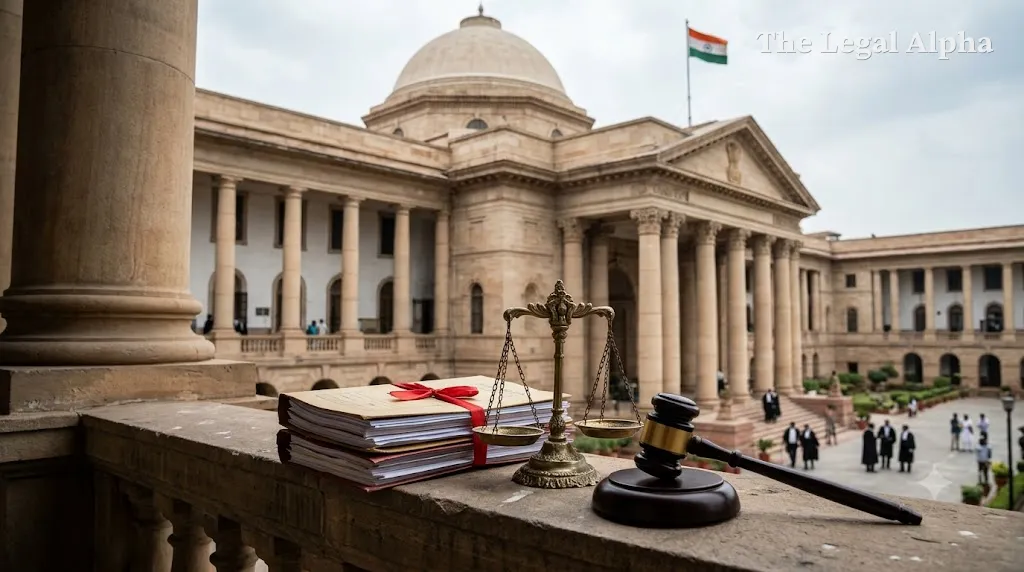
Supreme Court Examines Electoral Roll Revision Amid Exclusion Fears and Institutional Dispute
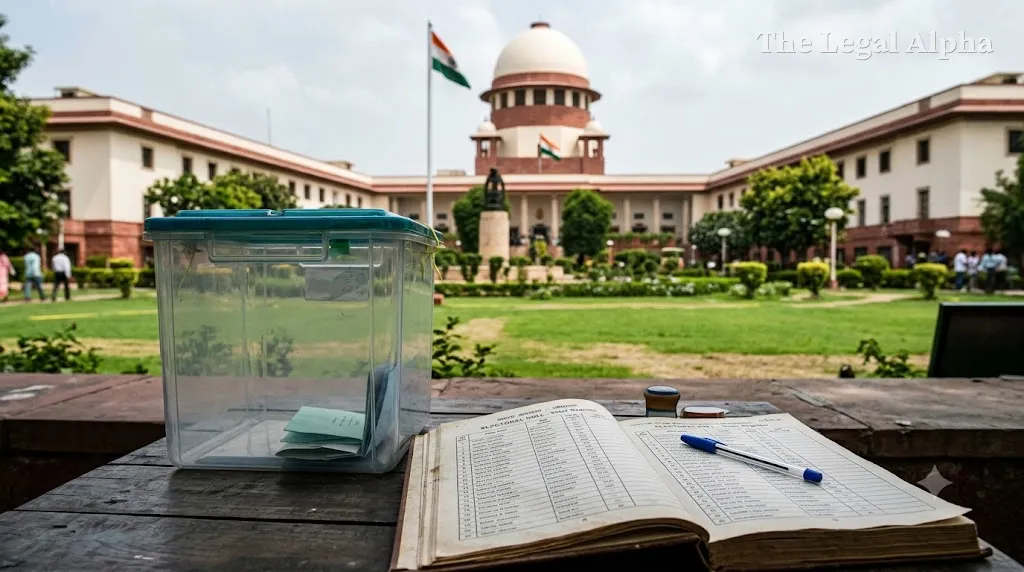
The Supreme Court of India has intensified judicial scrutiny over the Election Commission of India’s (ECI) Special Intensive Revision (SIR) of electoral rolls. The proceedings arise from multiple writ petitions challenging the nationwide revision exercise, alleging that large-scale arbitrary deletions are disenfranchising millions of eligible citizens without due process. The controversy gained renewed urgency following allegations that key decisions behind the revision orders were executed unilaterally rather than through collective multi-member deliberations. In response, the Election Commission filed a detailed affidavit before the top court affirming that its policy orders were approved unanimously and outlining procedural safeguards to ensure no legitimate voter is excised from the rolls.
Legal Topic
Area of Law: Constitutional and Election Law
Sub-topic: Electoral Roll Management / Multi-Member Commission Decision-Making / Universal Adult Suffrage
Core Legal Issue
The matter places two fundamental legal questions before the court: first, whether the ECI's Special Intensive Revision and its verification mechanisms comply with procedural fairness, natural justice, and the statutory requirements governing voter enrolment under the Representation of the People Act, 1950; and second, whether internal decision-making concerning voter registration policies conformed to the statutory mandate governing institutional unanimity and collective functioning within a multi-member constitutional body under the Chief Election Commissioner and Other Election Commissioners (Appointment, Conditions of Service and Term of Office) Act, 2023.
What Did the Court Decide?
While earlier declining to grant an immediate ex-parte stay based solely on journalistic reports, the Supreme Court issued formal notices to the Election Commission and central authorities to examine the legality of the revision process.
The court reiterated that any administrative order violating statutory safeguards or constitutional boundaries can be declared void upon judicial review. The ECI subsequently placed on record binding commitments: voters whose records are unmapped will not face mandatory personal appearances at hearings, Booth Level Officers (BLOs) will conduct in-person document verifications at households, and technical oversight committees comprising independent experts will audit database integrity. The core petitions remain pending final adjudication before the bench.
Key Legal Points
-
Protection of Adult Suffrage: Administrative streamlining and voter roll purification cannot displace the constitutional guarantee of adult suffrage or result in summary disenfranchisement without adequate inquiry.
-
Institutional Unanimity: Under statutory governance frameworks, decisions of the Election Commission must reflect collective multi-member determination, distinguishing intermediate file notings from formal Commission orders.
-
Presumption of Procedural Due Process: Deletions from the electoral rolls must follow statutory notice requirements, door-to-door verification, and reasoned orders by designated Electoral Registration Officers (EROs).
-
Separation of Statutory Forms: The executive cannot modify statutory voter registration forms without formal legislative or central rule amendments; auxiliary verification declarations must remain procedurally distinct from Form 6.
Relevant Law
-
Constitution of India: Article 324 (superintendence, direction, and control of elections) and Article 326 (elections based on adult suffrage).
-
Statutory Enactments: Representation of the People Act, 1950 (Sections 14–23 governing preparation and revision of rolls); Registration of Electors Rules, 1960; Chief Election Commissioner and Other Election Commissioners Act, 2023 (Section 18).
-
Precedents: Mohinder Singh Gill v. Chief Election Commissioner (1978) (width of plenary power under Article 324 is bounded by statute and natural justice); Inderjit Barua v. Election Commission of India (1985) (probative evidentiary value of existing electoral rolls).
Arguments of the Parties
Petitioners
The petitioners argued that the Special Intensive Revision operates without sufficient transparency, shifting the evidentiary burden onto marginalized and vulnerable citizens who risk unnotified removal from the rolls. They contended that auxiliary declaration mandates effectively alter voter qualification requirements without statutory backing, and that internal governance lapses led to unilateral policy directives contrary to multi-member consultation requirements.
Election Commission of India
The Commission submitted that the revision exercise is designed to maintain clean and reliable electoral registers by weeding out duplicate or ineligible entries without impinging on authentic voters. Counsel highlighted that all three formal SIR orders were unanimously approved by the full Commission. The ECI further affirmed that no elector is removed automatically by software, that deletion powers rest exclusively with statutory Electoral Registration Officers, and that doorstep field checks will precede any exclusion.
Why Does It Matter?
The resolution of this case establishes vital legal guardrails around the mechanics of voter list maintenance and digital electoral infrastructure. An unchecked revision process risks disenfranchising millions of eligible citizens, directly tilting democratic representation and eroding public confidence in the electoral system. By subjecting administrative cleanup directives to strict standards of natural justice, doorstep verification, and multi-member governance, the proceedings clarify that administrative efficiency cannot bypass procedural fairness in democratic elections.
Legal Takeaway
Electoral roll purification must strictly abide by statutory notice and natural justice, ensuring that administrative convenience never trumps the constitutional right to vote. Any procedural deviation or non-statutory evidentiary hurdle that systematically disenfranchises voters remains squarely open to judicial review and constitutional invalidation.
Sources
Primary Sources:
-
Records of Proceedings and Judgment, Supreme Court of India (Writ Petition (Civil) No. 35785 of 2025 and connected matters).
-
Counter-Affidavit filed by the Election Commission of India before the Supreme Court of India (October 2026).
Additional Sources:
-
Representation of the People Act, 1950 and Registration of Electors Rules, 1960.
-
The Chief Election Commissioner and Other Election Commissioners (Appointment, Conditions of Service and Term of Office) Act, 2023.