Federal Court Scrutinises Urgency Behind Capital Monument Project
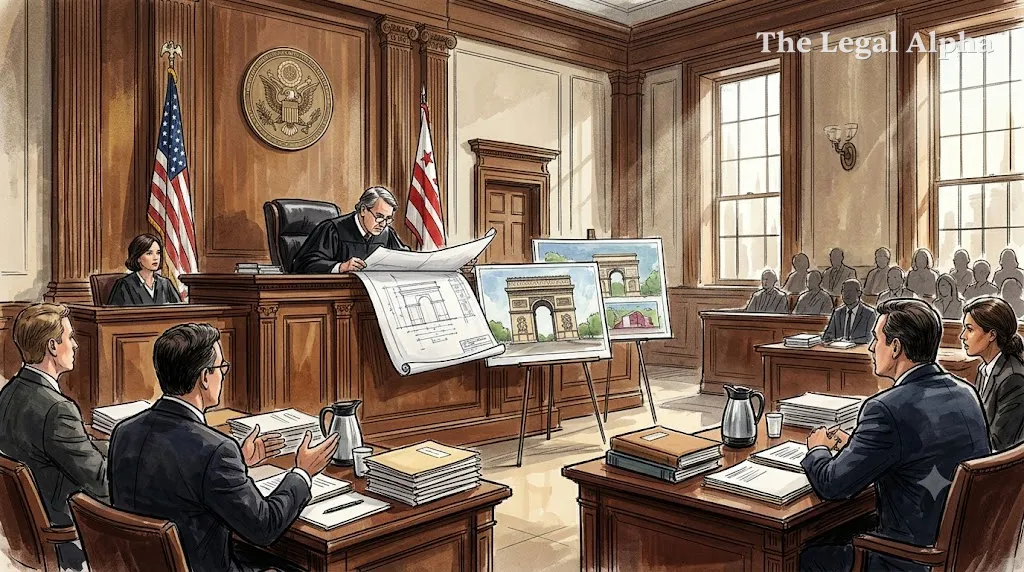
A federal district judge in Washington, D.C., sharply questioned government attorneys over efforts to expedite preliminary construction on an ambitious 250-foot triumphal arch planned near Arlington National Cemetery. During oral arguments on an application to stall ground-breaking operations, U.S. District Judge Tanya Chutkan pressed the Department of Justice on why work needed to begin immediately rather than awaiting a full judicial review of the project's regulatory approvals. The administration has asserted that the structure is intended to commemorate the nation's 250th anniversary while also fulfilling auxiliary defensive functions, but local authorities and civil challengers contend the rushed process bypasses critical municipal and statutory oversight.
Legal Topic
-
Area of Law: Administrative Law & Federal Land Use
-
Sub-topic: Injunctive Relief / Statutory Review Standards
Core Legal Issue
The dispute centres on whether the federal government should be enjoined from commencing site preparation and heavy excavation while substantive legal challenges proceed. The court must decide whether the plaintiffs have established irreparable harm to the surrounding urban fabric and historical landmark corridors, and conversely, whether the executive branch has shown any actionable injury or legal prejudice in pausing construction until the underlying compliance challenges are resolved on their merits.
What Did the Court Decide?
Judge Chutkan has taken the motion for a temporary restraining order or preliminary injunction under advisement without delivering an immediate formal decree. While the substantive decision remains pending, the bench voiced profound skepticism regarding the administration's claims of an emergency timetable, querying why the executive branch could not pause operations for three to four months to permit thorough briefing and judicial examination. A definitive written order on whether to halt pending site work is expected before construction equipment is scheduled to mobilise.
Key Legal Points
-
Equitable Balancing of Harms: Injunctive relief turns on balancing the immediate environmental and infrastructural impact against the government's operational interests, placing a heavy burden on the government to prove urgency.
-
Judicial Skepticism Toward Shifting Rationales: The court questioned whether post-hoc defense and utility justifications can sustain an expedited construction schedule that circumvents ordinary administrative deliberation.
-
Separation of Powers in Federal Enclaves: The controversy highlights friction between presidential directives governing federal properties and statutory review requirements mandated by landmark and capital planning acts.
-
Maintenance of Status Quo: The proceedings emphasize the judicial preference for freezing irreversible ground operations while complex statutory claims remain unresolved.
Relevant Law
-
Administrative Procedure Act (5 U.S.C. §§ 701–706): Governs judicial review of federal agency planning approvals and whether preliminary administrative actions were arbitrary, capricious, or not in accordance with law.
-
National Environmental Policy Act (NEPA) & National Historic Preservation Act (NHPA) Section 106: Frameworks regulating major federal undertakings that potentially alter historic sites, traffic flows, and memorial landscapes.
-
Four-Factor Preliminary Injunction Standard (Winter v. Natural Resources Defense Council, Inc.): Requires the movant to show likelihood of success on the merits, irreparable harm, balance of equities, and public interest.
Arguments of the Parties
Plaintiffs and Challengers
Counsel for the challengers argued that allowing immediate excavation would create irreversible physical alterations to historic vista corridors and disrupt regional transportation networks without adequate statutory review. They contended that the sudden introduction of national security justifications was a pretextual effort to sidestep standard historic preservation mandates and environmental impact evaluations.
The Government
The Department of Justice contended that executive authorities hold broad statutory discretion to proceed with development on federal land parcels. Counsel argued that any court intervention would impermissibly interfere with executive timetables and compromise the dual-purpose integration of civic infrastructure with federal logistics and protective installations.
Why Does It Matter?
This litigation tests the limits of executive power when federal construction projects collide with local land-use sensitivities, historic preservation statutes, and statutory planning commissions. If courts allow speculative deadlines to justify bypassing thorough environmental and historical reviews, federal entities could routinely expedite controversial civic works under the guise of rapid commemorative or administrative targets. Conversely, a preliminary injunction reinforces judicial willingness to enforce procedural compliance against the executive branch even when high-profile national symbols are invoked.
Legal Takeaway
Agencies cannot rely on arbitrary commemorative deadlines or newly asserted protective mandates to avoid showing tangible harm when opposing a preliminary stay. Where ground alterations would cause irreversible changes, federal courts will insist that statutory review standards take priority over executive speed.
Sources
-
Primary Source: U.S. District Court for the District of Columbia, Oral Arguments and Injunction Proceedings before Judge Tanya Chutkan (October 2026).
-
Additional Sources: Federal regulatory filings; District of Columbia and regional municipal planning records; U.S. Department of Justice submissions.