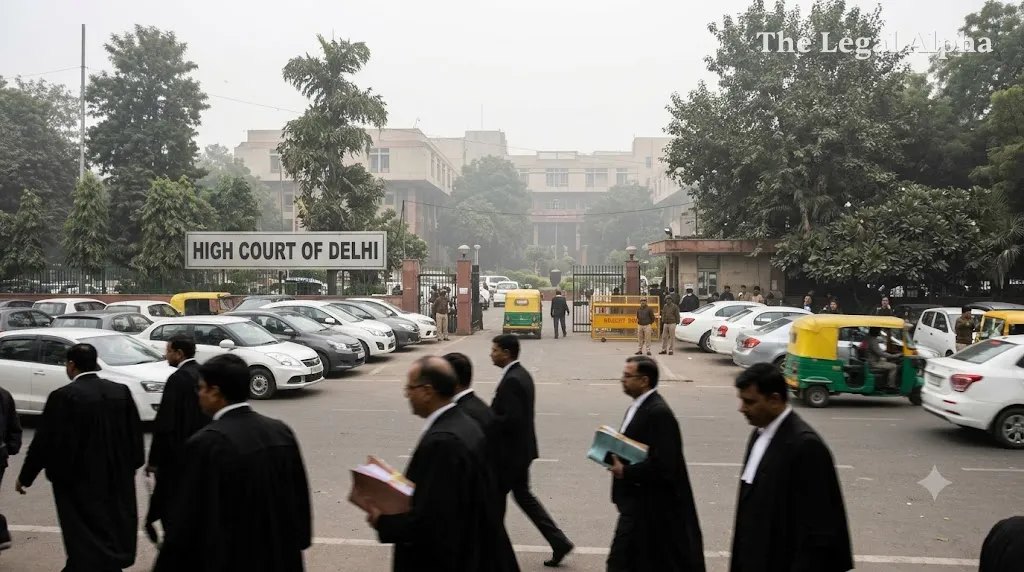
Special CBI Court Clears Gangster Chhota Rajan and Pune Builder in 2009 Murder Attempt on Shiv Sena Politician
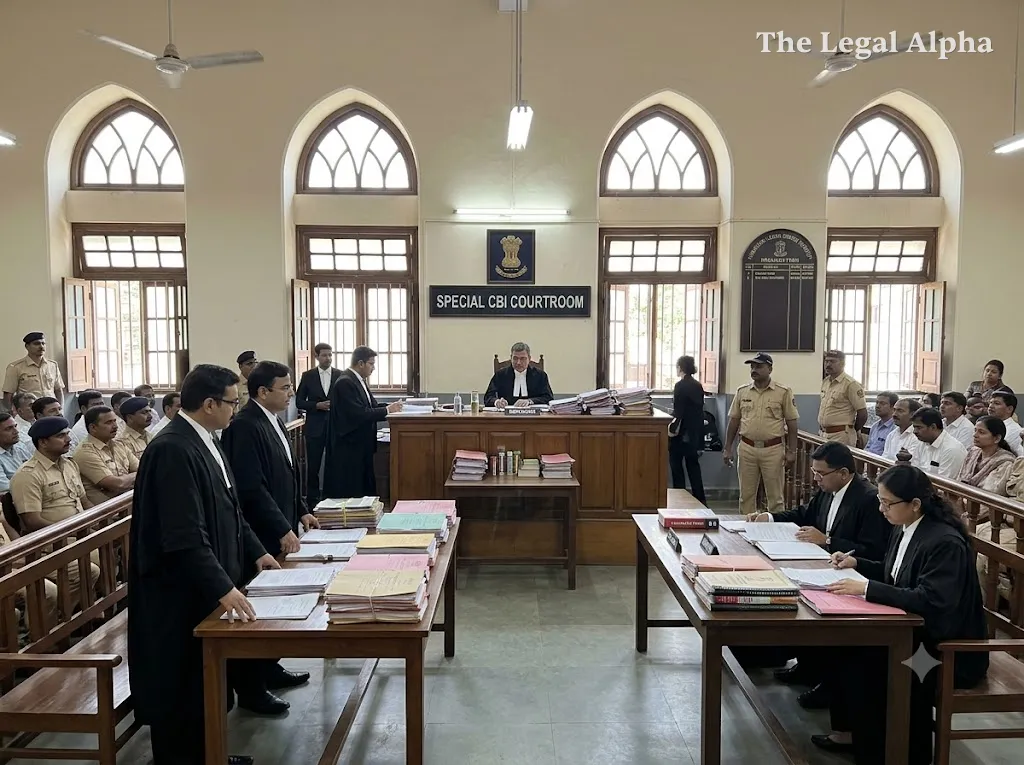
A special Central Bureau of Investigation (CBI) court in Mumbai has acquitted incarcerated underworld figure Rajendra Sadashiv Nikalje, widely known as Chhota Rajan, alongside Pune businessman Surendra Agarwal and three others in connection with a 2009 assassination bid on former Shiv Sena leader Ajay Bhosale.
The prosecution arose from an armed ambush on October 11, 2009, in the Koregaon locality of Pune. Assailants riding a motorbike fired upon Bhosale’s vehicle during an election campaign. Bhosale survived the shooting unharmed, though a bullet struck and injured his driver. Investigators contended that the attack was orchestrated to settle a high-stakes family real estate feud between Surendra Agarwal and his brothers, where Bhosale had reportedly intervened on behalf of the opposing faction. Special Judge Narendranath Pradhan concluded the protracted trial by exonerating all five accused on grounds of insufficient prosecutorial evidence.
Legal Topic
-
Area of Law: Criminal Law / Special Offences Under Central Investigating Agencies
-
Sub-topic: Criminal Conspiracy, Attempt to Murder, and Evidentiary Standards for Gang-Linked Extortion
Core Legal Issue
The fundamental legal question before the special court was whether the prosecution had established an unbroken chain of circumstantial and direct evidence demonstrating a criminal conspiracy between the property developer, the underworld operative, and the executing shooters under Sections 120B and 307 of the Indian Penal Code.
Specifically, the court had to evaluate whether the alleged motive—a civil inheritance dispute—could legally sustain criminal culpability against the remote conspirators without cogent proof of communication, planning, or direct command linking Chhota Rajan and his associates to the shooters on the ground.
What Did the Court Decide?
Special Judge Narendranath Pradhan acquitted all five accused: Rajendra Sadashiv Nikalje alias Chhota Rajan, Pune-based developer Surendra Agarwal, Shakib Aalam Khan, Rajesh Yadav, and Vijay Purshottam Salvi.
The court held that the prosecuting agency failed to present credible, unimpeachable evidence establishing the conspiracy or connecting the accused persons beyond reasonable doubt to the shooting incident. While the acquittal formally resolves this specific trial, it will not result in Chhota Rajan's release from custody, as he remains lodged in New Delhi's Tihar Jail serving a life sentence for the 2011 murder of investigative journalist J Dey, in addition to convictions across multiple other dockets.
Key Legal Points
-
Standard of Proof in Criminal Conspiracy: The court reiterated that conspiracy charges cannot be founded on mere suspicion, business animus, or association; the prosecution must demonstrate a meeting of minds through verifiable evidence.
-
Failure to Corroborate Motive: While the prosecution highlighted an intense family partition dispute as the impetus for hiring underworld muscle, established legal precedent holds that motive alone, absent independent corroboration linking the perpetrators to the act, cannot substitute for proof of guilt.
-
Evidentiary Hurdles in Legacy Inter-Agency Probes: The ruling underscores the institutional difficulties faced by central agencies when taking over decades-old local police investigations, particularly when critical witness testimonies and contemporaneous technical evidence degrade over time.
Relevant Law
-
Indian Penal Code, 1860 (IPC):
-
Section 307 (Attempt to murder)
-
Section 120B (Punishment of criminal conspiracy)
-
Section 34 (Acts done by several persons in furtherance of common intention)
-
-
Arms Act, 1959:
-
Sections 3, 25, and 27 (Unlawful possession and discharge of prohibited firearms)
-
-
Delhi Special Police Establishment Act, 1946 (DSPE Act):
-
Section 5 and Section 6 (Jurisdiction and powers of the CBI to investigate notified state offences following state government consent)
-
Arguments of the Parties
Prosecution (Central Bureau of Investigation)
The CBI contended that the firing was a premeditated strike arising directly out of a fierce family inheritance conflict between Surendra Agarwal and his brothers, R K Agrawal and V K Agrawal. According to the agency, Surendra engaged Chhota Rajan’s syndicate to mount pressure on R K Agrawal to relinquish designated shares in family assets. Because Ajay Bhosale was an influential political figure and a close friend supporting R K Agrawal, the agency alleged that the syndicate targeted Bhosale to eliminate external interference and coerce a settlement.
Defense (Accused Persons)
The defense counsel argued that the charges were entirely speculative, noting that the agency failed to substantiate any monetary trail, call detail records, or direct meetings between Surendra Agarwal and Chhota Rajan’s associates. They submitted that the prosecution relied entirely on circumstantial inferences and third-party assertions, without producing credible ballistic or eyewitness testimony definitively tying the accused to the motorcycle ambush.
Why Does It Matter?
This verdict represents a notable legal outcome among the cluster of 71 legacy underworld cases transferred by the Maharashtra Government to the CBI following Chhota Rajan’s deportation from Indonesia in 2015.
From an institutional and jurisprudential perspective, the judgment highlights the legal fragility of prosecuting decades-old gang-land crimes. When central investigators take over matters that were investigated years earlier by local police stations, missing physical evidence, changing witness testimonies, and gaps in technical surveillance records make securing convictions under rigorous statutory standards extraordinarily challenging.
Legal Takeaway
Suspicion, however strong, and an established commercial or personal dispute cannot take the place of concrete evidence required to prove a criminal conspiracy. For prosecutors charging remote conspirators in hit-and-run ambushes, establishing an unbroken chain of direct instruction, intent, and execution remains mandatory to secure a conviction.
Sources
Primary Source:
Special CBI Court Order, Mumbai, State (CBI) v. Rajendra Sadashiv Nikalje alias Chhota Rajan and Others (Special Case arising from RC/Bund Garden Police Station FIR No. 343/2009), decided by Special Judge Narendranath Pradhan.
Additional Sources:
Official notifications and procedural filings concerning the transfer of Maharashtra State police files to the Central Bureau of Investigation under the DSPE Act; case records from Bund Garden Police Station, Pune.