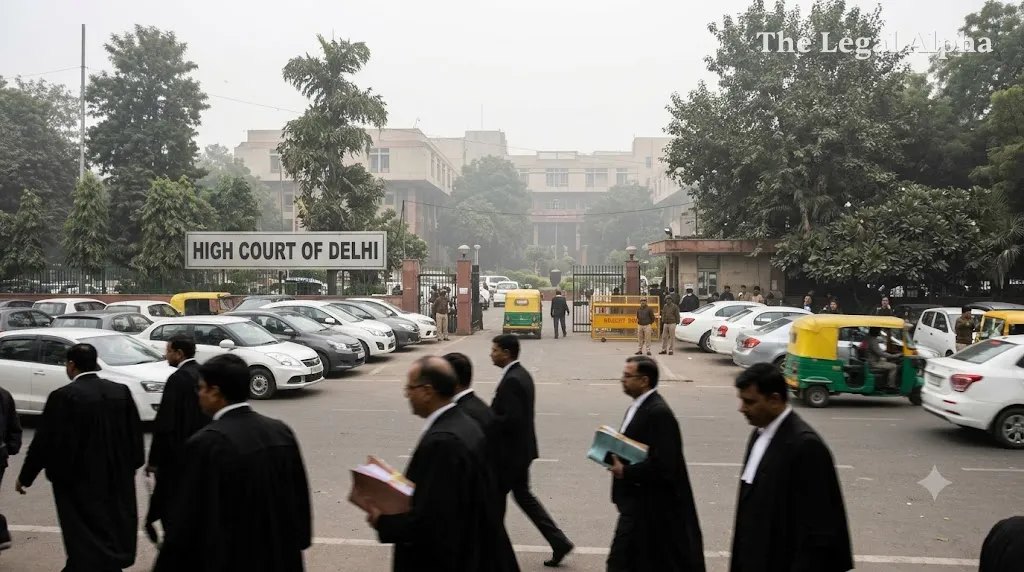
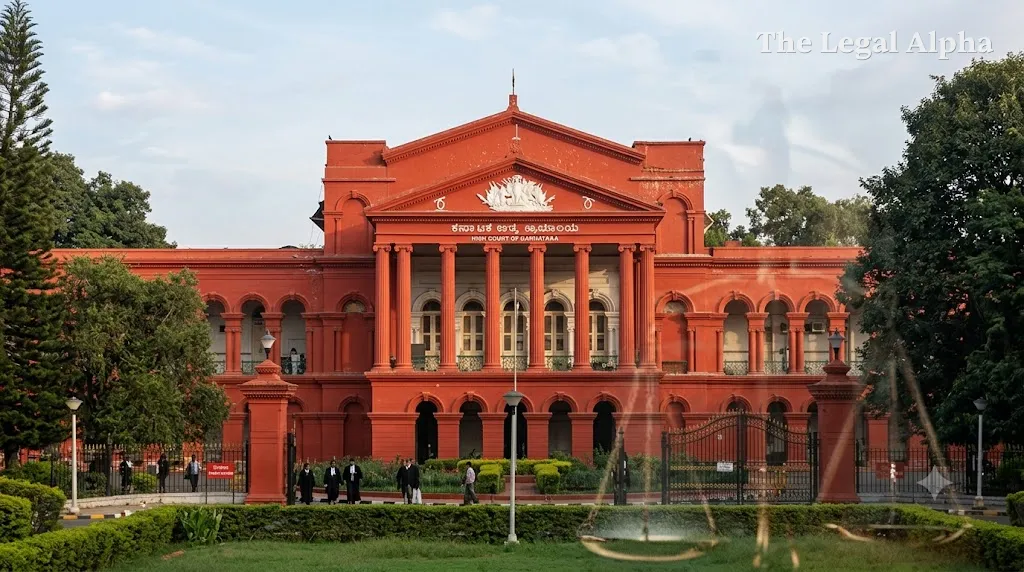
Telangana High Court Issues Notice to ED Over Allegations of Custodial Coercion and Physical Abuse

The Telangana High Court has issued notices to the Enforcement Directorate and local police authorities following a writ petition alleging unlawful detention, physical assault, and involuntary execution of statements during custodial interrogation. The petitioner, Mangalampalli Naga Sai Manikanta, stated that after reporting to the ED’s Hyderabad zonal office under summons issued in a money laundering probe, officials confined him for nearly ten hours. He alleged that he was beaten and coerced into signing a pre-drafted statement without being permitted to inspect its contents. After the local police reportedly failed to register a First Information Report on his complaint, the petitioner moved the High Court seeking the preservation of surveillance records, an independent probe, and a bar against the agency relying on the contested statements.
Legal Topic
Area of Law: Criminal Procedure and Constitutional Law
Sub-topic: Custodial Interrogation, Evidentiary Admissibility under PMLA, and Article 21 Rights
Core Legal Issue
The controversy centres on whether statements recorded by investigating agencies under statutory summons retain evidentiary legitimacy when challenged on grounds of physical intimidation, custodial assault, and lack of procedural safeguards.
It further engages the constitutional duty of high courts under Article 226 to intervene when statutory law enforcement bodies face allegations of violating personal liberty and the right against self-incrimination, particularly regarding the preservation of electronic evidence inside central agency interrogation facilities.
What Did the Court Decide?
Justice E.V. Venugopal issued formal notices to the Enforcement Directorate and state police authorities, directing them to submit their counter-affidavits detailing their stance on the allegations.
The Court has not made a final determination on the truth of the physical assault claims or the ultimate admissibility of the signed statement. The matter has been listed for subsequent hearing on November 27.
Key Legal Points
-
Evidentiary Sanctity of Interrogation: Judicial scrutiny was triggered regarding whether statements obtained under statutory power under money laundering legislation were executed voluntarily or procured under duress.
-
Preservation of Electronic Records: The petition brought focus to the urgent need to secure CCTV surveillance footage, visitor logs, and facility registries to evaluate custodial claims objectively.
-
High Court Writ Jurisdiction vs. Statutory Remedies: The maintainability of invoking extraordinary writ jurisdiction under Article 226 was contested against the ordinary statutory mechanism of approaching a jurisdictional magistrate.
-
Procedural Decorum: The proceedings saw observations regarding adherence to court decorum during hybrid proceedings involving statutory authorities.
Relevant Law
-
Section 50, Prevention of Money Laundering Act, 2002 (PMLA): Powers of central authorities regarding summons, production of documents, and recording statements.
-
Article 20(3), Constitution of India: Protection against compelled self-incrimination.
-
Article 21, Constitution of India: Right to life, human dignity, and protection against custodial torture.
-
Article 226, Constitution of India: Extraordinary writ jurisdiction of the High Court.
-
Code of Criminal Procedure, 1973 / Bharatiya Nagarik Suraksha Sanhita, 2023: Statutory procedure governing the registration of complaints and magistrate referrals.
-
Paramvir Singh Saini v. Baljit Singh (Supreme Court of India, 2020): Mandatory installation and maintenance of CCTV recording in all interrogation rooms and central agency offices.
Arguments of the Parties
Petitioner
The petitioner submitted that his appearance before the central agency on October 26 was voluntary and in compliance with lawful process. He argued that he was kept in unrecorded detention for close to ten hours, assaulted, and pressured to sign incriminating papers naming third parties in property transactions. The petitioner further contended that the Saifabad Police failed to register an FIR on his written grievance, rendering High Court intervention critical to prevent tampering with or deletion of CCTV records inside the agency's Hyderabad office. He maintained that statements extracted through physical intimidation cannot be relied upon in ongoing proceedings.
Respondent / Enforcement Directorate
Counsel for the agency opposed the petition at the threshold, arguing that the writ petition was not maintainable. The agency submitted that settled Supreme Court jurisprudence requires grievances regarding public servants or procedural irregularities in investigation to be presented before the jurisdictional magistrate through ordinary statutory avenues rather than through writ proceedings. The ED maintained that the allegations were intended to derail legitimate financial investigations and urged the dismissal of the petition.
Why Does It Matter?
The case highlights the recurring friction between the sweeping investigative mechanisms conferred by the Prevention of Money Laundering Act and basic constitutional guarantees against custodial overreach. While Section 50 statements under the PMLA hold judicial weight—unlike ordinary police confessions—allegations of involuntary execution undermine the integrity of the evidentiary chain.
Furthermore, this development underlines the practical enforceability of Supreme Court directives demanding transparent CCTV coverage within central investigative premises. If investigative wings face judicial calls to produce contemporaneous surveillance footage, it reinforces that economic offense inquiries are not exempt from constitutional decency and procedural oversight.
Legal Takeaway
Statements recorded by investigative agencies during statutory interrogation must be voluntary to hold legal weight, and complaints of custodial abuse place a sharp burden on authorities to produce contemporaneous records like CCTV footage. While courts remain cautious before halting probes, evidence procured through alleged duress remains subject to rigorous constitutional scrutiny.
Sources
Primary Source:
-
Order of the High Court for the State of Telangana in Writ Petition filed by Mangalampalli Naga Sai Manikanta (Coram: Justice E.V. Venugopal, October 2026).
Additional Sources:
-
High Court Proceedings Report, Telangana Today, October 30, 2026.
-
High Court Coverage, The Times of India, Hyderabad Edition, October 31, 2026.