Delhi High Court Bar Association Seeks Vehicle Restriction Carve-Out for Legal Fraternity
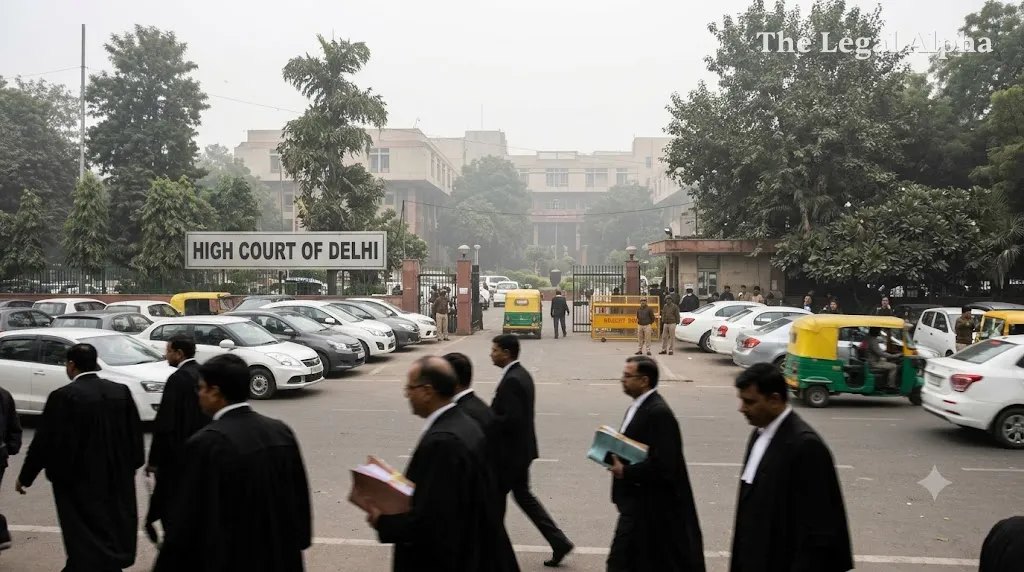
The Delhi High Court Bar Association (DHCBA) has submitted formal representations to Delhi Lieutenant Governor and the High Court’s leadership, requesting an exemption for judges, practicing advocates, and court personnel from sweeping vehicular restrictions targeting non-BS-VI compliant vehicles.
Under the proposed anti-pollution enforcement drive, vehicles falling short of Bharat Stage VI (BS-VI) emission norms face an operational prohibition in the national capital, backed by impounding directives administered by the Delhi Police Traffic Department. In response, DHCBA President, Senior Advocate N. Hariharan, moved representations stressing that thousands of legal practitioners and court officials commute daily across inter-state boundaries from satellite NCR hubs such as Gurugram, Noida, and Ghaziabad to discharge essential public functions in the administration of justice.
Legal Topic
-
Area of Law: Environmental Law & Administrative Law
-
Sub-topic: Air Pollution Mitigation / Essential Services Classification / Vehicular Emission Regulatory Norms
Core Legal Issue
The controversy centres on the tension between executive-led environmental containment measures under air quality management frameworks and the operational continuity of judicial institutions.
Specifically, the issue involves whether blanket traffic prohibitions designed to curb seasonal air degradation can override established statutory lifespans of registered motor vehicles without accommodating personnel discharging essential constitutional and judicial functions.
What Did the Court / Authority Decide?
The matter currently rests at the stage of an administrative representation; no judicial verdict or executive order granting exemption has yet been pronounced.
The DHCBA has placed its formal request before the Delhi Lieutenant Governor and the judicial leadership of the Delhi High Court. An administrative determination regarding possible classification carved out under the enforcement notification remains pending.
Key Legal Points
-
Vested Operating Lifespans: Bharat Stage VI emission benchmarks took effect across the capital territory in 2020. Non-BS-VI vehicles purchased prior to the transition operate under regulatory registrations granting permissible road lifespans—up to 10 years for diesel engines and 15 years for petrol engines.
-
Essential Service Doctrine: The bar leadership contends that the machinery administering justice functions as an essential sovereign service, warranting exemptions parallel to other emergency sectors under severe pollution action plans.
-
Socio-Economic Mobility Constraints: Given escalating housing costs within territorial Delhi, a substantial portion of the bar and registry staff resides across national capital borders in Haryana and Uttar Pradesh, making cross-border vehicular access a prerequisite for daily litigation appearances.
-
Delegation of Coercive Action: The blanket empowerment of traffic enforcement agencies to impound compliant non-BS-VI vehicles within their valid operating lifespans risks paralyzing court appearances and access to legal remedies.
Relevant Law
-
Motor Vehicles Act, 1988: Section 115 (Power to restrict the use of vehicles) and registration rules governing statutory vehicle longevity.
-
Commission for Air Quality Management in National Capital Region and Adjoining Areas Act, 2021 (CAQM Act): Statutory directions and Graded Response Action Plan (GRAP) enforcement mechanisms.
-
Supreme Court Jurisprudence on NCR Vehicle Age Bans: Rulings originating from M.C. Mehta v. Union of India, which established the operational cutoff caps of 10 years for diesel and 15 years for petrol-powered personal vehicles in the NCR.
Arguments of the Parties
Delhi High Court Bar Association
The Bar Association submitted that legal practitioners, judicial officers, and registry staff are indispensable functionaries in preserving the constitutional machinery of justice. Imposing an immediate ban on all non-BS-VI vehicles, coupled with summary vehicle impounding, disproportionately curtails advocates' fundamental trade rights and interferes with citizen representation. The association highlighted that high real estate costs in Delhi force members to reside in peripheral NCR cities, rendering private vehicular transit necessary for timely court appearances.
State Authorities / Regulatory Apparatus
Executive bodies and air quality regulators maintain that acute deterioration of atmospheric air quality across the Indo-Gangetic Plain necessitates strict emergency traffic containment measures. Strict emission cutoffs targeting older engine classifications (BS-IV and below) form a core component of staged pollution mitigation schedules aimed at preventing catastrophic public health emergencies.
Why Does It Matter?
This intervention highlights the practical conflict between aggressive urban environmental governance and the logistical requirements of institutional stakeholders.
If administrative authorities yield to the bar body's plea, it could pave the way for similar exemption claims from other professional bodies, corporate federations, and trade guilds whose constituents commute into Delhi. Conversely, refusing institutional carve-outs risks creating widespread disruption in case disposal rates, bail hearings, and urgent interim relief applications due to non-appearance of counsel and staff.
Legal Takeaway
Broad environmental directives that impose rapid operational bans on lawfully registered vehicles inevitably collide with public service delivery. Regulatory bodies must balance ecological emergency protocols with tailored institutional carve-outs to prevent systemic gridlock in essential judicial functions.
Sources
-
Primary Source: Representation Letter dated October 30, 2026, issued by Delhi High Court Bar Association President Senior Advocate N. Hariharan to the Lieutenant Governor of Delhi and the Acting Chief Justice of the Delhi High Court.
-
Additional Sources: Delhi Transport Department Regulatory Notifications; Commission for Air Quality Management (CAQM) Graded Response Directives.