North Carolina Court Clears Path for 750MW Facility, Holding County Liable Over Data Centre Moratorium
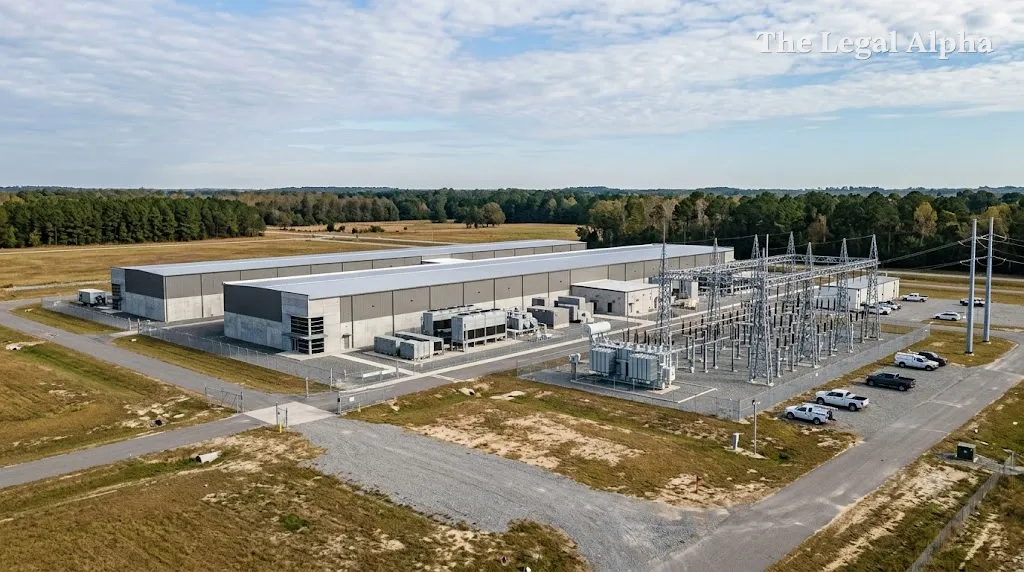
A North Carolina Superior Court judge has ruled against Chatham County in a legal challenge brought by developer Eco TIP West LLC. The dispute arose after the county enacted a temporary 12-month moratorium halting data centre developments across unincorporated areas to evaluate their impact on electrical grids, water resources, and local infrastructure.
Eco TIP, which had proposed constructing a massive 750-megawatt data centre and cryptocurrency mining campus on land already classified for industrial use, sued the county to prevent the pause from blocking its project. Granting summary judgment in favour of the developer on both liability and legal fees, the court determined that the county could not lawfully halt the project under the moratorium, marking one of the state's first direct legal tests of local data centre bans.
Legal Topic
Area of Law: Land Use and Administrative Law
Sub-topic: Zoning Moratoria / Vested Property Rights
Core Legal Issue
The dispute centres on whether a local government can retrospectively apply a blanket development freeze to a project where the developer has already initiated permit proceedings, secured zoning interpretations, and incurred significant development expenditures.
Specifically, the court had to determine whether Eco TIP West possessed protected statutory or common-law vested rights—or enforceable permit-choice protections—that precluded Chatham County from retroactively subjecting the 750MW facility to an interim development pause.
What Did the Court / Authority Decide?
Superior Court Judge John M. Morris granted summary judgment in favour of Eco TIP West LLC on the issues of liability and entitlement to attorneys' fees. The judge concluded that there was no genuine dispute of material fact and that the developer was entitled to relief as a matter of law.
The court ordered Eco TIP to submit an itemised accounting of legal costs and fees within 14 days and directed the parties to submit a scheduling proposal to resolve monetary damages within 21 days. The order resolved the question of liability without articulating specific statutory interpretations or declaring all municipal data centre moratoria across the state invalid. Consequently, while the liability determination allows the project to move forward free from the moratorium, the calculation of damages remains pending.
Key Legal Points
-
Protection of Pipeline Applications: Local zoning authorities face substantial legal constraints when applying newly enacted development pauses to applicants who have already commenced approvals under existing zoning classifications.
-
Summary Judgment on Municipal Liability: The court found Chatham County legally liable at the summary judgment stage without requiring a full trial on liability, underscoring that the legal protections invoked by the developer were sufficient on the undisputed record.
-
Bifurcation of Liability and Damages: The ruling settled the substantive illegality of applying the ban to the developer while reserving the determination of financial compensation and statutory damages for subsequent proceedings.
-
Shift of Legal Costs: By awarding attorneys' fees to the developer, the court invoked fee-shifting principles typically applicable when a local authority acts outside statutory zoning authority.
Relevant Law
-
North Carolina General Statutes Chapter 160D: North Carolina’s unified planning and development regulation statute, governing municipal moratoria, vested development rights, and the permit-choice rule.
-
North Carolina Constitution: Guarantees of substantive due process and protections against arbitrary deprivation of property rights.
-
42 U.S.C. § 1983 (Civil Rights Act): Federal statutory vehicle asserted by the developer claiming violations of constitutional due process rights through improper governmental land-use interference.
Arguments of the Parties
Eco TIP West LLC (Petitioner / Plaintiff):
The developer argued that data centres were explicitly permitted as a matter of right under the tract’s existing industrial zoning classification. Eco TIP submitted that it had received formal zoning guidance from county staff, committed substantial capital in good faith reliance, and properly initiated permit processing. Consequently, the company contended that the county’s moratorium constituted an unlawful retroactive restriction that infringed on its vested development rights, statutory permit choices, and constitutional due process guarantees.
Chatham County (Respondent / Defendant):
The county maintained that the interim moratorium was an essential regulatory measure adopted to assess community-wide resource demands, including heavy water consumption and grid strain. Legally, the county submitted that preliminary staff zoning interpretation letters did not equate to final building authorization or convey vested rights. It further argued that Eco TIP's application remained incomplete when the moratorium was passed—citing missing advisory commission approvals and uncompleted fee payments—meaning the developer had not crossed the legal threshold required to shield itself from local moratoria.
Why Does It Matter?
Across North Carolina and several other US jurisdictions, dozens of municipal and county boards have recently implemented sudden zoning moratoria to pause the rapid proliferation of high-density artificial intelligence hubs and cryptocurrency data centres. These infrastructure projects place unprecedented demands on local utilities and environmental resources.
This ruling serves as an important legal warning for local governments attempting to use emergency freezes against projects already under review. It establishes that local authorities cannot unilaterally halt large-scale industrial projects midway through the planning pipeline without exposing public bodies to significant liability, attorney fee shifting, and potential compensatory damages. For energy and infrastructure investors, the decision demonstrates the robustness of North Carolina's statutory vested rights framework against post-hoc regulatory resistance.
Legal Takeaway
A local government cannot rely on a newly enacted development moratorium to stall a project that has already acquired protected status under established zoning and permit rules. Developers who establish good-faith expenditures and timely applications can hold municipalities liable for regulatory overreach and recover related legal costs.
Sources
Primary Source:
-
Order on Summary Judgment, Eco TIP West LLC v. Chatham County, North Carolina Superior Court (Presided over by Superior Court Judge John M. Morris; signed September 17, 2026, filed September 18, 2026).
Additional Sources:
-
North Carolina General Statutes Chapter 160D (Local Planning and Development Regulation).
-
Chatham County Board of Commissioners Public Records and Case Briefings.
-
The News & Observer / Chatham Journal legal reporting on data centre zoning moratoria litigation.