Myanmar's Treatment of Rohingya Faces International Scrutiny as ICJ Examines Genocide Allegations
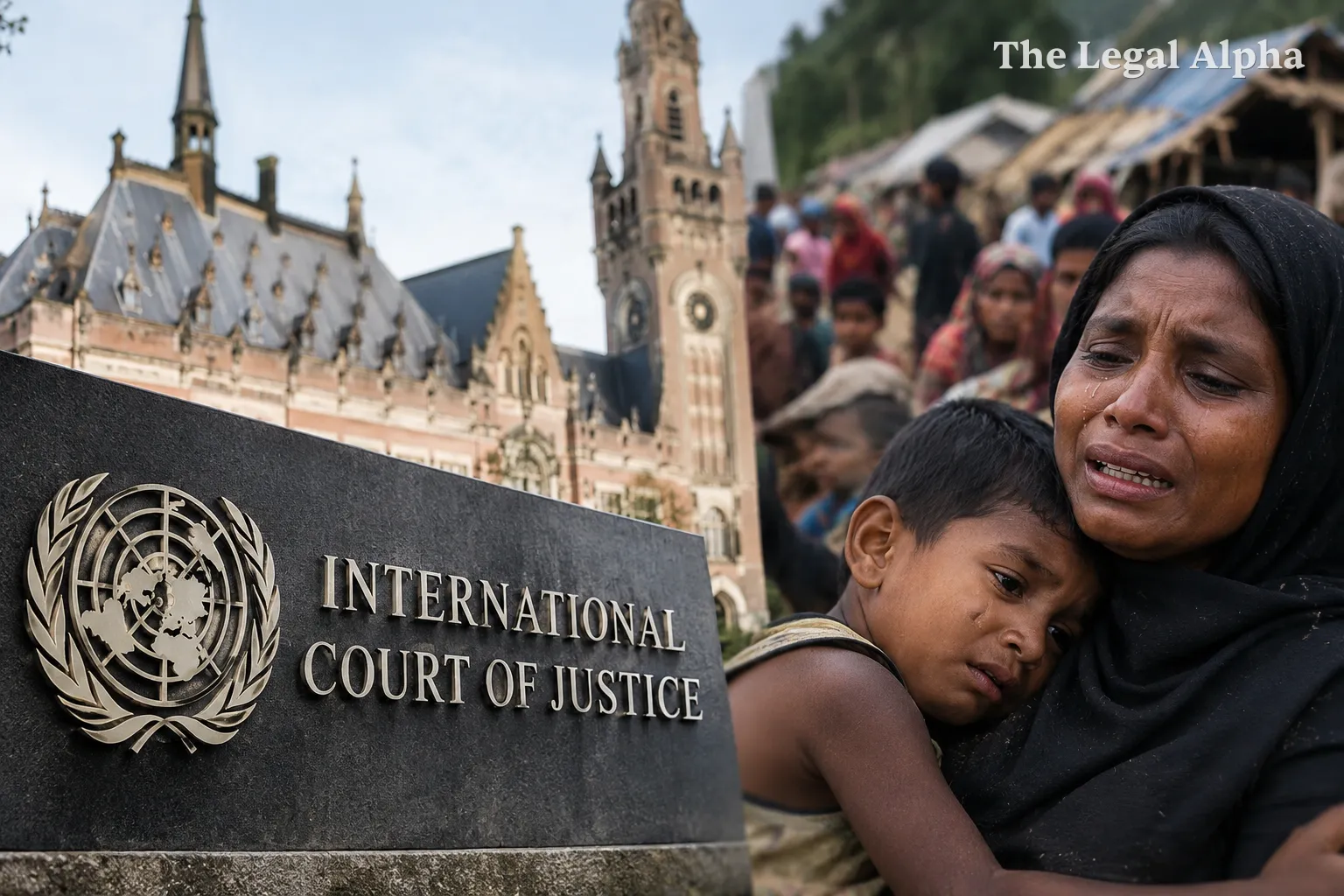
The International Court of Justice (ICJ) is examining allegations that Myanmar committed genocide against the Rohingya Muslim minority, bringing renewed international attention to the violence, displacement and alleged systematic persecution of the community.
The proceedings concern Myanmar's obligations under the 1948 Convention on the Prevention and Punishment of the Crime of Genocide. The case was brought by The Gambia, which alleges that Myanmar violated its international obligations through acts committed against the Rohingya population.
The proceedings are significant because they concern whether a State can be held internationally responsible for acts of genocide and what legal remedies may follow if violations are established.
Legal Topic
Area of Law: Public International Law
Sub-topic: Genocide, State Responsibility and International Human Rights Law
Core Legal Issue
The central legal question before the ICJ was whether Myanmar could be held internationally responsible for genocide against the Rohingya population during the 2017 military clearance operations in northern Rakhine State.
The Court had to determine whether the killings, serious bodily and mental harm, destruction of living conditions and measures intended to prevent births were accompanied by the specific intention to destroy the Rohingya group, in whole or in part, as required under the Genocide Convention.
What Did the International Court of Justice Decide?
In its judgment delivered on November 19, 2026, the ICJ found, by a majority of nine votes to six, that Myanmar had committed genocide against the Rohingya group in northern Rakhine State.
The Court also found that Myanmar had breached several other obligations under the Genocide Convention. These included its duty to prevent genocide, punish prohibited acts and enact domestic legislation giving effect to the Convention.
The Court's findings included:
-
Myanmar failed to fulfil its obligation to prevent genocide committed by individuals acting alongside its security forces.
-
Myanmar violated its obligation to investigate, prosecute and punish genocide and other acts covered by Article III of the Convention.
-
Myanmar failed to enact the necessary domestic legislation to implement its obligations under the Convention.
-
The Court found that Myanmar had not directly and publicly incited genocide against the Rohingya through private persons, rejecting that particular allegation.
-
Myanmar violated the Court's earlier provisional measures by failing to adequately protect and preserve evidence relating to alleged genocidal acts.
The ICJ further directed Myanmar to investigate persons reasonably suspected of involvement in the 2017 operations and prosecute and punish them where warranted. It also ordered assurances against repetition, restitution for affected Rohingya and compensation for the damage caused.
The amount and modalities of compensation will be determined in a subsequent phase. Myanmar must submit a report to the Court within two years of the judgment.
Key Legal Points
-
State responsibility for genocide: A State can be held internationally responsible for violating the Genocide Convention.
-
Specific intent requirement: Genocide requires proof of an intention to destroy a protected national, ethnic, racial or religious group, in whole or in part.
-
Duty to prevent and punish: States have independent obligations to prevent genocide and investigate and punish acts prohibited by the Convention.
-
Preservation of evidence: States must comply with international court orders requiring the protection of evidence relevant to alleged genocide.
-
Reparations: International responsibility can result in obligations to provide restitution, compensation and guarantees of non-repetition.
Relevant Law
Convention on the Prevention and Punishment of the Crime of Genocide, 1948
-
Article I: Establishes the obligation to prevent and punish genocide.
-
Article II: Defines genocide and identifies the prohibited acts.
-
Article III: Identifies punishable acts, including genocide, conspiracy, direct and public incitement, attempt and complicity.
-
Article IV: Provides for punishment of persons committing genocide, including rulers, public officials and private individuals.
-
Article V: Requires States to enact the necessary legislation to give effect to the Convention.
-
Article VI: Addresses the trial of persons charged with genocide before competent national tribunals or an international penal tribunal.
-
Article IX: Provides for the ICJ's jurisdiction over disputes between Contracting Parties relating to the interpretation, application or fulfilment of the Convention.
ICJ Statute, Article 41: Provides the Court with the power to indicate provisional measures to preserve the respective rights of parties.
Arguments of the Parties
The Gambia
The Gambia argued that Myanmar had violated its obligations under the Genocide Convention through its treatment of the Rohingya population. It relied on evidence of killings, sexual violence, destruction of villages, forced displacement and other acts allegedly demonstrating genocidal intent.
It sought a declaration of Myanmar's international responsibility, effective measures to prevent further violations, accountability for those responsible and reparations for the Rohingya community.
Myanmar
Myanmar disputed the allegations of genocide and defended the military operations as security measures undertaken in response to attacks by the Arakan Rohingya Salvation Army (ARSA).
It challenged the allegations concerning genocidal intent and disputed the legal and factual basis of The Gambia's claims.
The ICJ ultimately rejected Myanmar's central defence that the conduct established before it did not amount to genocide.
Why Does It Matter?
The judgment represents a major development in international law because the ICJ has, for the first time, found a State responsible for committing genocide against a protected group.
Its significance extends beyond Myanmar and the Rohingya community.
Recognition of international State responsibility: The decision reinforces that States can be held accountable before international courts for violations of their obligations under the Genocide Convention.
Protection of vulnerable communities: The ruling highlights the importance of preventing systematic violence, discrimination and persecution against ethnic and religious minorities.
International accountability: The judgment strengthens the principle that States must investigate and punish individuals suspected of genocide rather than allowing impunity.
Reparations for victims: The directions concerning restitution, compensation and safe return recognise that international responsibility must also address the consequences suffered by affected communities.
Wider implications for international justice: The Court's interpretation of genocidal intent and State responsibility may become relevant in other international disputes involving allegations of genocide.
The judgment does not itself criminally convict individual military officers. Individual criminal responsibility falls within the jurisdiction of competent criminal courts, including the International Criminal Court where its jurisdiction is established.
Legal Takeaway
The ICJ's judgment establishes Myanmar's international responsibility for genocide against the Rohingya and confirms that obligations under the Genocide Convention extend beyond refraining from genocide to preventing, investigating and punishing it. The decision also makes clear that victims' rights to restitution and compensation form an important part of the legal consequences of State responsibility.
Sources
Primary Source:
-
International Court of Justice, The Gambia v. Myanmar, Judgment dated November 19, 2026.
- ICJ Press Release No. 2026/30, November 19, 2026.
Additional Sources:
-
Reuters – Reporting on the ICJ's landmark genocide judgment.
Associated Press – Coverage of the Court's findings and remedies.