Tamil Nadu Moves Supreme Court to Reconsider One-Time Deepam Permission at Thiruparankundram Hill
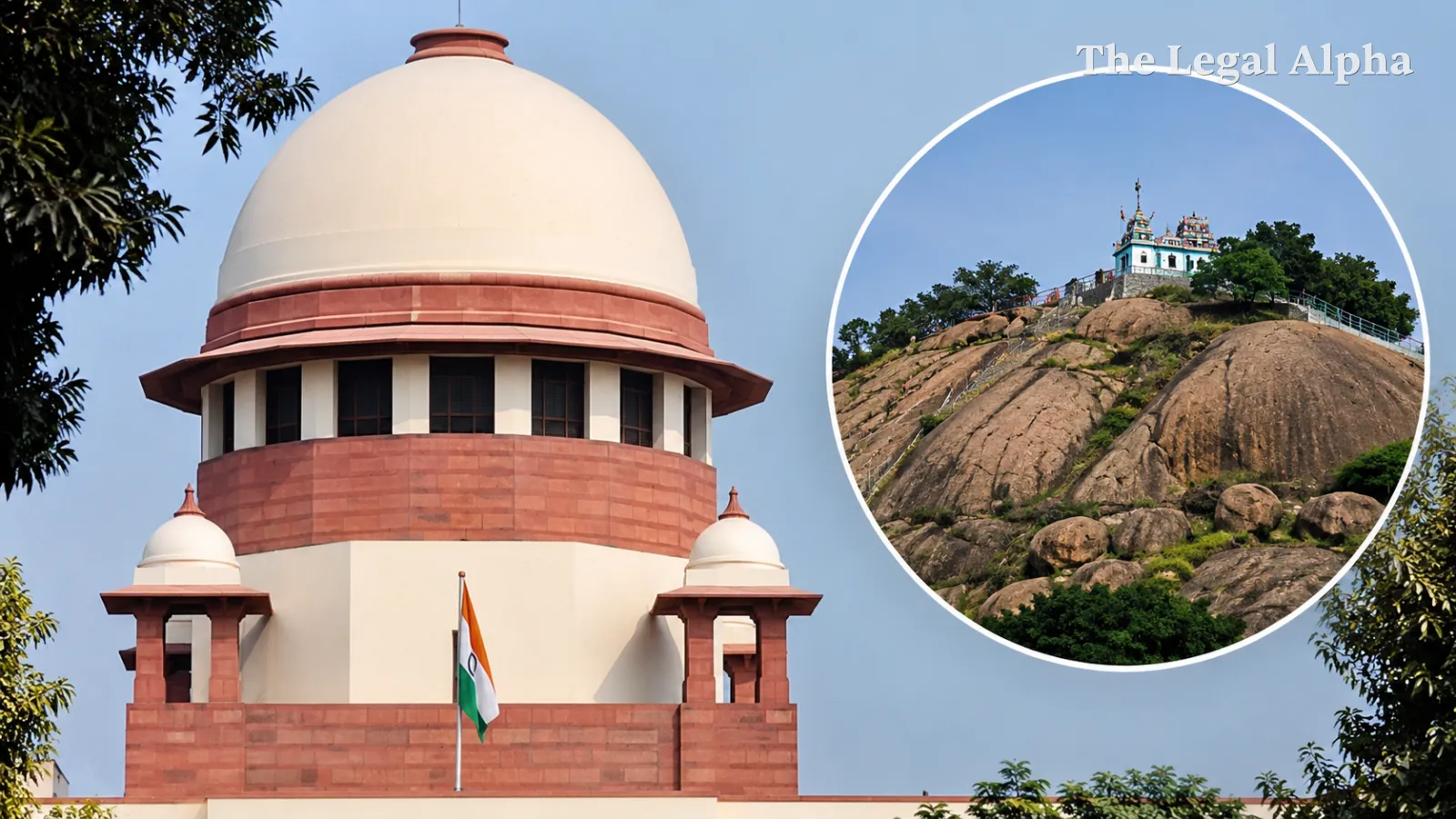
The Tamil Nadu Hindu Religious and Charitable Endowments (HR&CE) Commissioner has filed a review petition before the Supreme Court challenging its November 20, 2026 order permitting the lighting of the Karthigai Deepam at a disputed stone pillar, known as Deepathoon, on Thiruparankundram Hill in Madurai.
The review petition was filed late on November 21, a day after a Bench of Justices Aravind Kumar and Vipul M Pancholi permitted the ceremony as a one-time arrangement for November 24, 2026.
The Supreme Court also stayed the findings recorded by the Madras High Court's Division Bench in its January 6, 2026 judgment concerning the nature of the pillar and the land on which it stands.
The development brings the State government's challenge to the interim arrangement before the Supreme Court while the larger dispute concerning religious customs, access and the legal character of the site remains pending.
Legal Topic
Area of Law: Constitutional Law
Sub-topic: Religious Freedom, Religious Customs, Temple Administration and Judicial Review
Core Legal Issue
The central legal issue concerns the extent to which a constitutional court can grant interim relief permitting a religious ceremony at a disputed location when the underlying questions concerning customary religious practices, ownership, access and the authority of temple administration have not been finally determined.
The matter also raises questions about the relationship between Articles 25 and 26 of the Constitution and the limits of judicial intervention in disputes involving religious observances.
What Did the Supreme Court Decide?
In its November 20, 2026 order, the Supreme Court permitted the lighting of the Karthigai Deepam at Deepathoon on November 24 as a restricted, one-time arrangement.
The Bench explained that the opportunity to perform the ceremony on the particular festival date could not be restored through a subsequent judgment. At the same time, it recognised that permitting the ceremony could not be undone once performed.
The Court therefore imposed safeguards to ensure that the temporary arrangement would not create permanent legal consequences.
The important directions include:
-
The ceremony can be performed only by a team authorised by the temple administration.
-
The Madurai District Collector will determine the team's size and composition in consultation with the Temple Executive Officer, Archaeological Survey of India (ASI) and Madurai Police Commissioner.
-
The general public cannot accompany the authorised team to the pillar.
-
Public gatherings, processions, demonstrations and slogan-raising are prohibited at the location.
-
Existing religious observances at customary locations and lawful access to the Sikandar Badusha Dargah must continue without interference.
-
No excavation, construction, structural alteration or permanent installation is permitted.
-
The District Collector must submit a compliance report within three days after the festival.
The Supreme Court clarified that its permission does not establish any customary religious practice, proprietary right or entitlement to access the disputed location.
The Court has listed the main proceedings for further consideration in the second week of January 2027.
Tamil Nadu's Review Petition
The HR&CE Commissioner has approached the Supreme Court seeking reconsideration of the November 20 interim order.
The review petition challenges the permission granted for lighting the lamp at the disputed pillar. However, the available report does not reproduce the complete grounds of the review petition, and its specific legal arguments should therefore not be treated as established.
The central controversy remains whether the disputed pillar qualifies as a traditional Deepathoon and whether the temple administration can be directed to conduct the ceremony there.
Background of the Dispute
The dispute originated after the Executive Officer of Arulmigu Subramania Swamy Temple rejected devotee Rama Ravikumar's request to light the Karthigai Deepam at the stone pillar near the dargah.
Ravikumar subsequently approached the Madras High Court seeking directions to the temple administration to conduct the ceremony at the disputed location or permit him to light the lamp himself.
In December 2025, Justice GR Swaminathan held that the pillar was a Deepathoon and directed the temple administration to light the lamp there in addition to the customary location near the Uchippillaiyar Temple.
A Division Bench of the Madras High Court upheld the direction on January 6, 2026, also holding that the pillar stood on temple land.
The matter subsequently reached the Supreme Court, where different parties raised competing claims concerning the historical character of the pillar, the ownership of the land and the interpretation of earlier judicial proceedings.
Arguments of the Parties
Tamil Nadu Government and Temple Administration
The HR&CE Commissioner has sought review of the Supreme Court's interim permission. The dispute involves the authority of temple administration, the nature of the claimed religious custom and the legal status of the disputed location.
The specific grounds advanced in the review petition are not fully reproduced in the available report.
Devotee Rama Ravikumar
Ravikumar sought permission to light the Karthigai Deepam at the disputed pillar after the temple administration rejected his request.
During the Supreme Court proceedings, his side relied on the hollow at the top of the pillar and photographs of similar pillars at other temples in Tamil Nadu to support its claim that the structure was a Deepathoon.
Madurai District Collector
The District Collector relied on historical survey records to contend that the pillar was a survey marker rather than a traditional lamp-lighting structure.
Dargah Committee
The Dargah Committee argued that the Madras High Court had interpreted a 1923 decree concerning the hill too narrowly.
Key Legal Points
-
Interim judicial relief does not automatically establish a substantive or customary religious right.
-
Articles 25 and 26 involve important questions concerning individual religious freedom and the rights of religious denominations.
-
Temple administration and established religious usage remain relevant to disputes concerning religious observances.
-
The Supreme Court has expressly kept questions of title, possession, customary usage and access open for final adjudication.
-
A one-time interim arrangement cannot independently create a precedent for similar permissions in subsequent years.
Relevant Legal Provisions
Constitution of India
-
Article 25: Protects freedom of conscience and the right to practise and profess religion, subject to constitutional limitations.
-
Article 26: Provides religious denominations the right to manage their religious affairs, subject to public order, morality and health.
Tamil Nadu Hindu Religious and Charitable Endowments Act, 1959
The statutory framework governing the administration of Hindu religious institutions is relevant to the broader dispute concerning temple management and established religious usage.
Why Does It Matter?
The dispute raises significant questions about how courts should balance religious freedom, institutional authority and public order when competing religious claims concern the same location.
The Supreme Court's decision to permit the ceremony without determining the underlying rights demonstrates the distinction between interim arrangements and final judicial findings.
It also highlights the importance of preserving the rights of all parties while disputes involving religious institutions and customary practices remain under adjudication.
The eventual decision in the main appeals could provide further clarity on the legal treatment of asserted religious customs, the role of temple administration and the limits of judicial intervention in religious matters.
Legal Takeaway
The Supreme Court's one-time permission to light the Karthigai Deepam at Deepathoon does not amount to recognition of an established religious custom or ownership right. The underlying questions concerning religious practice, temple administration, possession and access remain open for final adjudication.
Sources
Primary Source:
- Supreme Court of India, order dated November 20, 2026, in the Thiruparankundram Deepam proceedings. Read Supreme Court Order (PDF)
Additional Sources: