Visakhapatnam Consumer Commission Orders Hospital to Pay ₹9.29 Lakh for Negligence in Cataract Surgery
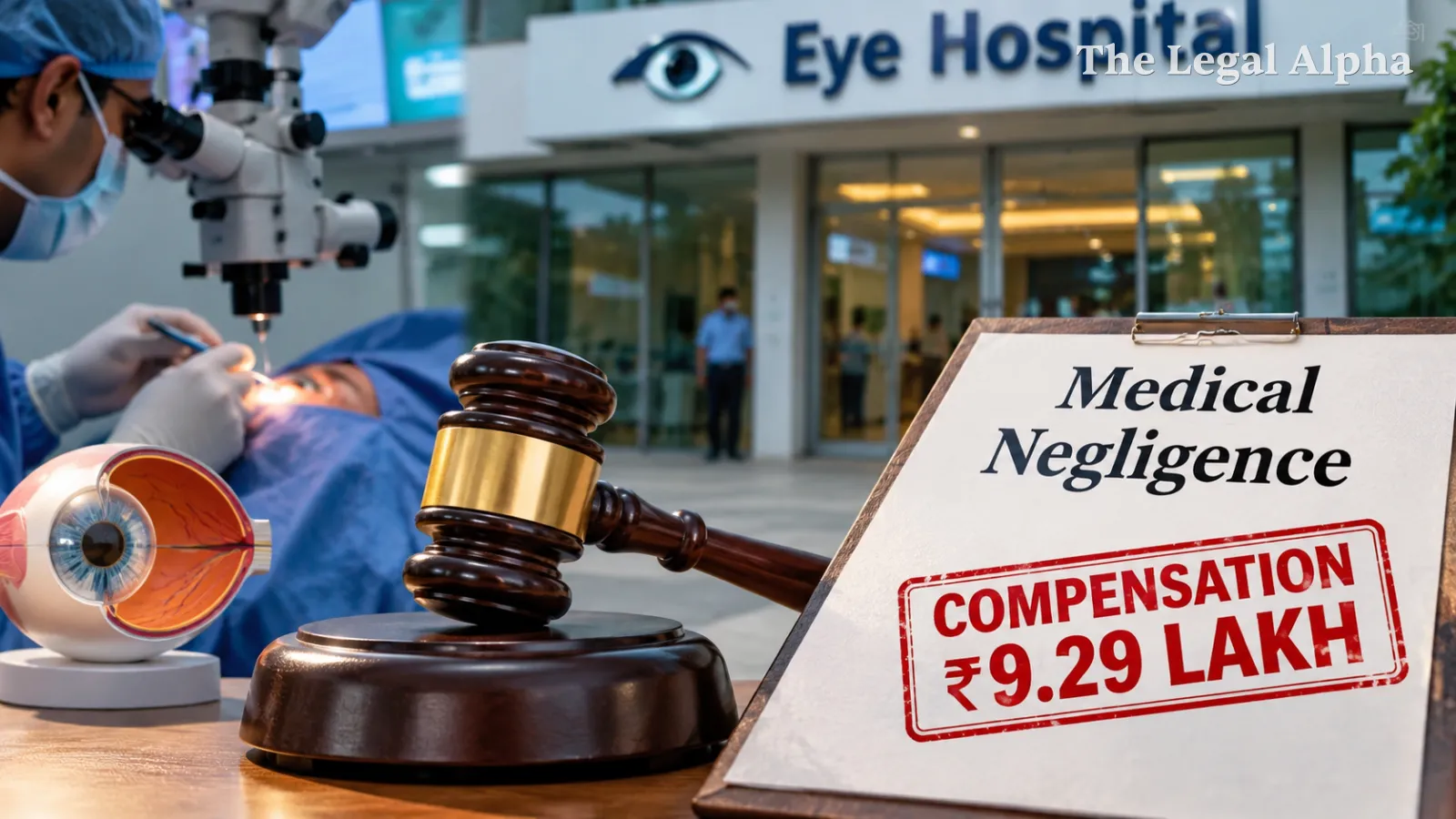
The Visakhapatnam District Consumer Disputes Redressal Commission has held an eye hospital responsible for medical negligence and deficiency in service after a patient experienced serious vision complications following cataract surgery.
The Commission directed the hospital to refund ₹8,020 towards the amount paid for the procedure, pay ₹9 lakh as compensation and provide an additional ₹21,000 towards litigation expenses. The total amount payable to the patient is ₹9,29,020.
The complaint arose from a cataract operation performed on June 7, 2021, after which the patient reportedly experienced severe pain and persistent vision problems. He subsequently required additional eye surgeries, including treatment at another hospital.
The Commission delivered its order on November 16, 2026, emphasising the responsibility of healthcare institutions to maintain proper standards of patient care.
Legal Topic
Area of Law: Consumer Protection Law
Sub-topic: Medical Negligence and Deficiency in Healthcare Services
Core Legal Issue
The central legal question was whether the hospital had failed to exercise the required standard of care during and after the cataract operation, resulting in complications that affected the patient's vision and necessitated further surgical treatment.
The Commission also had to examine whether the hospital could avoid liability by describing the complications as recognised medical risks or whether the medical records demonstrated a failure to discharge its duty of care towards the patient.
What Did the Consumer Commission Decide?
The Visakhapatnam District Consumer Disputes Redressal Commission, headed by President Gudla Tanuja and comprising members Rahimunnisa Begum and Varri Krishna Murthy, found the hospital guilty of medical negligence and deficiency in service.
The Commission considered the medical records and the differences in the patient's recorded vision findings following the initial procedure and subsequent treatment. It found that the evidence established a failure on the hospital's part to fulfil its duty of care.
The Commission also highlighted the importance of proper eye treatment, observing that patients depend on healthcare institutions for safe procedures and appropriate medical attention.
It noted that the complainant had been compelled to pursue a prolonged legal battle for three years while dealing with discomfort and impaired vision.
The hospital was consequently directed to:
-
Refund ₹8,020 paid by the patient.
-
Pay ₹9,00,000 as compensation for medical negligence, suffering and related losses.
-
Pay ₹21,000 towards litigation expenses.
The total compensation and other amounts awarded come to ₹9,29,020.
Key Legal Points
- Duty of care: Hospitals are required to exercise appropriate care and maintain proper standards while providing medical treatment.
- Medical documentation: Differences in medical findings recorded after surgical procedures can become important evidence when assessing allegations of negligence.
- Deficiency in service: Inadequate medical treatment and failure to provide appropriate care may attract liability under consumer protection law.
- Patient compensation: Consumer commissions can award compensation where deficient healthcare services result in injury, suffering or financial loss.
- Litigation expenses: Patients who successfully establish consumer grievances may also receive compensation towards the costs of pursuing legal proceedings.
Relevant Law
Consumer Protection Act, 2019
The Consumer Protection Act, 2019 provides the legal framework for addressing complaints involving deficiencies in services, including healthcare services where the statutory requirements are satisfied.
Relevant provisions include:
-
Section 2(11): Defines deficiency in service, including shortcomings or inadequacies in the manner of performing a service.
-
Section 2(42): Defines the term service under consumer protection law.
-
Section 39: Provides for reliefs that a District Consumer Commission may grant after establishing a consumer complaint.
The application of these provisions depends on the facts and findings of the individual case.
Arguments of the Parties
Patient's Arguments
The complainant stated that he initially approached the hospital on June 5, 2021, for an eye examination and was advised to undergo cataract surgery in his left eye.
He alleged that the hospital declined his request for treatment under the government-backed Aarogya Mitra scheme, citing delays in receiving payments. He subsequently agreed to pay for the operation himself.
According to the complaint, the June 7 operation was performed without proper anaesthesia and with allegedly malfunctioning equipment. He further claimed that inadequate cleaning during the procedure resulted in complications and severe pain.
The patient subsequently underwent another operation and later required emergency treatment at a different hospital after retinal detachment was diagnosed.
His counsel argued that the complications affected his ability to work and earn a livelihood, causing financial difficulties for his family.
Hospital's Arguments
The hospital disputed the allegations of negligence and maintained that the patient had voluntarily opted for surgery under its trust scheme after being informed about the procedure and its costs.
Its counsel argued that the operation was conducted according to standard medical practices and that the presence of a fragment in the eye was a recognised complication that could occur despite appropriate medical care.
The hospital further submitted that the patient had been referred to a retina specialist and that his vision initially improved following the additional procedure.
It also contended that the patient did not return for further treatment despite being advised to undergo another operation.
Why Does It Matter?
The decision highlights the responsibility of hospitals to maintain appropriate standards of medical care and address complications arising during or after surgical procedures.
Medical treatment involves inherent risks, and not every unsuccessful procedure automatically establishes negligence. However, healthcare institutions remain responsible for demonstrating that appropriate professional care was exercised.
For patients, the ruling underlines the importance of preserving medical records, prescriptions, diagnostic reports, surgical documents and follow-up consultations. Such evidence can become crucial when establishing whether a hospital has failed to provide the required standard of service.
The compensation awarded also demonstrates the role of consumer commissions in providing remedies to individuals who suffer because of deficient healthcare services.
For hospitals and healthcare providers, the decision serves as a reminder that adequate post-operative monitoring, timely diagnosis and appropriate medical intervention are essential components of patient care.
Legal Takeaway
Hospitals can be held accountable under consumer protection law when evidence establishes that a failure to exercise the required standard of medical care amounts to negligence or deficiency in service. The Visakhapatnam Commission's decision reinforces the importance of proper surgical care, medical documentation and timely post-operative treatment in protecting patients' rights.
Sources
Primary Source:
Visakhapatnam District Consumer Disputes Redressal Commission order dated November 16, 2026. The complete official order and case number could not be independently verified.
Additional Sources: