Meghalaya High Court Issues Criminal Contempt Notices to Bar Associations Over Statewide Boycott Demanding Advocate General’s Removal
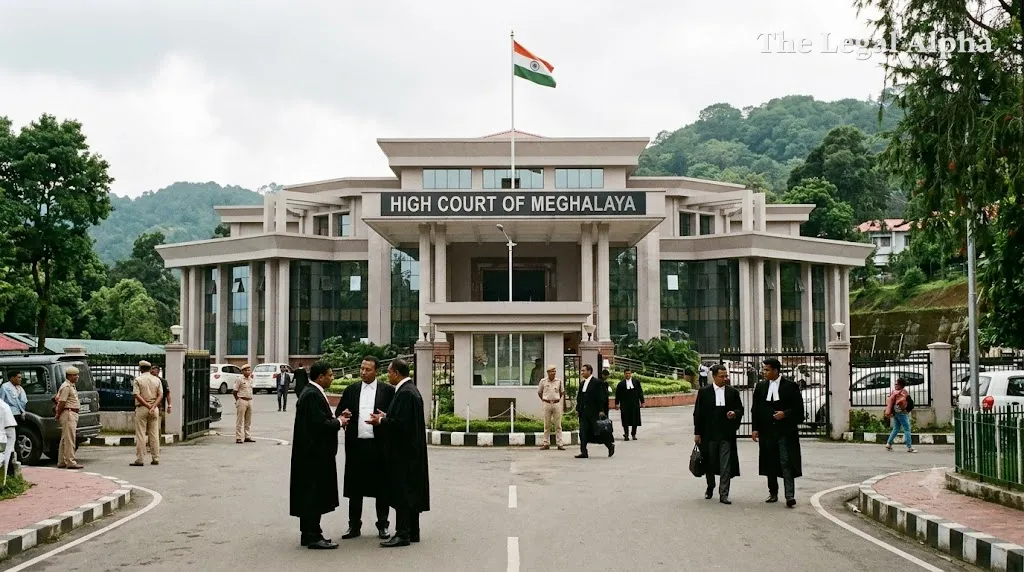
The Meghalaya High Court initiated suo motu criminal contempt proceedings against office-bearers of regional bar associations following a coordinated abstention from judicial work. Lawyers across the state ceased attending court hearings to press the state government to remove Advocate General Amit Kumar.
The confrontation originated in early August, following an alleged molestation of a female law intern by a senior practitioner. During court proceedings, the Advocate General criticized the Bar’s handling of the situation and raised concerns regarding the safety of women legal professionals. In response, the Shillong Bar Association and the High Court of Meghalaya Bar Association expelled the Advocate General from their rolls and subsequently called for a judicial boycott starting October 1 to enforce his removal. With court proceedings disrupted and litigants left unrepresented, a Division Bench took stern cognisance of the stoppage.
Legal Topic
Area of Law: Constitutional & Legal Profession Law
Sub-topic: Contempt of Court / Regulation of Advocates & Strikes
Core Legal Issue
The fundamental legal question before the court is whether bar associations or individual advocates have any legal right to boycott judicial proceedings to pressure the executive into removing a constitutional officer. Additionally, it addresses whether an organized abstention from court duty amounts to criminal contempt and professional misconduct under the Advocates Act.
What Did the Court Decide?
A Division Bench comprising Chief Justice Revati Mohite Dere and Justice H. S. Thangkhiew held that abstaining from court work on any ground—particularly to demand the removal of the Advocate General—is completely illegal and impermissible.
The Bench issued criminal contempt notices to the office-bearers of the boycotting bar associations, warning other district bodies that continued strikes would attract similar contempt proceedings. It commended the Baghmara Bar Association for adhering to judicial discipline by refusing to join the strike. The court impleaded the Bar Council of India, summoned the Chairman of the Bar Council of Meghalaya to appear in person on October 13, and directed both bodies to submit reports detailing the disciplinary measures initiated against the striking lawyers.
Key Legal Points
-
No Right to Strike: Advocates holding a brief do not possess the right to strike, participate in symbolic bandhs, or abstain from court work.
-
Disruption of Justice: Utilizing the judicial system as a platform to extract executive concessions or press private grievances undermines the rule of law and harms litigants.
-
Disciplinary Mandate: Statutory regulatory bodies such as the State Bar Council and the Bar Council of India have an affirmative duty to initiate disciplinary actions against advocates indulging in unauthorized court boycotts.
-
Duty to Litigants: Non-appearance during a strike can expose advocates to personal liability for costs and damages sustained by clients.
Relevant Law
-
The Contempt of Courts Act, 1971: Sections 2(c) and 14 (prejudice to judicial administration and contempt in the face of the court)
-
The Advocates Act, 1961: Sections 35 and 36 (disciplinary actions and professional misconduct)
-
The Constitution of India: Article 165 (appointment and tenure of the Advocate General) and Article 215 (High Court as a Court of Record with contempt powers)
-
Judicial Precedent: Ex-Capt. Harish Uppal v. Union of India (2003), establishing that lawyers cannot strike or call for court boycotts under any circumstances
Arguments of the Parties
The Bar Associations The bar bodies contended that the Advocate General’s courtroom statements made generalized and derogatory remarks against the entire legal fraternity, eroding their dignity. Consequently, they argued that they were entitled to withdraw their cooperation, expel him from their membership, and demand his removal by the appointing authority.
The Advocate General / Judicial Stance The Advocate General maintained that while voluntary associations may regulate their own internal rolls, the office of the Advocate General is an independent constitutional post governed strictly by the State under Article 165. The court noted that lawyers cannot hold the administration of justice hostage to settle disputes involving a constitutional office.
Why Does It Matter?
This development reinforces judicial zero-tolerance toward strikes that paralyze everyday litigation. In several jurisdictions across India, regional bar bodies frequently employ work boycotts as bargaining tools. By issuing criminal contempt notices and demanding direct accountability from the Bar Council of India, the Meghalaya High Court underscores that professional privileges do not eclipse an advocate's primary constitutional duty to the court and to the public. It also reiterates that constitutional functionaries cannot be removed through collective professional coercion.
Legal Takeaway
Advocates have no constitutional or legal standing to disrupt judicial proceedings through strikes or boycotts, regardless of the underlying dispute. Stoppage of work is treated as contempt of court and actionable professional misconduct under the law.
Sources
-
Primary Source: High Court of Meghalaya, Suo Motu Contempt Proceedings / Judicial Order dated October 8, 2026 (Bench of Chief Justice Revati Mohite Dere and Justice H. S. Thangkhiew)
-
Additional Sources: Supreme Court of India precedent in Ex-Capt. Harish Uppal v. Union of India (2003) 2 SCC 45; Bar Council of India and Bar Council of Meghalaya official proceedings