Legal Tech Firm NYAI Debuts Dedicated Agentic AI Infrastructure Platform for Law Practices and Enterprise Compliance
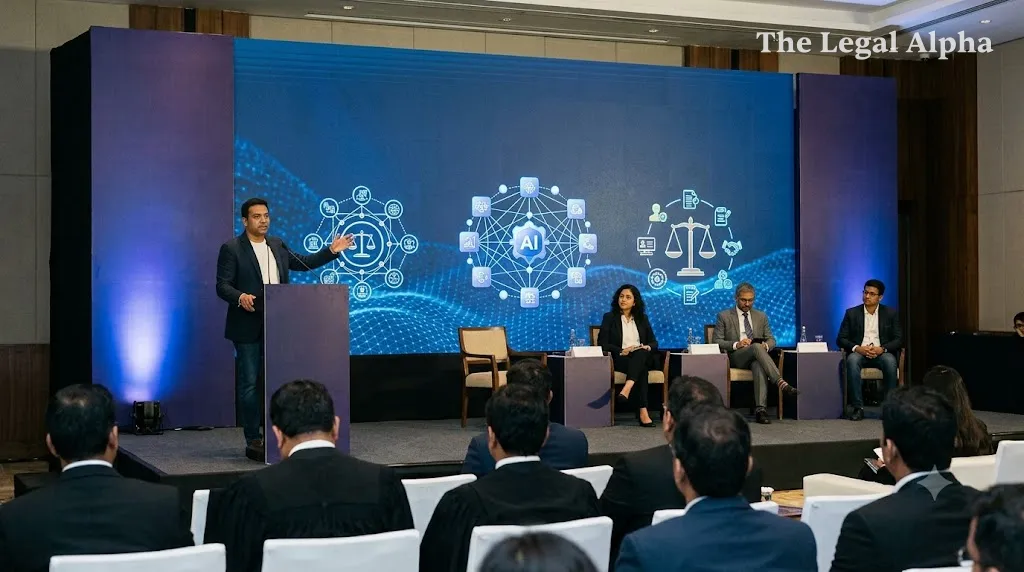
Legal technology enterprise NYAI has introduced NYAI AI Studio, an agentic artificial intelligence infrastructure platform engineered specifically for legal professionals, corporate law departments, and enterprise compliance divisions.
Unlike standalone generative AI point tools that operate merely as text chatbots, the newly unveiled system functions as an underlying operating layer capable of orchestrating autonomous multi-agent workflows. The system is designed to allow legal teams to automate multi-tiered assignments—ranging from mergers and acquisitions due diligence and digital personal data protection compliance to complex contractual redlining—while keeping proprietary data within secure enterprise boundaries.
Legal Topic
Area of Law: Legal Technology & Corporate Governance
Sub-topic: Artificial Intelligence Regulation, Enterprise Compliance & Legal Practice Management
Core Legal Issue
The expansion of generative artificial intelligence in the legal sector has highlighted serious operational, ethical, and regulatory hurdles: How can legal practices and corporate entities implement automated, multi-model AI workflows without compromising attorney-client privilege, client confidentiality, and data sovereignty mandates?
Legal practitioners operate under stringent ethical obligations to safeguard sensitive client records and maintain oversight over automated work products. At the same time, companies face increasing statutory duties to track data governance and ensure regulatory auditability. NYAI's platform addresses this structural friction by separating model inference from raw organisational data, enabling institutions to deploy autonomous agents without exposing sensitive files to third-party public training architectures.
What Did the Authority / Firm Launch?
NYAI launched NYAI AI Studio as a model-agnostic infrastructure layer configured to support external foundational models, including Claude, GPT, Gemini, and Microsoft Copilot, under a unified administrative governance model.
Key structural aspects of the rollout include:
-
Flexible Deployment Architectures: To accommodate divergent confidentiality and data localization standards, the platform is structured across three deployment tiers: software-as-a-service (SaaS), isolated instances on dedicated hyperscalers, and fully air-gapped, on-premise installations.
-
Multi-Agent Orchestration: The engine coordinates specialised task-specific agents across end-to-end legal operations. In transactional diligence, for example, individual agents concurrently categorize documents, extract metadata, evaluate transactional risk profiles, and assemble consolidated deal reports.
-
Ecosystem Integration and Precedential Customisation: The system includes more than 100 enterprise integrations (covering platforms such as iManage, SAP, DocuSign, and communication channels) and allows practitioners to embed firm-specific clause libraries, internal playbooks, and escalation policies directly into custom-built agent workflows.
-
Governance and Audit Controls: The infrastructure incorporates role-based access management, single sign-on, and audit logs to supervise agent outputs and track data movement.
Key Legal Points
-
Preservation of Professional Secrecy and Privilege: The architecture enables legal entities to insulate internal precedents, case files, and privileged client communications within an isolated enterprise boundary while utilizing third-party foundation models.
-
Transition from Assistive Tools to Autonomous Legal Operations: The infrastructure shifts legal technology from prompt-and-response text generators to autonomous multi-agent systems capable of executing sequential tasks across corporate compliance and transactional practice.
-
Auditability and Supervisory Accountability: Incorporating granular activity logs and role-based permissions ensures corporate legal departments can satisfy internal governance requirements and show human oversight over AI-assisted legal determinations.
-
Customised Regulatory Workflows: The framework incorporates targeted modules for statutory compliance tracking, periodic internal audits, and consent management frameworks under data protection laws.
Relevant Law
-
Advocates Act, 1961 & Bar Council of India Rules: Rules governing advocate professional conduct, confidentiality, and professional ethics concerning client communications.
-
Digital Personal Data Protection Act, 2023 (DPDP Act): Statutory provisions regulating data fiduciary accountability, consent management, data processing standards, and data security safeguards.
-
Information Technology Act, 2000 & Reasonable Security Practices Rules (SPDI Rules, 2011): Statutory mandates governing cybersecurity obligations, safe handling of sensitive corporate data, and systems protection.
Arguments and Industry Positions
Platform Developers and Proponents
According to co-founders Vikrant Labde and Dr. Chinmay S. Bhosale, generic artificial intelligence tools fail to accommodate the nuanced, high-stakes nature of legal and regulatory operations. They submit that legal technology must move beyond fragmented point solutions toward an infrastructure-level architecture. This structure gives law firms and in-house teams full sovereignty over their playbooks, risk tolerances, and proprietary clause archives while integrating directly into their active practice tools.
Compliance and Risk Regulators' Perspective
Data protection authorities and risk management analysts continue to emphasize that autonomous agentic software cannot dilute the final accountability of human fiduciaries. When automated agents parse cross-border contracts or audit data processing pipelines, compliance officers and qualified advocates retain ultimate statutory responsibility for any analytical mistakes, biased outputs, or compliance lapses.
Why Does It Matter?
The launch of dedicated agentic legal infrastructure marks an evolutionary shift in legal practice management and corporate compliance:
-
Law Firms: Transitioning from discrete prompt tools to integrated agentic platforms lets firms standardize high-volume workflows—such as title verification, discovery, and contract review—while safeguarding internal work product and institutional knowledge.
-
Enterprise In-House Counsel: Enables corporate legal teams to manage ongoing compliance tracking, risk reporting, and regulatory updates across complex supply chains with lower friction.
-
Data Sovereignty and Security: By offering air-gapped and private cloud deployments, the model demonstrates how organizations under strict confidentiality constraints can adopt artificial intelligence while minimizing external data leak risks.
-
The Legal Profession: As autonomous agents increasingly carry out operational legal tasks, professional practice standards will place greater weight on technological competence, output validation, and supervisory oversight over automated legal tooling.
Legal Takeaway
NYAI’s launch of an agentic AI infrastructure layer highlights the shift in legal technology from simple chatbots to autonomous, governance-controlled workflows. For legal departments and law practices, adopting agentic platforms requires maintaining clear audit trails, protecting client privilege through isolated environments, and ensuring human advocates remain accountable for automated outputs.
Sources
Primary Source:
-
Official Launch Announcement and Platform Architecture Briefing, NYAI (October 2026).
Additional Sources:
-
Bar & Bench, Coverage on NYAI AI Studio Launch and Infrastructure Architecture (October 2026).
-
Industry Reporting, Konsulteer and SMEStreet Legal Tech Dispatches (October 2026).