Centre Operationalises Law Mandating IPS Quotas Across Senior Ranks in Paramilitary Forces
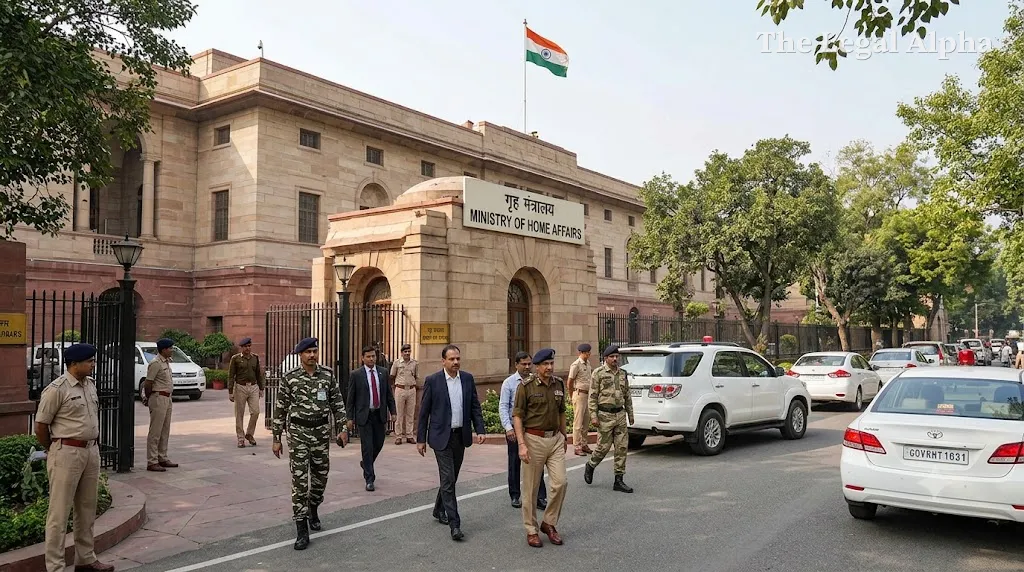
The Ministry of Home Affairs notified the enforcement of the Central Armed Police Forces (General Administration) Act, formally operationalising statutory reservations for Indian Police Service officers across leadership tiers within central paramilitary forces. The statutory framework applies across five primary organisations: the Central Reserve Police Force, Border Security Force, Central Industrial Security Force, Indo-Tibetan Border Police, and Sashastra Seema Bal.
The move comes against the backdrop of long-standing friction between directly recruited cadre officers and deputationists, as well as recent scrutiny from the Supreme Court concerning career stagnation and deputation caps within the paramilitary ranks.
Legal Topic
-
Area of Law: Service Law / Constitutional Law
-
Sub-topic: Deputation, Cadre Allocation, and Public Employment
Core Legal Issue
The controversy centres on whether the executive and legislature can statutorily reserve a fixed quota of apex command posts for an external civil service—the IPS—over organic, directly recruited cadre officers who have spent their entire careers within paramilitary formations.
At stake is the constitutional balance under Articles fourteen and sixteen regarding fair promotion avenues and non-arbitrary service conditions, weighed against the Union government's policy prerogative to determine administrative structures and inter-agency coordination mechanisms for national security bodies.
What Did the Court / Authority Decide?
The Union Home Ministry issued an official notification declaring the appointed day for the enforcement of the legislation. Under the enacted scheme:
-
Specific quotas have been fixed across supervisory and command designations. Half of all Inspector General posts must be filled through external deputation, primarily drawn from the IPS.
-
At the Additional Director General tier, at least sixty-seven percent of sanctioned positions are mandated for deputationists.
-
All posts at the apex levels of Director General and Special Director General remain designated for deputation.
-
Concurrently, the Union Home Ministry clarified before the Supreme Court that continuing deputations remains legally sound, maintaining that previous judicial observations directing a phased drawdown did not prohibit the intake of deputation officers altogether.
Key Legal Points
-
Statutory Codification of Deputation Quotas: The Act formalises what was historically managed through administrative executive orders and service recruitment rules, giving statutory backing to IPS induction at top levels.
-
Impact on Cadre Restructuring: Directly recruited cadre personnel face statutory caps on promotion into senior operational command, limiting upward career progression to lower and middle-management rungs.
-
Interplay with Supreme Court Directives: The enforcement directly interacts with prior apex court directions addressing cadre stagnation, where judicial benches sought to phase out excessive external deputation.
-
Union Regulatory Authority: The legislation exercises the Union's legislative competence to govern the administration and leadership structure of central armed forces deployed for internal security and border control.
Relevant Law
-
Central Armed Police Forces (General Administration) Act, 2026: Sections notifying appointed commencement and prescribing fixed deputation quotas across senior supervisory tiers.
-
Constitution of India:
-
Article 14 (Equality before law and protection against arbitrary state action)
-
Article 16 (Equality of opportunity in matters of public employment)
-
Article 309 (Regulation of recruitment and conditions of service of persons serving the Union)
-
-
All India Services Act, 1951: Provisions governing IPS cadre deputation to central agencies.
Arguments of the Parties
Paramilitary Cadre Officers
Cadre officers have consistently argued that reserving top leadership slots for an external service severely impairs their promotional avenues, leading to acute stagnation and low morale. They contend that personnel with decades of tactical, ground-level operational experience are routinely subordinated to officers lacking comparable paramilitary operational exposure, running contrary to principles of fair service progression.
Union Government / State
The Union has maintained that central forces frequently operate in tandem with state police forces and intelligence agencies during counter-insurgency, anti-terror, and law-and-order duties. From this perspective, IPS officers provide indispensable horizontal coordination between state governments and the Centre, and the legislative framework represents a legitimate exercise of sovereign policy in structuring force commands.
Why Does It Matter?
This legislation solidifies the institutional dominance of the Indian Police Service over national security forces, closing the door on purely internal command trajectories within paramilitary organisations. It impacts tens of thousands of cadre officers across border and internal security forces who have repeatedly litigated against cadre glass ceilings.
Legally, it establishes a high hurdle for ongoing and future service petitions: courts must now evaluate the constitutional validity of a primary statute rather than merely testing discretionary recruitment circulars or executive notifications against service parity jurisprudence.
Legal Takeaway
By enacting statutory quotas for IPS deputationists across Inspector General and higher leadership ranks, the Union has placed the paramilitary command structure on a formal legislative footing. Any future challenge by cadre officers will require demonstrating that statutory reservations infringe fundamental service rights under the Constitution, rather than arguing procedural arbitrariness against executive rules.
Sources
-
Primary Source: Ministry of Home Affairs Notification bringing into force the Central Armed Police Forces (General Administration) Act; Union Home Secretary Affidavit / Submissions before the Supreme Court of India.
-
Additional Sources: The Times of India; judicial records concerning CAPF cadre parity petitions.