Kerala High Court Directs Vigilance to Register Corruption FIR Against Former Chief Minister Pinarayi Vijayan and Family
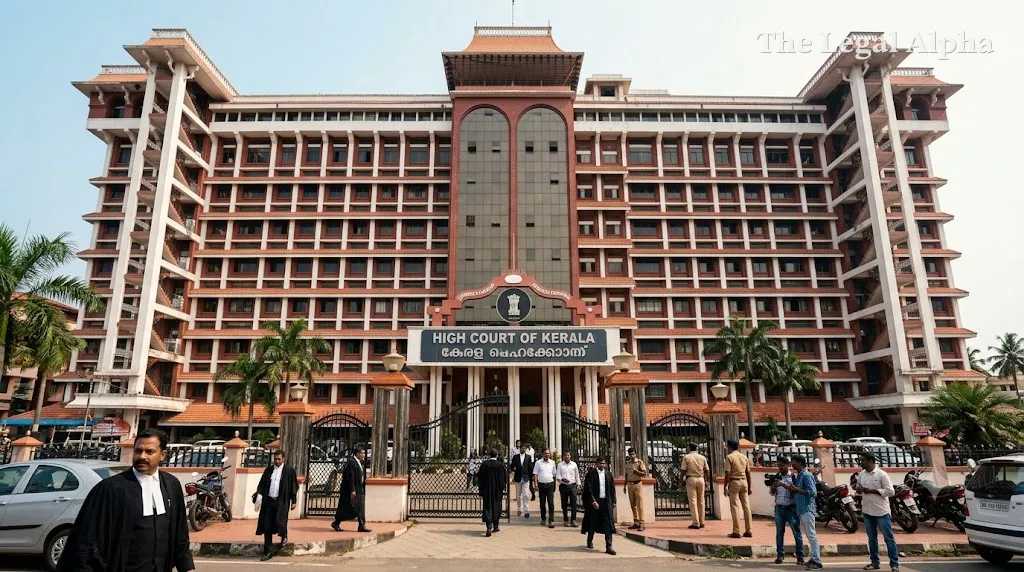
The Kerala High Court has directed the State Vigilance and Anti-Corruption Bureau to register a formal First Information Report against former Chief Minister Pinarayi Vijayan, his daughter Veena T, and his son-in-law P. A. Mohamed Riyas in connection with the Cochin Minerals and Rutile Limited payoff matter.
The direction arose from a petition filed by advocate K. M. Shajahan, who contended that state investigative agencies ought to register a regular criminal case instead of conducting protracted preliminary inquiries, especially given the material already uncovered and forwarded by central agencies. The matter has triggered wide interest because it orders statutory criminal proceedings against high-ranking political figures under anti-graft legislation.
Legal Topic
-
Area of Law: Criminal Law / Anti-Corruption Law
-
Sub-topic: Registration of FIR / Threshold for Preliminary Inquiry under the Prevention of Corruption Act
Core Legal Issue
The core legal question before the High Court was whether the state investigating agency was justified in withholding the registration of an FIR to conduct a preliminary inquiry, or whether the documentation and evidence forwarded by statutory authorities—specifically the Enforcement Directorate—already disclosed the commission of cognizable offences under the Prevention of Corruption Act.
Under settled criminal jurisprudence governing public servants, authorities often use preliminary inquiries to filter out vexatious complaints. The court had to determine whether requiring a preliminary inquiry in this case was legally warranted or an impermissible procedural roadblock given the existing threshold of primary material.
What Did the Court Decide?
A single-judge bench of Justice A. Badharudeen allowed the writ petition, holding that the information and documentary material placed on record established sufficient primary evidence disclosing cognizable offences under the anti-graft framework.
The Court ruled that when an official report accompanied by statements and financial trails discloses a prima facie case, undertaking another preliminary inquiry is redundant and legally unwarranted. Consequently, the High Court directed the Vigilance authorities to promptly register an FIR against the named persons and instructed the Enforcement Directorate to transmit all relevant evidentiary records to the state investigating agency to facilitate the criminal probe. The court clarified that the order strictly relates to the registration of a regular investigation and does not make a final determination on guilt.
Key Legal Points
-
Cognizable Threshold: When material submitted before an authority unequivocally discloses cognizable anti-graft offences, registering an FIR is mandatory rather than optional.
-
Redundancy of Preliminary Inquiry: A preliminary inquiry is an exception intended to verify whether allegations disclose a crime; it cannot be treated as a parallel mini-trial or invoked when concrete evidentiary documents have already been compiled by statutory agencies.
-
Inter-Agency Evidentiary Sharing: Financial intelligence and investigative dossiers assembled by central bodies can serve as an actionable basis for state vigilance agencies to commence a statutory investigation.
-
Separation of Investigation from Guilt: The registration of an FIR marks only the commencement of the investigatory process, leaving issues of culpability and trial proof to statutory procedure.
Relevant Law
-
Prevention of Corruption Act, 1988: Provisions governing public servant gratification, criminal misconduct, and abetment.
-
Code of Criminal Procedure, 1973 / Bharatiya Nagarik Suraksha Sanhita, 2023: Statutory mandates governing the duty of police officers to register information regarding cognizable offences.
-
Judicial Precedent (Lalita Kumari v. Government of Uttar Pradesh): The landmark Supreme Court ruling establishing mandatory registration of an FIR upon disclosure of cognizable offences, while circumscribing the narrow scope where preliminary inquiries are permissible.
Arguments of the Parties
Petitioner
The petitioner submitted that the Enforcement Directorate’s report, alongside findings concerning bogus transactions routed to corporate entities without underlying consultancy services, established clear ingredients of illegal gratification. It was argued that the vigilance department’s failure to register a formal FIR constituted an abdication of statutory duty, and that subjecting comprehensive findings to further preliminary checks served only to delay due process.
Respondents
The state authorities submitted that complaints involving elected public functionaries warrant caution and preliminary screening to eliminate unsubstantiated or frivolous charges before initiating full-blown criminal proceedings.
Representatives for the accused leaders contended that the allegations were politically motivated, devoid of quid pro quo, and that the financial agreements were legitimate corporate commercial arrangements rather than criminal misconduct.
Why Does It Matter?
This ruling reinforces the procedural limits of preliminary inquiries in anti-corruption jurisprudence. In corruption allegations involving high-ranking public figures, investigative agencies frequently defer FIR registration behind lengthy administrative verifications.
By holding that detailed evidence gathered by statutory authorities leaves no scope for an additional preliminary inquiry, the decision sets an important precedent for inter-agency coordination. It signals to vigilance departments that once documentation discloses actionable wrongdoing, administrative discretion cannot be used to delay the formal commencement of a criminal investigation.
Legal Takeaway
The registration of an FIR is non-negotiable when available records disclose a cognizable corruption offence. Investigating bodies cannot use preliminary inquiries as a stalling mechanism when substantive findings and documentary trails are already in hand.
Sources
-
Primary Source: Order of the Kerala High Court in Criminal Writ Petition / Vigilance Petition, Bench of Justice A. Badharudeen (decided October 9, 2026).
-
Additional Sources: Reports and official communications by the Enforcement Directorate and Vigilance & Anti-Corruption Bureau; Proceedings before the Income Tax Interim Settlement Board.