Madras High Court Says Non-Jain Trader Cannot Justify Honest Use of Jain Deity Name in Trademark Dispute
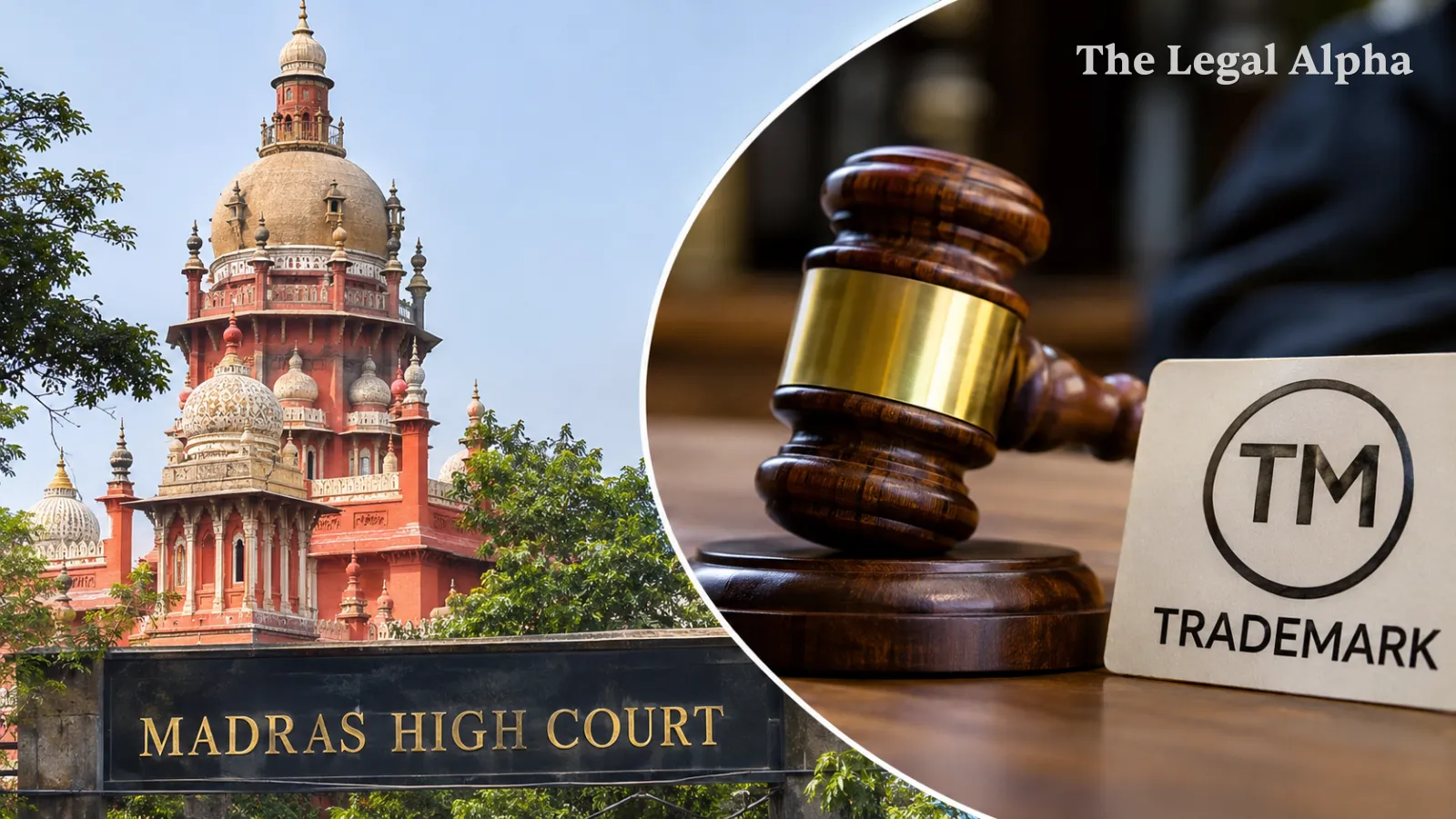
The Madras High Court has granted interim protection to a Chennai-based hardware business in a trademark dispute involving the use of the word “NAKODA”, a name associated with a Jain deity.
In Kailash Chand Surana v. Shiv Mangal Singh, Justice P.B. Balaji observed that a trader who does not belong to the Jain community could not claim to have honestly adopted the name of a Jain deity as a trademark in the circumstances of the case.
The dispute involved two businesses manufacturing and selling metal screws. The plaintiff, Kailash Chand Surana, proprietor of Kalptaru Enterprise, accused Shiv Mangal Singh, proprietor of Bengaluru-based AJ and Sons, of using a deceptively similar trademark and creating confusion among customers.
The Court considered the defendant's adoption of the mark SNE NAKODA to be dishonest and not bona fide.
Legal Topic
Area of Law: Intellectual Property Law
Sub-topic: Trademark Infringement, Passing Off and Protection of Religious Names
Core Legal Issue
The principal question before the Court was whether the defendant could claim honest adoption of the trademark SNE NAKODA despite the plaintiff's earlier use of similar marks and the defendant's alleged lack of a bona fide basis for adopting the name.
The Court also had to consider whether the similarity between the competing marks, when used for identical products, was likely to mislead consumers and amount to trademark infringement or passing off.
What Did the Court Decide?
In its order dated November 13, 2026, the Madras High Court allowed both interim applications filed by Surana in O.A. Nos. 273 and 274 of 2026.
Justice P.B. Balaji found that the plaintiff had established a prima facie case for protection of his trademark rights. The Court noted the following circumstances:
-
The plaintiff had demonstrated use of the SNE NAKODA mark since September 2017.
-
The defendant's claimed use from January 2021 required supporting evidence.
-
Both businesses operated in the same product category, dealing in metal screws and related hardware.
-
The similarity between the marks was capable of misleading customers.
-
The defendant's adoption of the mark was found to be mala fide rather than an honest commercial choice.
The Court also rejected the argument that the plaintiff's annual turnover of approximately ₹25 crore was insignificant. It explained that turnover must be assessed in the context of the goods being sold, particularly where relatively inexpensive products such as nuts and screws are involved.
The interim injunction restrains the defendant from infringing the plaintiff's protected marks and passing off its products under the disputed marks while the commercial suit remains pending.
Key Legal Points
-
Honest adoption of trademarks: The circumstances and intention behind adopting a mark are relevant when determining whether its use is bona fide.
-
Religious significance: The Court considered the defendant's lack of association with the Jain community while assessing the claimed honest adoption of NAKODA.
-
Prior use: Evidence of earlier commercial use can play an important role in establishing goodwill and protecting trademark rights.
-
Likelihood of confusion: Similar marks used for identical products can mislead consumers and support an action for infringement or passing off.
-
Commercial goodwill: Business turnover must be assessed in relation to the nature and value of the products rather than simply compared with larger companies.
Relevant Law
The dispute concerns the protection of registered trademarks and the legal remedies available against infringement and passing off.
Trade Marks Act, 1999
-
Section 28: Rights conferred by registration of a trademark.
-
Section 29: Infringement of registered trademarks.
-
Section 27(2): Preservation of the common law remedy of passing off.
The Court also referred to established Supreme Court principles in T.V. Venugopal v. Ushodaya Enterprises Ltd. concerning reputation and goodwill, and Midas Hygiene Industries (P) Ltd. v. Sudhir Bhatia concerning injunctions in cases involving dishonest adoption of trademarks.
Arguments of the Parties
Plaintiff – Kailash Chand Surana
The plaintiff argued that he had been manufacturing and selling metal screws since 2017 and had acquired substantial goodwill through trademarks including NAKODA PROPLUS and PRO NAKODA.
He maintained that SNE NAKODA originated from the earlier partnership firm Sree Nakoda Enterprises, established in 2007. According to him, the defendant subsequently adopted a deceptively similar mark for competing hardware products, creating confusion in the market.
The plaintiff also relied on his sales figures and commercial presence to demonstrate the reputation acquired by his business.
Defendant – Shiv Mangal Singh
The defendant contended that no individual trader could claim exclusive ownership over the name of a Jain deity.
He further argued that neither party had registration for SNE NAKODA and that the businesses operated in different geographical markets. He also questioned whether the plaintiff's reported turnover of ₹25 crore was sufficient to establish substantial commercial reputation.
The Court was not persuaded by these arguments at the interim stage.
Why Does It Matter?
The order highlights the importance of examining the circumstances in which a business adopts a trademark, particularly when the mark has religious or cultural significance.
For businesses, the decision reinforces that merely arguing that a religious name is available for public use may not be sufficient to establish honest adoption. Courts may examine prior commercial use, the origin of the mark, the parties' conduct and the likelihood of consumer confusion.
The ruling is also relevant for small and medium-sized manufacturers. It demonstrates that commercial goodwill cannot be assessed solely by comparing turnover with that of larger companies. The nature of the products and the market in which the business operates are equally important considerations.
However, the decision is an interim ruling based on the facts presented before the Court. It should not be interpreted as establishing a general prohibition on non-Jains using Jain deity names as trademarks. The underlying commercial suit remains pending.
Legal Takeaway
The Madras High Court has emphasised that trademark adoption must be assessed in light of its surrounding circumstances, including prior use, goodwill and the possibility of consumer confusion. A claim that a religious name is available for public use does not automatically establish bona fide adoption, particularly where the evidence indicates an attempt to benefit from another trader's established reputation.
Sources
Primary Source:
- Kailash Chand Surana v. Shiv Mangal Singh, O.A. Nos. 273 and 274 of 2026 in C.S. (Comm. Div.) No. 95 of 2026, Madras High Court, order dated November 13, 2026. Read the Court's Order.
Additional Sources:
- Bar & Bench – Report on the Madras High Court's trademark ruling.
- T.V. Venugopal v. Ushodaya Enterprises Ltd. – Supreme Court of India.
- Midas Hygiene Industries (P) Ltd. v. Sudhir Bhatia – Supreme Court of India.