Kerala High Court Urges Media Restraint in Reporting Oral Exchanges Between Judges and Lawyers
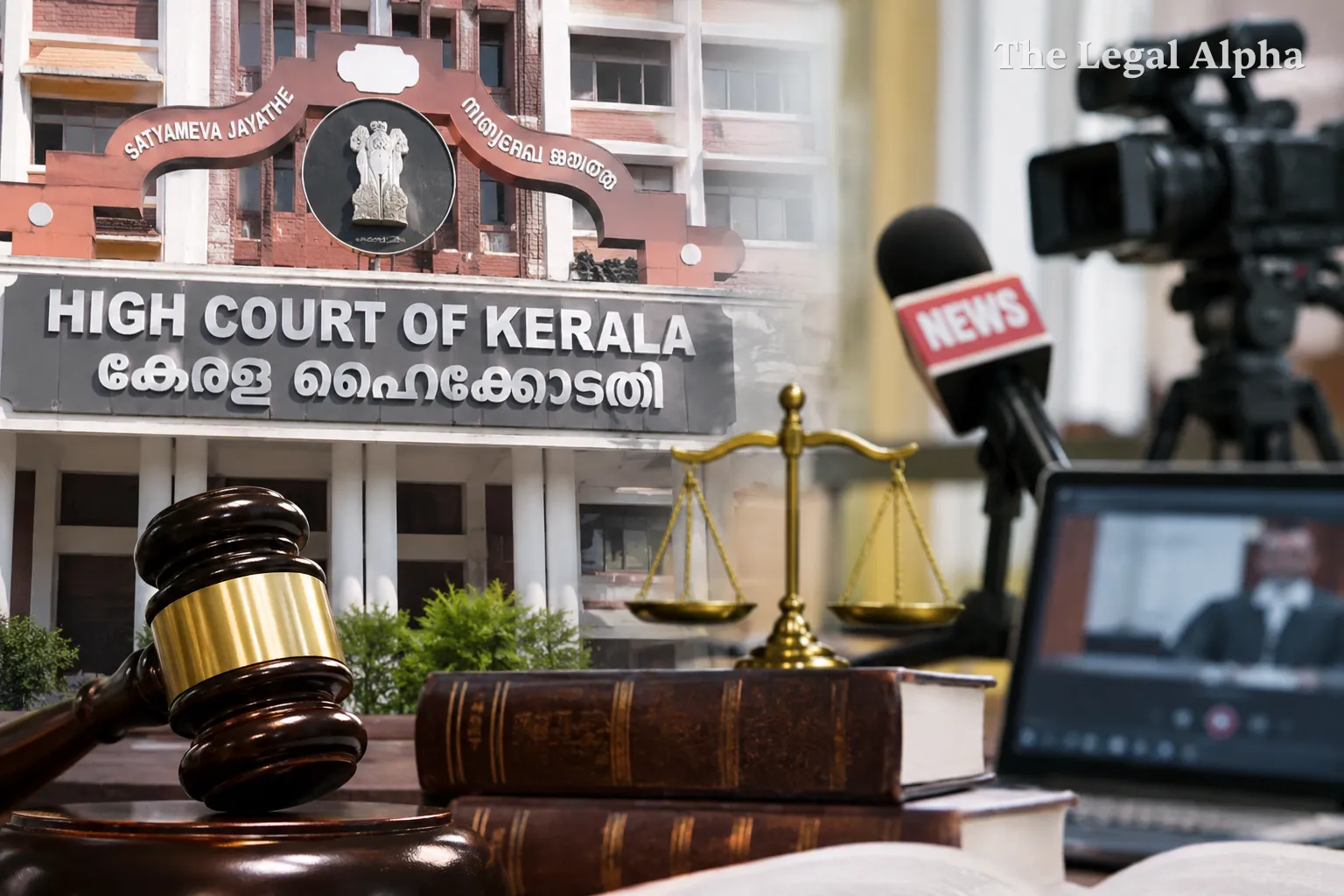
The Kerala High Court has cautioned media organisations against presenting oral observations and informal courtroom exchanges between judges and lawyers as news, particularly when such reporting could damage someone's professional reputation.
Justice P.V. Kunhikrishnan made the observations while deciding a writ petition filed by advocate T.B. Mini, who sought criminal contempt proceedings against former Ernakulam Principal District and Sessions Judge Honey M. Varghese over allegedly derogatory remarks concerning her courtroom conduct.
The Court emphasised that courtroom conversations must be understood in their proper context. Observations made during arguments do not necessarily represent a judge's final opinion, and judges formally express their decisions through judgments and orders.
The Court also highlighted the responsibility of both the judiciary and the media in an environment where courtroom exchanges can quickly circulate through television channels, YouTube and social media platforms.
Legal Topic
Area of Law: Constitutional Law and Contempt of Courts
Sub-topic: Criminal Contempt, Judicial Conduct and Media Reporting of Court Proceedings
Core Legal Issue
The central legal question was whether criminal contempt proceedings could be initiated against a judicial officer based on allegations of derogatory courtroom remarks when the petitioner could not produce sufficient material establishing that the statements had actually been made.
The matter also raised broader concerns about the reporting of oral judicial observations, the professional dignity of advocates and the potential reputational consequences of circulating courtroom exchanges without considering their context.
What Did the Court Decide?
The High Court dismissed the writ petition, holding that there was insufficient evidence to establish that the alleged remarks had actually been made by the judicial officer.
The Court noted that:
-
Advocate T.B. Mini was not personally present when the alleged remarks were made on January 12, 2026.
-
She had learnt about the incident through her junior advocate.
-
No affidavit from the junior advocate was filed before the High Court to substantiate the allegation.
-
The alleged remarks were not recorded in the official judicial proceedings.
-
Media reports and hearsay allegations alone could not provide a sufficient foundation for initiating contempt proceedings against a judicial officer.
The Court also declined to issue notice to the former Sessions Judge merely to determine whether the alleged remarks had been made.
Importantly, Justice Kunhikrishnan agreed with the Advocate General's conclusion that even if the alleged remarks were assumed to be true, they would not amount to criminal contempt in the circumstances of the case.
The Court rejected the two interlocutory applications seeking to implead media organisations and summon records relating to the underlying criminal proceedings.
Key Legal Points
-
Judicial officers and contempt: Section 16 of the Contempt of Courts Act, 1971, extends contempt liability to judges, magistrates and other persons acting judicially.
-
Evidence is essential: Contempt proceedings cannot be initiated against a judicial officer solely on the basis of hearsay allegations and media coverage.
-
Professional dignity of lawyers: Advocates are entitled to dignity and fair treatment from the Bench while discharging their professional responsibilities.
-
Responsible media reporting: Oral exchanges between judges and lawyers should not automatically be presented as news without considering their context and possible reputational consequences.
-
Judicial observations versus judgments: Oral courtroom remarks do not necessarily represent the final judicial position. Formal judicial decisions are reflected in judgments and orders.
Relevant Law
Contempt of Courts Act, 1971
-
Section 2(c): Defines criminal contempt.
-
Section 15: Deals with cognisance of criminal contempt.
-
Section 16: Addresses contempt committed by judges, magistrates and other persons acting judicially.
Contempt of Courts (High Court of Kerala) Rules, 1988
- Rule 7: Referred to in connection with the procedure for considering suo motu contempt proceedings.
Important Judicial Precedents
-
Berely v. Xavier and Another [1986 KHC 278]: The Court relied on the principle that excessive or extravagant language must be distinguished from criminal contempt.
-
State of Uttar Pradesh v. Mohammed Naim [AIR 1964 SC 703]: Discusses the standards governing judicial observations and the need for restraint in judicial language.
-
Joseph Kuzhanjalil v. Joseph Pulikunnel [1999 KHC 557]: Discusses procedural safeguards governing the initiation of contempt proceedings.
Arguments of the Parties
Petitioner – Advocate T.B. Mini
The petitioner argued that the alleged remarks were false, derogatory and damaging to her professional reputation. She contended that the comments questioned her competence and integrity as an advocate and resulted in online harassment, including sexist and body-shaming remarks.
She sought initiation of criminal contempt proceedings under Section 16 of the 1971 Act, removal of the alleged remarks from public circulation and appropriate directions to restore her professional standing.
Respondents
The Additional Advocate General submitted that the Advocate General had already examined the allegations and concluded that they did not constitute criminal contempt.
Reliance was placed on Berely v. Xavier and Another, particularly the distinction between excessive language and conduct amounting to contempt of court.
The High Court also examined the absence of supporting evidence and the fact that the petitioner was not personally present when the alleged remarks were made.
Why Does It Matter?
The judgment highlights the delicate relationship between judicial proceedings, professional dignity and responsible media reporting.
Courtroom exchanges frequently involve questions, observations and informal dialogue intended to clarify legal arguments. Treating every such exchange as a definitive judicial opinion can create a misleading impression about the court's position.
The observations are particularly relevant in the age of digital journalism, where short video clips and isolated courtroom comments can quickly circulate and generate public reactions before their full context is understood.
At the same time, the judgment recognises that advocates deserve dignity and fair treatment from judges. Its observations on media restraint should be understood in the context of responsible reporting, rather than as a blanket prohibition on reporting court proceedings.
The decision also reinforces an important procedural principle: allegations of contempt against judicial officers require a proper evidentiary foundation and cannot rest merely on unverified accounts.
Legal Takeaway
The Kerala High Court has emphasised that oral courtroom exchanges should not automatically be treated as news without considering their context and potential consequences. It has also clarified that contempt proceedings against judicial officers cannot be founded solely on hearsay allegations or media reports without supporting evidence.
Sources
Primary Source:
- Kerala High Court, T.B. Mini v. The Hon'ble Registrar General, High Court of Kerala and Others, W.P.(C) No. 37581 of 2026, decided on November 17, 2026, reported as 2026:KER:87660.
Additional Sources: