Missing a Legislative Meeting Does Not Amount to Defection Under the Tenth Schedule, Eknath Shinde Faction Tells Supreme Court
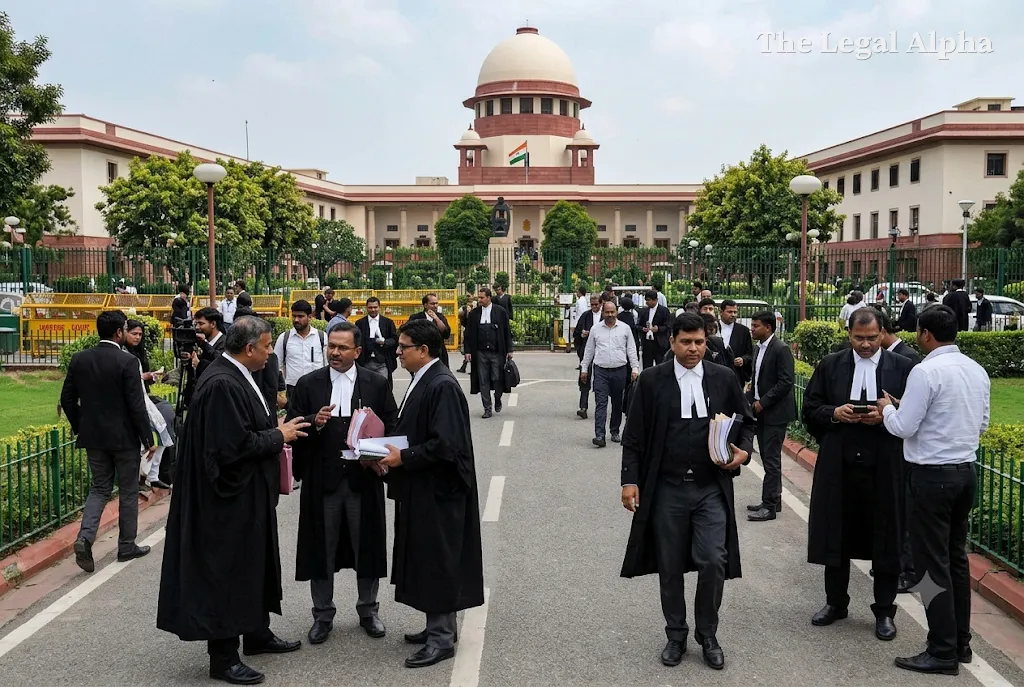
During ongoing hearings in the long-running Shiv Sena political dispute, legal counsel representing Maharashtra leader Eknath Shinde urged the Supreme Court to distinguish between internal party dissent and constitutional defection. Appearing before a three-judge bench led by Chief Justice of India Surya Kant alongside Justices Joymalya Bagchi and V Mohana, Senior Advocate Dhruv Mehta contended that skipping a meeting of elected legislators does not automatically mean an MLA has abandoned their parent political party.
The submissions were made in connection with petitions filed by the Uddhav Balasaheb Thackeray (UBT) faction challenging two major rulings: the Maharashtra Legislative Assembly Speaker's decision not to disqualify Shinde-camp MLAs, and the Election Commission of India's (ECI) order recognising the Shinde group as the official Shiv Sena with rights to the 'bow and arrow' election symbol.
Legal Topic
Area of Law: Constitutional Law
Sub-topic: Anti-Defection Law / Tenth Schedule Disqualification
Core Legal Issue
The central legal question before the Supreme Court is whether an elected legislator’s absence from a legislative party meeting—called during a period of internal political turmoil—can be legally treated as "voluntarily giving up" membership of their original political party under Paragraph 2(1)(a) of the Tenth Schedule to the Constitution of India.
What Did the Court / Authority Decide?
The Supreme Court has not yet delivered a final verdict on these petitions. The proceedings remain at the stage of oral arguments, with Senior Advocate Dhruv Mehta presenting submissions on behalf of the Eknath Shinde faction and arguments scheduled to continue. No interim directions or final orders were issued during this hearing.
Key Legal Points
-
Legislative Party vs. Political Party: Under the Tenth Schedule, disqualification for defection is triggered when a member voluntarily gives up the membership of their original political party, not merely by skipping a gathering of the legislative party (the group of elected MLAs).
-
Dissent Is Not Defection: Internal disagreement or political dissent within a party structure does not cross the constitutional threshold into defection unless accompanied by conduct clearly demonstrating severing of ties with the parent organisation.
-
Nature of Party Communications: A routine message or call to attend a reconciliation meeting—especially one lacking a formal agenda or issued after the meeting has already commenced—does not carry the binding legal force of a formal party whip.
-
Evidentiary Consistency in Disqualification Pleas: Disqualification petitions must rely on consistent, credible evidence; contradictory claims regarding attendance records undermine allegations of wilful defiance.
Relevant Law
-
Constitution of India, Tenth Schedule, Paragraph 2(1)(a): Provides that a member of a House belonging to any political party becomes disqualified if they voluntarily give up their membership of such political party.
-
Constitution of India, Tenth Schedule, Paragraph 2(1)(b): Governs disqualification arising from voting or abstaining from voting in the House contrary to any direction (whip) issued by the political party.
Arguments of the Parties
Petitioner / Appellant (Uddhav Balasaheb Thackeray Faction)
The petitioners, through earlier disqualification petitions filed by MLA Sunil Prabhu, contended that MLAs aligned with Eknath Shinde voluntarily gave up their party membership by remaining absent from a crucial legislative party meeting held on June 21, 2022, ahead of the Maharashtra Legislative Council elections. They maintained that this absence defied party directions and warranted disqualification under the Tenth Schedule.
Respondent / Opposing Party (Eknath Shinde Faction)
Senior Advocate Dhruv Mehta argued that the disqualification notices were issued on the letterhead of the legislative office rather than the political party, and that missing a legislative meeting does not equate to leaving the political party itself. He submitted that a WhatsApp message sent to Shinde's personal assistant at 12:31 PM—one minute after the 12:30 PM meeting had already started—was merely an informal attempt at reconciliation without a formal agenda or valid whip. Furthermore, Mehta pointed out contradictions in the petitioners' reliance on an attendance register, noting that the Assembly Speaker had already found the document unreliable due to disputed and allegedly forged signatures.
Why Does It Matter?
The outcome of this dispute carries significant implications for legislative stability and intra-party democracy across India. Clarifying the boundary between legitimate internal dissent and constitutional defection affects how political parties enforce discipline and how Speakers evaluate disqualification petitions during leadership splits. A clear judicial standard on what constitutes a valid whip versus an informal meeting notice, as well as the distinction between a legislative wing and an organisational party, will guide future constitutional benches and presiding officers handling political crises.
Legal Takeaway
Absence from a legislative party meeting, on its own, does not automatically prove that a lawmaker has abandoned their parent political party. To establish defection under the Tenth Schedule, petitioners must demonstrate clear, unambiguous conduct showing the legislator severed ties with the political party itself or defied a validly issued whip.
Sources
Primary Source:
Oral submissions before the Supreme Court of India (Bench comprising Chief Justice of India Surya Kant, Justice Joymalya Bagchi, and Justice V Mohana) in the Shiv Sena disqualification and symbol dispute proceedings (November 2026).
Additional Sources:
-
Constitution of India, Tenth Schedule (Provisions as to disqualification on ground of defection).
-
Background reporting on Supreme Court proceedings regarding the Maharashtra Legislative Assembly Speaker's order and Election Commission of India ruling.