Karnataka High Court Halts Police Probes Into Alleged Bulk Voter Deletions Pending Election Commission Scrutiny
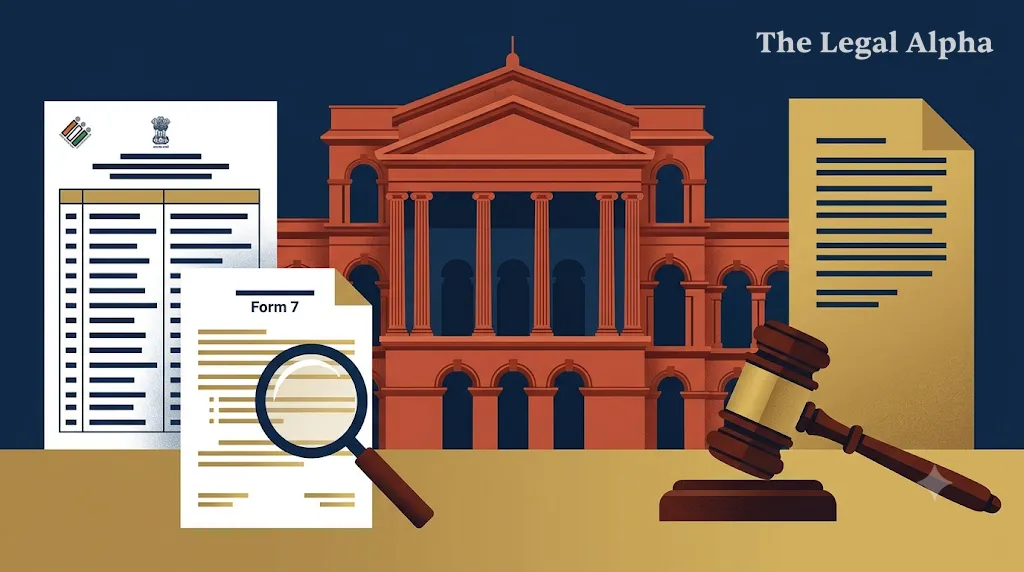
The Karnataka High Court on Tuesday, November 17, 2026, paused police investigations into three First Information Reports (FIRs) registered against ten individuals accused of submitting fraudulent Form 7 applications to remove eligible voters—predominantly from the Muslim community—from Karnataka’s electoral rolls. With this ruling, Justice Anant Ramanath Hegde has now stayed police probes across five separate criminal cases stemming from Karnataka’s Special Intensive Revision (SIR) of voter lists.
The disputes originated from allegations that political workers and Booth Level Agents filed thousands of bulk Form 7 objections—the official form used to object to an existing voter's inclusion—using forged signatures, false declarations, and impersonation across constituencies including Jayanagar, Malleshwaram, Yeshwanthpur, Kodagu, and Mysuru. While the State government sought to lift earlier interim stays and proceed with criminal investigations, the High Court ruled that election authorities must first complete their statutory verification of the disputed forms before the police can step in.
Legal Topic
Area of Law: Election Law and Criminal Procedure Sub-topic: Electoral Roll Revision / Parallel Criminal Investigation
Core Legal Issue
The central legal question before the Karnataka High Court was whether the police can conduct parallel criminal investigations into allegations of false declarations and forgery in Form 7 voter-deletion applications before the Electoral Registration Officer (ERO) completes the mandatory statutory inquiry under election laws.
Specifically, the Court had to determine how the self-contained administrative mechanism under the Registration of Electors Rules, 1960, interacts with criminal prosecution under the Representation of the People Act, 1950, when bulk objections to electoral rolls are challenged as fraudulent.
What Did the Court Decide?
In a set of interim orders passed across five connected petitions, Justice Anant Ramanath Hegde temporarily halted further police investigation while keeping the underlying criminal cases pending.
-
New Interim Stays Granted: The Court stayed police investigations in three newly heard petitions involving ten accused individuals: Ramakrishna & Another, U H Lokesh & Others, and Harish Kumar C & Others.
-
Existing Stays Extended: The Court refused to vacate the interim stays granted on October 9, 2026, in two earlier petitions filed by G S Vasantha Lakshmi and Deepak Singh R, thereby extending protection against police probes in all five matters.
-
Directions to the Election Commission: The Court directed the Election Commission of India (ECI) to submit records detailing the actions and decisions taken by Electoral Registration Officers on the disputed Form 7 applications.
-
Liberty to Modify: The Court granted liberty to the complainants to seek modification or vacation of the interim stay orders, and permitted the State government to move for modification once it receives the official verification records from the ECI.
Key Legal Points
-
Primacy of Statutory Electoral Scrutiny: The Registration of Electors Rules, 1960, establish a comprehensive, self-contained framework for reviewing objections to electoral rolls, requiring the Electoral Registration Officer to verify claims, notify affected voters, and conduct hearings before altering voter lists.
-
Prematurity of Criminal Probes: Findings recorded by the Registration Officer during the administrative inquiry are essential foundational material to determine whether an FIR should ultimately be quashed or if a criminal investigation is genuinely warranted.
-
Evaluating Signature Discrepancies: A mere visual mismatch in signatures on a Form 7 application does not automatically prove criminal forgery at a preliminary stage; the ERO must first verify with the named applicant whether they actually signed the form.
-
Built-in Penal Consequences: Election law already accounts for fraudulent filings under Section 31 of the Representation of the People Act, 1950, which penalizes knowingly false written declarations during electoral roll revisions.
Relevant Law
-
Registration of Electors Rules, 1960 (Rules 15 to 23): Govern the administrative procedure for handling claims and objections to electoral rolls (including Form 7), mandating scrutiny, notice, personal hearing of affected voters, inquiry by the Electoral Registration Officer, and a formal appellate remedy.
-
Representation of the People Act, 1950 (Section 31): Criminalizes the act of making a false written statement or declaration that a person knows or believes to be false in connection with the preparation, revision, or correction of an electoral roll, punishable by up to one year of imprisonment, a fine, or both.
Arguments of the Parties
Petitioners Represented by Senior Advocates Aruna Shyam M and Vivek Subba Reddy along with advocate K G Aiyappa, the petitioners argued that Booth Level Agents are legally permitted to submit Form 7 objections on behalf of political parties during voter list revisions. They contended that the validity and accuracy of these applications fall strictly within the jurisdiction of the Electoral Registration Officer under the 1960 Rules, making simultaneous police investigations premature and legally unsustainable.
Respondent / State of Karnataka Represented by Advocate General K Shashi Kiran Shetty and State Public Prosecutor B N Jagadeesha, the State strongly opposed the stays. The State argued that the right to vote is a foundational democratic right and maintained that individuals cannot be allowed to abuse the Special Intensive Revision process by submitting fabricated or forged applications to disenfranchise legitimate voters without facing immediate criminal scrutiny.
Why Does It Matter?
Disputes over mass voter deletions frequently spark intense political and legal friction during electoral roll revisions across India. By pausing police investigations until election officials finish verifying the disputed forms, the Karnataka High Court has drawn a clear procedural boundary between administrative election oversight and criminal law enforcement.
For election officials, political parties, and voters, this approach ensures that specialized electoral authorities—rather than local police—make the initial factual determination on whether a voter-deletion request is legitimate, erroneous, or fraudulent. At the same time, because the stays are strictly interim and allow the State to seek resumption of the probe once ECI records are produced, the ruling preserves accountability if systematic forgery or targeted disenfranchisement is substantiated by election records.
Legal Takeaway
When allegations of fraud arise over voter-deletion forms during an electoral roll revision, the statutory verification process by the Election Commission must run its course first. Police investigations into alleged forgery or false declarations cannot bypass the Electoral Registration Officer's primary duty to scrutinize the applications and establish the underlying facts.
Sources
Primary Source
Orders of the High Court of Karnataka (Bench of Justice Anant Ramanath Hegde), dated November 17, 2026, in Vasantha Lakshmi G S v. State of Karnataka, Deepak Singh R v. State of Karnataka, Harish Kumar C & Other v. State of Karnataka, Ramakrishna & Another v. State of Karnataka, and U H Lokesh & Others v. State of Karnataka.
Additional Sources
Statutory provisions under the Representation of the People Act, 1950, and the Registration of Electors Rules, 1960.