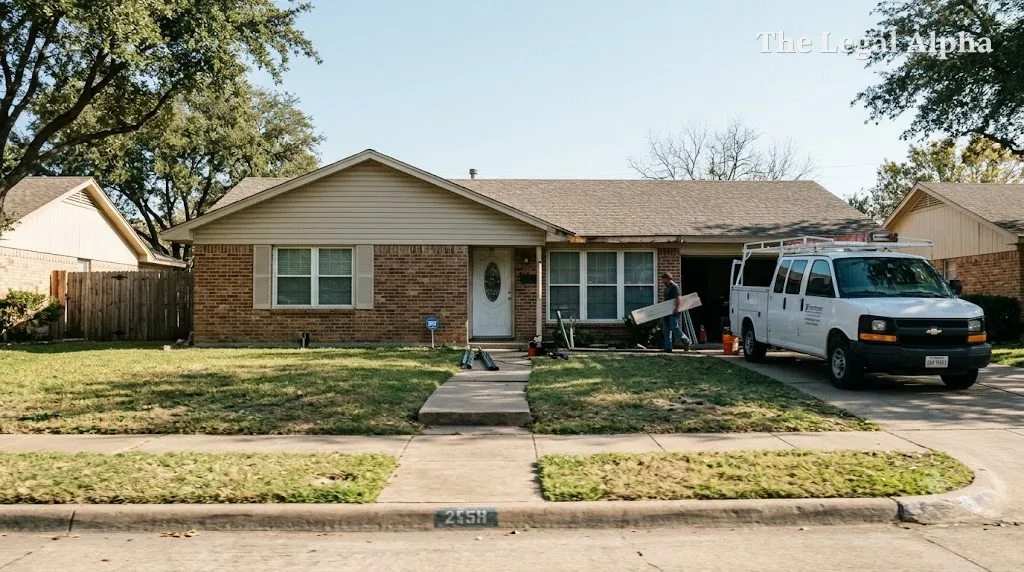
Loan Modification Waives Assignment Challenges in Long-Running Mortgage Foreclosure, Ohio Appeals Court Rules
The Ohio Court of Appeals for the Eighth District affirmed a summary judgment granting Wells Fargo Bank the right to foreclose on a residential property in Cuyahoga County, resolving a seventeen-year dispute involving three successive loan modifications.
The borrower, Grace Doberdruk, acquired the property with her late husband in 2007. Following her husband's death in 2009, she experienced severe financial distress and entered into workout agreements with the loan servicer in 2009, 2014, and 2022 to alter interest rates and payment terms. The 2022 agreement consolidated accrued interest with the principal debt, establishing an unpaid balance of $449,905. When the borrower defaulted after the third modification, Wells Fargo initiated foreclosure proceedings in the Cuyahoga County Court of Common Pleas. While an earlier appellate ruling had dismissed the homeowner's challenge as moot after a sheriff's auction, the Ohio Supreme Court revived the appeal and remanded the case for a decision on the merits, leading to the Eighth District's October 22, 2026 decision upholding the foreclosure decree.
Legal Topic
Area of Law: Real Estate & Banking Law
Sub-topic: Mortgage Foreclosure / Standing and Loan Modification Estoppel
Core Legal Issue
The primary legal issue was whether a surviving spouse who signs a mortgage and later executes a comprehensive loan modification agreement remains bound by the debt, effectively waiving prior defenses regarding mortgage assignment chains and standing.
The court also had to determine whether a deceased co-owner's probate estate must be named as a necessary party when the property is held under a survivorship deed.
What Did the Court Decide?
The Eighth District Court of Appeals affirmed the judgment of the Cuyahoga County Court of Common Pleas in favour of Wells Fargo. Presiding Judge Michelle J. Sheehan held that the bank satisfied all legal prerequisites for foreclosure under Ohio law by submitting the authenticated promissory note, the recorded mortgage, proof of default, and an accounting of the $449,905 debt.
The court ruled that Doberdruk's execution of the 2022 loan modification ratified the security instrument and recognized Wells Fargo's status as note holder and lender. As a result, she waived procedural challenges relating to historical chain-of-title transfers. The court also confirmed that because title vested in the surviving spouse automatically by operation of the survivorship deed upon her husband's death, the deceased spouse's estate possessed no legal interest in the property and was not a necessary party to the action.
Key Legal Points
-
Ratification and Waiver via Modification: Entering into a formal loan modification agreement acknowledging an existing mortgage debt binds the signing homeowner to its amended terms and waives procedural objections concerning prior loan assignments.
-
Survivorship Operation in Foreclosure: When co-owners hold real estate under a survivorship deed, title transfers automatically to the surviving joint owner upon death, eliminating the necessity of joining the decedent's probate estate in a subsequent foreclosure action.
-
Evidentiary Standard for Bank Affidavits: Bank representatives may authenticate loan records and prove default through personal knowledge derived from reviewing regularly maintained business records, even if the affiant did not personally create the historical documents.
-
Standing Established via Note and Mortgage Possession: A financial institution establishes standing to foreclose in Ohio by demonstrating that it is the legal holder of the note or the assignee of the underlying mortgage securing the real estate.
Relevant Law
-
Ohio Revised Code § 5302.17 / § 5302.20: Governing survivorship deeds and the automatic transfer of title upon the demise of a joint tenant.
-
Ohio Rule of Civil Procedure 56: Standards governing summary judgment in foreclosure disputes.
-
Ohio Evidence Rule 803(6): Business records hearsay exception permitting admission of loan default records authenticated by a servicer's affidavit.
-
Ohio Revised Code § 2329.45: Restitution provisions governing reversals of foreclosure decrees following property execution sales.
Arguments of the Parties
Appellant (Grace Doberdruk)
The homeowner contended that the trial court erred in entering summary judgment because Wells Fargo lacked legal standing and failed to establish an unbroken chain of title for mortgage assignments. She also asserted that the proceeding was procedurally defective because her late husband’s probate estate had not been joined as a party, and alleged that the 2022 loan modification lacked a valid signature from the lender.
Appellee (Wells Fargo Bank, N.A.)
Wells Fargo maintained that it possessed standing as the lawful holder of the note and mortgage, having established default and provided timely notice to cure. The bank argued that Doberdruk was personally bound as an original mortgage signatory and had reaffirmed the debt by executing the 2022 modification agreement. The lender further submitted that the decedent's estate held no property interest due to the survivorship deed.
Why Does It Matter?
This decision clarifies the legal enforceability of mortgage modifications in Ohio. For borrowers, the ruling underscores that executing a loan modification is not merely an administrative adjustment of monthly payments; it operates as a substantive reaffirmation of the underlying security agreement and can bar subsequent defenses regarding prior assignment anomalies.
For institutional lenders and loan servicers, the ruling confirms that well-documented modification agreements provide robust protection against technical chain-of-custody attacks. Additionally, it reaffirms standard real-property principles regarding survivorship tenancies, confirming that lenders do not risk procedural dismissal for failing to open or join a deceased spouse's estate when title has vested exclusively in the survivor.
Legal Takeaway
Signing a loan modification agreement legally ratifies the underlying mortgage and forecloses later challenges to the lender’s prior chain of title or standing. Furthermore, where property is held with rights of survivorship, a lender need only proceed against the surviving owner who holds complete title.
Sources
Primary Source:
-
Wells Fargo Bank, Natl. Assn. v. Doberdruk, 2026-Ohio-4137, Appeal No. 113637 (Ohio Ct. App. 8th Dist., decided October 22, 2026).
-
Wells Fargo Bank, N.A. v. Doberdruk, 2026-Ohio-2674, Nos. 2024-1669, 2025-0071 (Ohio Supreme Court, decided July 15, 2026).
Additional Sources:
-
Cuyahoga County Court of Common Pleas, foreclosure and summary judgment proceedings in Wells Fargo Bank, N.A. v. Doberdruk.
-
The Times of India / MSN News report: "In 2007, an Ohio couple bought a home and the husband died two years later; after three loan modifications and a $449,905 foreclosure claim, an October 22 court upheld the bank's right to foreclose" (October 2026).