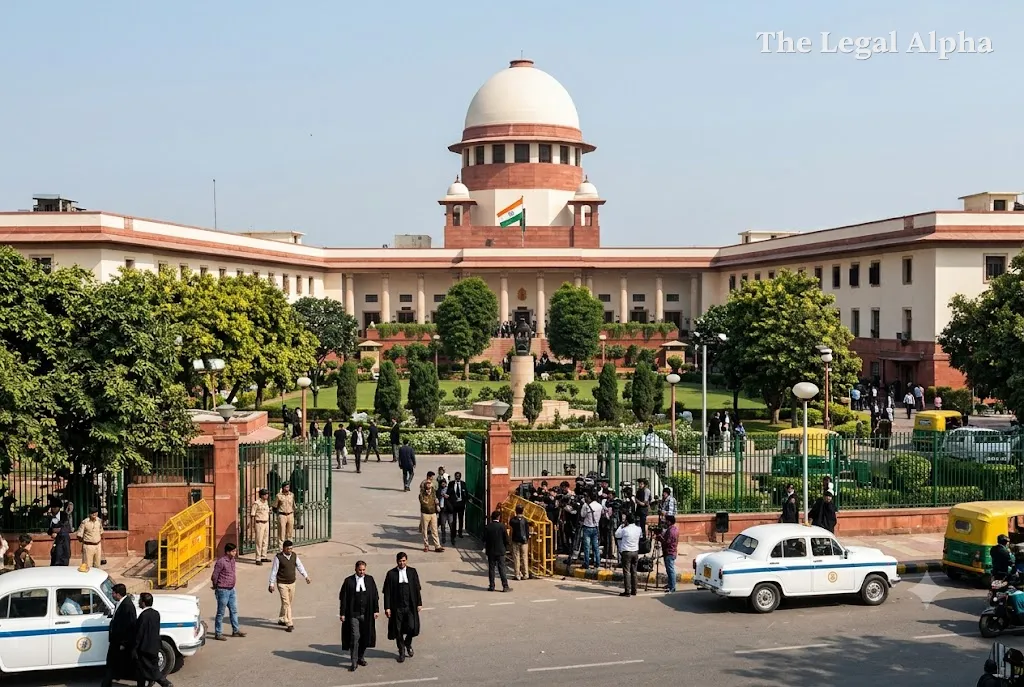
Meerut ‘Blue Drum’ Murder: Convicts Move Allahabad High Court Against Death Penalty, Citing Flaws in Circumstantial Evidence
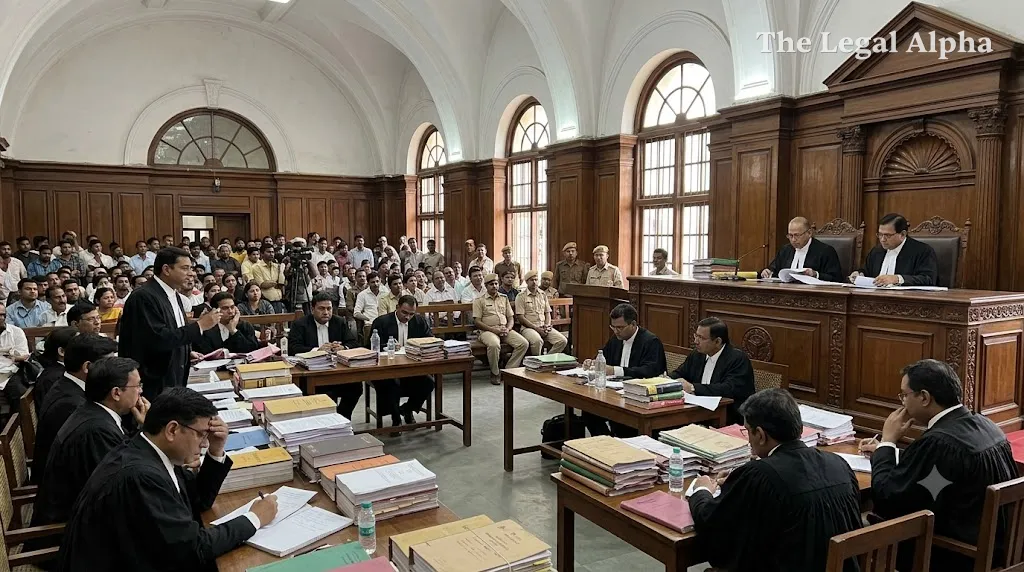
Muskan Rastogi and Sahil Shukla, who were recently sentenced to death by a Meerut sessions court for the murder of Muskan’s husband, Saurabh Rajput, have moved the Allahabad High Court against their conviction and capital punishment.
The case—widely known as the "blue drum murder"—came to light in March 2025 in the Brahmpuri area of Meerut. The prosecution alleged that following Rajput's murder, the duo concealed his body inside a large blue plastic drum filled with concrete and cement to prevent detection.
Following an expedited 13-month trial spanning 126 hearings, the Meerut District and Sessions Court convicted both accused on September 30, 2026, and handed down the death penalty on October 14, 2026, categorising the offence as falling within the "rarest of rare" doctrine. The convicts have now approached the High Court seeking the quashing of their convictions and the annulment of the capital sentence.
Legal Topic
Area of Law: Criminal Law & Procedure
Sub-topic: Capital Punishment / Evaluation of Circumstantial Evidence & Electronic Evidence
Core Legal Issue
The core issue before the Allahabad High Court is whether the trial court erred in convicting the appellants and imposing the death penalty based entirely on circumstantial evidence without the prosecution establishing an unbroken chain of circumstances pointing exclusively to their guilt.
The appeal also brings into question the legal admissibility and evidentiary weight of recovery memos allegedly lacking independent witness attestations, as well as electronic evidence produced without mandatory statutory certificates.
What Did the Court / Authority Decide?
The District and Sessions Court in Meerut found Muskan Rastogi and Sahil Shukla guilty of murder and causing the disappearance of evidence. Finding the nature of the crime exceptionally depraved, the trial judge sentenced both individuals to death alongside a fine of ₹50,000 each. In accordance with statutory procedure, the trial court submitted the death sentence to the High Court for confirmation.
The joint appeal filed by the convicts has now been lodged with the registry of the Allahabad High Court and is scheduled to be heard by a Division Bench. The High Court will adjudicate both the appeal and the statutory death reference simultaneously.
Key Legal Points
-
Chain of Circumstantial Evidence: Under settled Indian criminal jurisprudence, where a conviction is based entirely on circumstantial evidence, every hypothesis except the guilt of the accused must be ruled out beyond reasonable doubt.
-
Admissibility of Electronic Evidence: The appellants have challenged digital and recorded material relied upon by the trial court, alleging failure to furnish mandatory statutory certificates governing electronic records.
-
Recovery and Independent Witnesses: The defense has challenged seizure memos under the law of evidence, asserting procedural infirmities such as the omission of signatures of independent panch witnesses during recoveries.
-
Confirmation of Capital Sentences: Under Indian procedural law, any death sentence passed by a Sessions Court cannot be executed unless confirmed by the High Court after an independent re-appreciation of evidence on record.
Relevant Law
-
Bharatiya Nyaya Sanhita, 2023 (BNS): Section 103 (Punishment for Murder) and Section 238 (Causing disappearance of evidence of offence).
-
Bharatiya Nagarik Suraksha Sanhita, 2023 (BNSS) / Code of Criminal Procedure, 1973: Section 407 BNSS (Section 366 CrPC), requiring compulsory submission and confirmation of capital punishment by the High Court.
-
Bharatiya Sakshya Adhiniyam, 2023 (BSA) / Indian Evidence Act, 1872: Section 63 BSA (Section 65B IEA), governing conditions for the admissibility of electronic records; and provisions governing discoveries based on disclosures.
-
Precedent: Sharad Birdhichand Sarda v. State of Maharashtra (1984), laying down the "panchsheel" principles essential to sustain a conviction based on circumstantial evidence; Bachan Singh v. State of Punjab (1980), governing the "rarest of rare" doctrine for death penalties.
Arguments of the Parties
Appellants (Muskan Rastogi & Sahil Shukla):
-
Contended that the conviction rests on conjecture and speculation rather than conclusive proof.
-
Argued that the prosecution failed to establish a complete and unbroken chain of circumstances.
-
Pointed out material contradictions in witness testimonies regarding the alleged purchase of the murder weapon, cement, and the plastic drum, noting the absence of receipts or supporting CCTV footage.
-
Highlighted procedural lapses, including the absence of independent witness signatures on recovery documentation and non-compliance with statutory mandates for electronic evidence.
The State / Prosecution:
-
Maintained that the circumstantial evidence presented before the trial court conclusively demonstrated premeditation and execution of the murder.
-
Argued that the subsequent concealment of the victim’s body within a concrete-filled drum exhibited extreme depravity and brutality.
-
Asserted that the medical, material, and circumstantial findings left no reasonable doubt regarding the culpability of the accused, warranting capital punishment within the "rarest of rare" framework.
Why Does It Matter?
The proceedings before the Allahabad High Court will subject high-profile trial court findings to rigorous appellate scrutiny. Trial courts in sensational cases often face immense public scrutiny, making the High Court’s role as an objective appellate forum essential to ensure that emotional outrage does not replace strict legal standards of proof.
The matter reinforces key procedural safeguards in serious criminal trials: the necessity of strictly adhering to electronic evidence certification, avoiding reliance on compromised recovery memos, and ensuring that circumstantial evidence meets the rigorous thresholds demanded when a human life is at stake.
Legal Takeaway
In criminal jurisprudence, moral certainty or public outrage cannot substitute for legal proof beyond a reasonable doubt. When a death sentence is awarded on circumstantial evidence, appellate courts must independently re-evaluate whether every link in the evidentiary chain is unassailable before confirming the ultimate penalty.
Sources
Primary Source:
Criminal Appeal & Capital Death Reference, Muskan Rastogi & Sahil Shukla v. State of Uttar Pradesh, before the High Court of Judicature at Allahabad (arising out of judgment dated September 30, 2026, and order of sentence dated October 14, 2026, passed by District and Sessions Judge, Meerut).
Additional Sources:
-
Case records and filings before the Allahabad High Court Registry.
-
Reports by Press Trust of India (PTI) and Asian News International (ANI) on October 24, 2026.