Bombay High Court Declines Private Medical College’s Bid for Independent Admissions, Deems Plea Premature Amid Ongoing Centralised Counselling

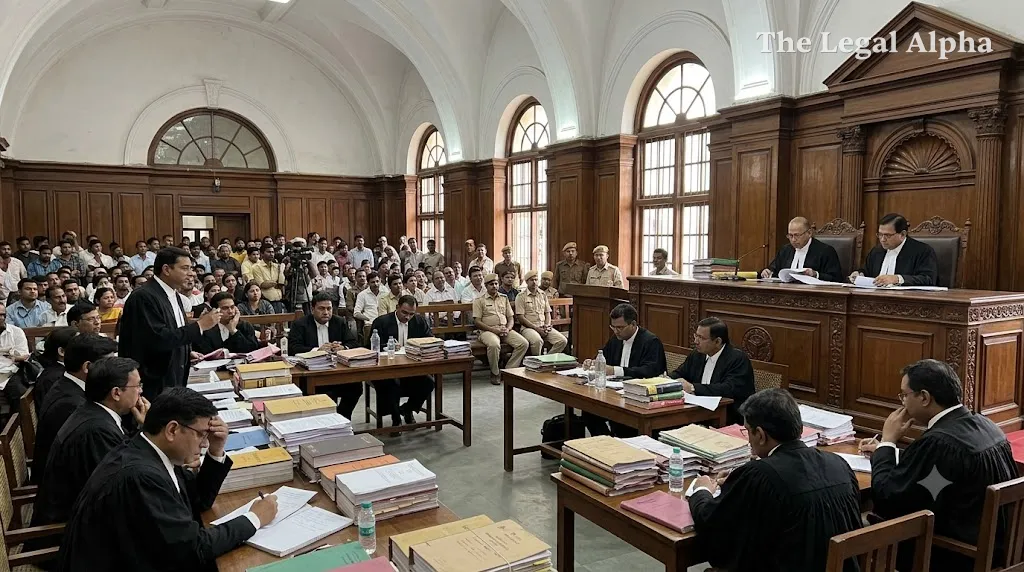
The Aurangabad Bench of the Bombay High Court has declined to grant interim relief to a private medical institution seeking permission to conduct independent, institute-level counselling to fill vacant MBBS seats. Hearing a plea instituted by Parbhani Medical College, the court termed the challenge premature because the state’s centralised Common Admission Process (CAP) was actively underway with scheduled stray vacancy rounds.
The decision comes in the backdrop of the Maharashtra government's regulatory overhaul in July, which scrapped institute-level admission rounds across private medical and dental colleges to eliminate backdoor entries and bring 100 percent of seat allotments under the direct administration of the State Common Entrance Test (CET) Cell. With the national admission deadline set for late October, private managements voiced apprehension over financial losses from unfilled seats, but the High Court refused to disrupt the ongoing counselling calendar.
Legal Topic
Area of Law: Education Law / Administrative Law
Sub-topic: Regulation of Medical Admissions / Common Entrance & Centralised Allotment
Core Legal Issue
The dispute centres on whether private unaided medical colleges possess an inherent right to independently conduct spot or institutional rounds to fill residual vacant seats, or whether the state regulatory authority holds exclusive statutory competence to administer 100 percent of seats through a centralised, merit-based counselling mechanism until the formal closure of the admission session.
A secondary question before the bench was whether apprehension of financial loss from potential vacancies warrants judicial intervention to permit institutional counselling before the state-run centralised stray rounds conclude.
What Did the Court Decide?
The Aurangabad Bench of the Bombay High Court dismissed the interim prayer sought by Parbhani Medical College, observing that the apprehension of seats remaining vacant was unsubstantiated while centralised counselling rounds were still actively in progress. The bench noted that permitting college-level counselling midway would disrupt the established admission timetable and compromise the integrity of the state-administered process.
The High Court clarified that if vacancies persist after the CET Cell completes all designated stray vacancy rounds, the petitioner institution cannot obtain unilateral spot admission rights from the High Court; instead, it must approach the Supreme Court of India to request an extension of the mandatory admission cut-off date and seek specific directions to fill any leftover seats.
Key Legal Points
-
Pre-eminence of Centralised Merit Allotment: State-administered common counselling takes precedence over institutional discretion to safeguard merit and transparency in professional medical admissions.
-
Prematurity of Grievance: Judicial review cannot be invoked on speculative apprehension of leftover seats when administrative stray rounds have not yet run their full course.
-
Adherence to Fixed Admission Calendars: High Courts will not grant interim directions that risk derailing statutory admission schedules established in accordance with apex court mandates.
-
Jurisdictional Forum for Cut-Off Relaxations: Any extension of medical admission deadlines prescribed by regulatory authorities falls exclusively within the remit of the Supreme Court of India.
Relevant Law
-
Maharashtra Unaided Private Professional Educational Institutions (Regulation of Admissions and Fees) Act, 2015: Empowers the State Admission Regulating Authority and CET Cell to conduct centralised admissions for professional educational institutions.
-
National Medical Commission (NMC) Regulations: Mandates centralised counselling based strictly on NEET merit for all undergraduate and postgraduate medical seats.
-
Supreme Court Directives in Priyadarshini Dental College and Mridul Dhar: Establishes strict cut-off timelines for medical course admissions, prohibiting unauthorised institutional admissions past designated deadlines.
Arguments of the Parties
The Petitioner (Parbhani Medical College)
The petitioner institution contended that private colleges face irreversible financial strain when MBBS seats remain unfilled at the conclusion of the academic intake. The college submitted that it sought permission only to run an institutional round during the final window—from 5:00 PM until midnight on the cut-off date—to ensure full capacity without circumventing merit. Counsel argued that established jurisprudence recognizes the feasibility of manual, college-level counselling once centralised rounds fail to allocate students to all available seats.
The Respondent (State CET Cell & Regulatory Authorities)
The state authorities opposed the petition, submitting that the institutional quota rounds were expressly abolished following pervasive complaints regarding arbitrary allotments and opacity in private college admissions. The respondents argued that conducting three dedicated online stray vacancy rounds ensures fair access to every eligible candidate on the state merit list. The regulatory authority further emphasized that creating customized, college-specific waiting lists at an institutional level creates severe logistical challenges and undermines the principle of centralized oversight.
Why Does It Matter?
This ruling reinforces the regulatory shift toward eliminating the grey area historically associated with college-level "institutional stray vacancy rounds" in private professional education. Over past academic sessions, institutional spot admissions frequently faced allegations of seat blocking, capitation fees, and disregard for merit rank order.
By declining to sanction institutional admissions midway through the counselling cycle, the High Court has fortified the state government’s July mandate, reaffirming that private medical colleges cannot reclaim admissions authority simply by citing potential seat vacancies. The order signals to private managements nationwide that deviations from centralised counselling schedules require exceptional sanction from the Supreme Court, solidifying institutional accountability within the NEET framework.
Legal Takeaway
Private medical institutions cannot bypass centralised counselling mechanisms or demand institutional spot admissions based on speculative vacancy concerns while state allotment rounds remain active. Any relief concerning seat filling past prescribed admission deadlines falls strictly within the jurisdictional purview of the Supreme Court.
Sources
Primary Source:
Order of the High Court of Judicature at Bombay (Aurangabad Bench) in the writ petition filed by Parbhani Medical College challenging the discontinuation of institutional-level admission rounds for MBBS/BDS courses (October 2026).
Additional Sources:
-
Maharashtra State Common Entrance Test (CET) Cell Notifications & Stray Vacancy Allotment Schedule (October 2026).
-
Maharashtra Unaided Private Professional Educational Institutions (Regulation of Admissions and Fees) Act, 2015.