Legal Void Over Coma Patients' Bank Accounts: Allahabad High Court Reprimands State Government and Demands Regulatory Action from RBI
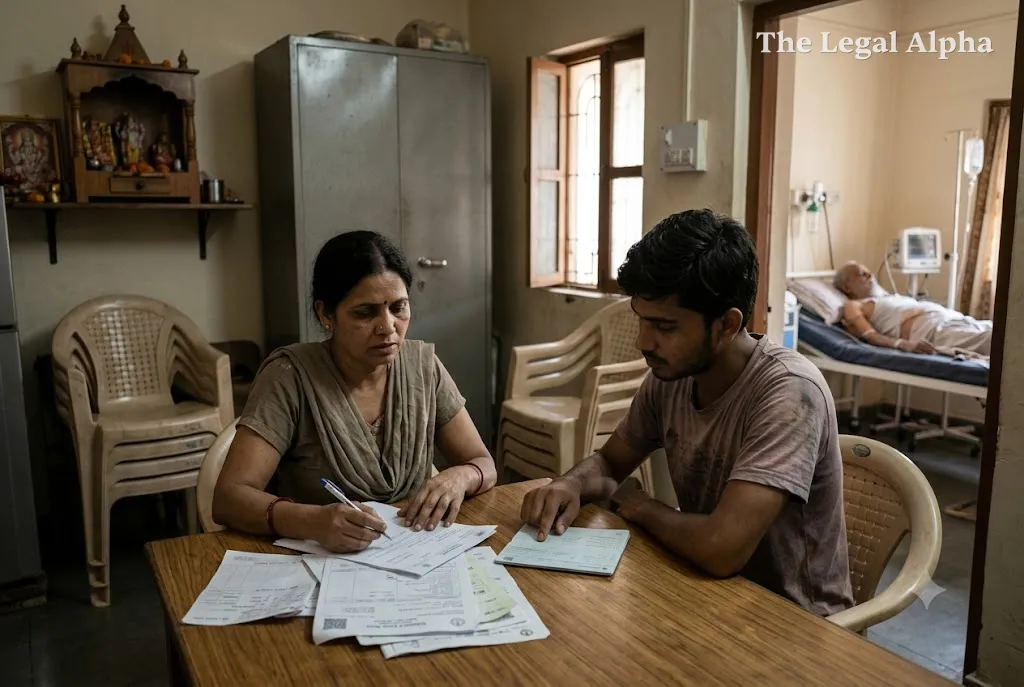
The Allahabad High Court highlighted a severe legislative void leaving families of comatose patients legally and financially stranded. The matter originated when Parveen Jahan approached the court in July seeking permission to operate the bank account of her husband, Shamshad Ali, who had slipped into a prolonged coma. The family faced severe financial distress and urgently needed access to his funds to pay for medical treatments and basic household expenses. However, the patient passed away on October 8 while the petition remained pending, without the family ever gaining access to his funds.
This tragic outcome prompted a division bench comprising Justices Ajit Kumar and Garima Prashad to severely pull up the Uttar Pradesh government and its Chief Secretary for failing to enforce judicial guidelines framed back in 2020 concerning the appointment of guardians for comatose individuals. The court directed that both the Union Government and the Reserve Bank of India (RBI) be impleaded as respondents to formulate binding regulatory mechanisms.
Legal Topic
Area of Law: Civil & Banking Law
Sub-topic: Guardianship & Parens Patriae Jurisdiction
Core Legal Issue
The central legal question is how family members of an individual who has slipped into a comatose or vegetative state can lawfully access the patient’s bank accounts to cover ongoing medical treatment and family maintenance, given the absence of any explicit statutory provision in Indian law for appointing guardians over mentally incapacitated adults.
Existing statutes provide mechanisms for appointing guardians over minors or individuals with specific mental disabilities, but they do not address sudden adult incapacitation caused by trauma, stroke, or illness. This leaves families without statutory standing or operational banking authority during critical emergencies.
What Did the Court Decide?
-
Impleaded the Union of India and the Reserve Bank of India (RBI) as respondents, ordering them to submit clear, formal responses on whether statutory amendments or binding banking guidelines can be introduced to release funds to dependents.
-
Issued a strict warning to the Chief Secretary of Uttar Pradesh, directing that substantial administrative solutions be presented in writing by the next hearing, failing which the official must appear in court in person.
-
Observed that the state executive could have implemented the court's earlier judicial framework through administrative directions rather than stalling under the pretext of waiting for lengthy legislative processes.
-
Scheduled the matter for its next hearing on November 6.
Key Legal Points
-
Legislative Vacuum: Indian guardianship statutes lack dedicated provisions for appointing legal guardians over adult individuals in comatose or permanent vegetative states.
-
Binding Nature of Constitutional Judgments: Judicial directions and guidelines issued by constitutional courts do not lose their force or become stale over time; executive authorities are obligated to comply.
-
Parens Patriae Jurisdiction: Reaffirmed the constitutional courts' protective custody role over individuals who cannot speak or act for themselves when statutes offer no remedy.
-
Regulatory Responsibility of the RBI: Highlighted the necessity for central banking regulations that allow commercial and nationalised banks to handle emergency fund releases for medical care safely.
Relevant Law
-
Guardians and Wards Act, 1890: Applies exclusively to minors and does not extend to incapacitated adults.
-
Rights of Persons with Disabilities Act, 2016: Addresses specific long-term disabilities but lacks express procedural remedies for acute comatose conditions.
-
Uma Mittal & Ors. v. Union of India & Ors. (Allahabad High Court, 2020): Precedent adopting the Kerala High Court's framework to appoint close relatives (spouse or children) as legal guardians for comatose individuals.
-
Article 226 of the Constitution of India: The High Court's writ jurisdiction invoked to protect the fundamental rights and bodily survival of incapacitated citizens.
Arguments of the Parties
The Petitioner (Parveen Jahan)
The petitioner submitted that her husband was entirely incapacitated in a comatose state and that the family faced acute financial destitution. She argued that access to his State Bank of India (SBI) account in Kanpur was critical for his ongoing medical care. Her counsel also highlighted that despite clear guidelines issued by the High Court in 2020, administrative authorities took no meaningful action to operationalise a standard procedure.
The State and Central Authorities
The Chief Secretary's affidavit sought additional time, contending that enacting comprehensive legislation is an extensive process requiring formal legislative deliberation. Meanwhile, counsel for the Union Government stated they had not yet received instructions regarding the formulation of national guidelines or legislation.
Why Does It Matter?
This development addresses a critical humanitarian and legal dilemma faced by hundreds of families across India. When a household's primary earner falls into a coma, bank accounts are routinely frozen because the account holder cannot sign documents or grant a valid power of attorney, throwing the family into immediate financial paralysis.
By bringing the RBI and the Central Government directly into the proceedings, this case could compel standard operating procedures across the national banking sector. Such regulations would enable immediate relatives to withdraw funds under strict medical certification and court supervision, ensuring medical bills are settled while protecting the patient's assets from fraud.
Legal Takeaway
The absence of a statutory framework for comatose adults leaves dependents without an automatic legal remedy, turning judicial intervention into an agonizing, time-sensitive race. The ruling underscores that executive and banking authorities must establish proactive administrative and regulatory mechanisms rather than allowing families to suffer systemic delays during medical crises.
Sources
-
Primary Source: Orders of the Allahabad High Court, Division Bench of Justices Ajit Kumar and Garima Prashad in the petition of Parveen Jahan v. State of U.P. and Others.
-
Additional Sources: Uma Mittal and others v. Union of India and others (Allahabad High Court, 2020); Legal news report by Bhupendra Pandey, The Indian Express, October 2026.