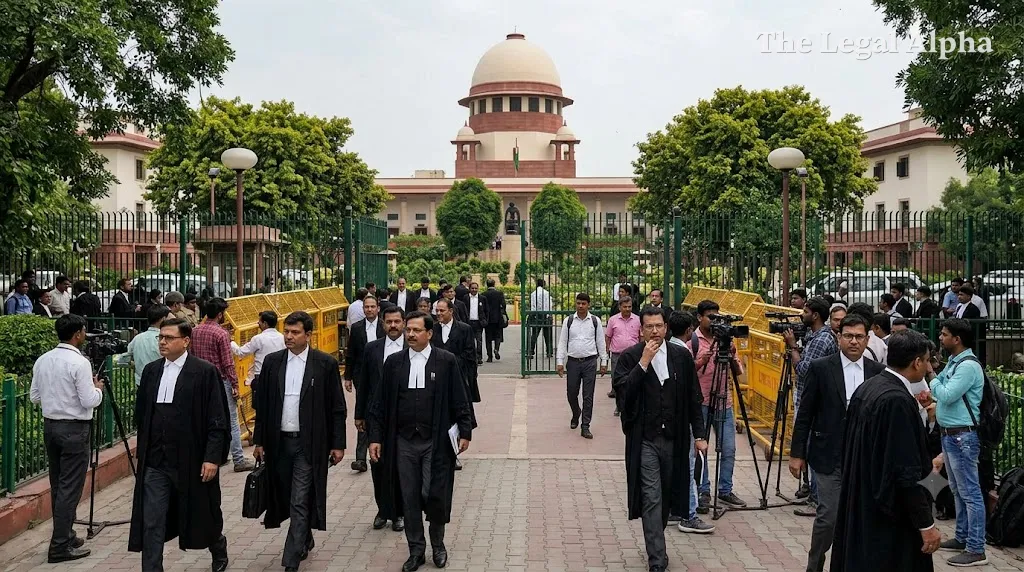
INDIA Bloc Plans March to Supreme Court Seeking Urgent Intervention on Electoral Roll Revisions and Election Commission Accountability
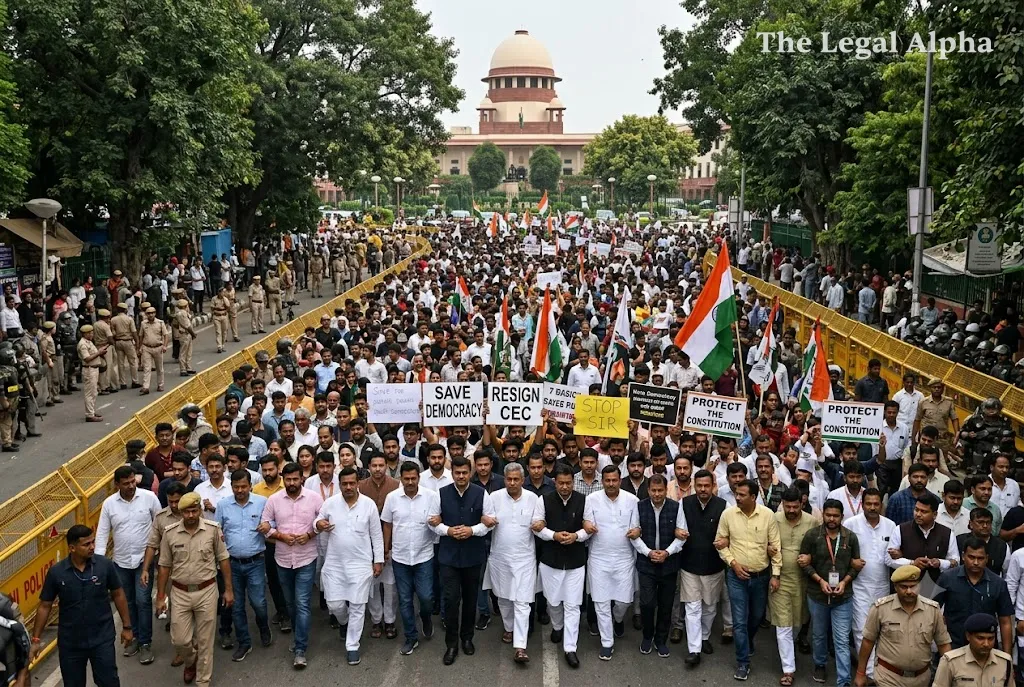
Opposition parties under the INDIA alliance announced plans for a demonstration and a direct march to the Supreme Court of India. The planned march follows widespread police detentions across the national capital during youth and civil society protests led by the Cockroach Janta Party (CJP). Opposition leaders—including Mallikarjun Kharge, Rahul Gandhi, Arvind Kejriwal, and Mamata Banerjee—are demanding an immediate pause on the Election Commission of India’s (ECI) Special Intensive Revision (SIR) of electoral rolls, the stepping down of Chief Election Commissioner Gyanesh Kumar, and judicial intervention into allegations of large-scale voter disenfranchisement. A senior delegation also plans to submit a formal memorandum directly to the Chief Justice of India seeking expedited hearings in pending challenges.
Legal Topic
Area of Law: Constitutional Law / Election Law
Sub-topic: Electoral Rolls Verification / Constitutional Independence and Accountability of Election commisioners
Core Legal Issue
The controversy centres on the constitutional bounds of the Election Commission of India under Article 324, specifically regarding whether administrative roll revision mechanisms (such as the Special Intensive Revision) comply with procedural due process and protect against arbitrary disenfranchisement.
A secondary legal issue is the statutory framework governing Election Commissioners, specifically the challenge against immunity and appointment provisions introduced under the Chief Election Commissioner and other Election Commissioners (Appointment, Conditions of Service and Term of Office) Act, 2023, and whether political entities can formally seek judicial administrative intervention through demonstrations and direct memoranda outside conventional writ petitions.
What Did the Court / Authority Decide?
No judicial ruling has been made on the newly planned march or the fresh memorandum, as the delegation plans to approach the Supreme Court in the coming days.
From an administrative standpoint:
-
The Delhi Police placed high-security cordons and invoked preventive detentions across Central Delhi, declining protest clearances at Jantar Mantar and surrounding routes.
-
The Election Commission of India has maintained the regular operational validity of the Special Intensive Revision (SIR) process as part of statutory updating under election law.
-
Pending constitutional challenges regarding the Appointment Act, 2023 and the validity of roll deletions remain sub judice before the Supreme Court.
Key Legal Points
-
Direct marches by political delegations toward the Supreme Court raise novel procedural and security issues regarding court access, peaceful assembly, and the standard convention of invoking judicial remedies solely via Article 32 writ petitions.
-
The controversy implicates the fundamental right to vote, which the Supreme Court has consistently characterized as integral to free and fair elections—a recognised component of the basic structure of the Constitution.
-
The opposition continues to contest the statutory protections and appointment architecture established under the 2023 legislation governing Election Commissioners.
-
State preventative detentions under procedural police regulations highlight ongoing tensions between public order maintenance and the rights of assembly and free expression under Article 19(1)(a) and (b).
Relevant Law
-
Article 324 of the Constitution of India (Superintendence, direction, and control of elections vested in an Election Commission).
-
Article 326 of the Constitution of India (Elections to the House of the People and Legislative Assemblies to be based on adult suffrage).
-
Article 19(1)(a) and 19(1)(b) of the Constitution of India (Freedom of speech, expression, and peaceful assembly without arms).
-
The Representation of the People Act, 1950 (Statutory framework governing electoral rolls and their periodic revision).
-
The Chief Election Commissioner and other Election Commissioners (Appointment, Conditions of Service and Term of Office) Act, 2023.
Arguments of the Parties
Opposition Parties / Petitioners' Perspective The opposition contends that the Special Intensive Revision (SIR) is being executed arbitrarily, leading to disenfranchisement and selective deletion of voters. They argue that the Election Commission is functioning without required neutrality and that statutory changes from 2023 have compromised institutional accountability, justifying urgent intervention by the Chief Justice of India.
State and Administrative Authorities' Perspective Law enforcement authorities submitted that large-scale demonstrations in restricted zones of the capital threaten public order, justifying preventive measures and restrictions on movement. The government and Election Commission contend that electoral roll updates follow established statutory rules with built-in claims and objections procedures, and that political disputes over election administration should be pursued through established legal channels rather than unpermitted marches.
Why Does It Matter?
This development highlights rising institutional strain between political parties, regulatory bodies, and law enforcement. The integrity of electoral rolls forms the foundation of parliamentary democracy; unaddressed claims of systemic deletion or disenfranchisement risk undermining public confidence in poll outcomes. Furthermore, attempting to deliver political memoranda directly to the Chief Justice via street marches represents an unusual approach to constitutional advocacy, testing the traditional divide between legal litigation and mass public protest.
Legal Takeaway
Disputes concerning statutory voter roll revisions and Election Commission independence are properly resolved through constitutional writ remedies, transparent verification mechanisms, and statutory appellate processes. While public assembly remains a recognized democratic right, demands for judicial intervention must adhere to procedural norms rather than extrajudicial pressure.
Sources
Primary Source:
-
Pending writ petitions and constitutional challenges concerning the Chief Election Commissioner and other Election Commissioners Act, 2023 and Representation of the People Act framework before the Supreme Court of India.
Additional Sources:
-
Statements and public releases from INDIA bloc leadership (October 11, 2026).
-
Administrative and public security orders issued by Delhi Police.