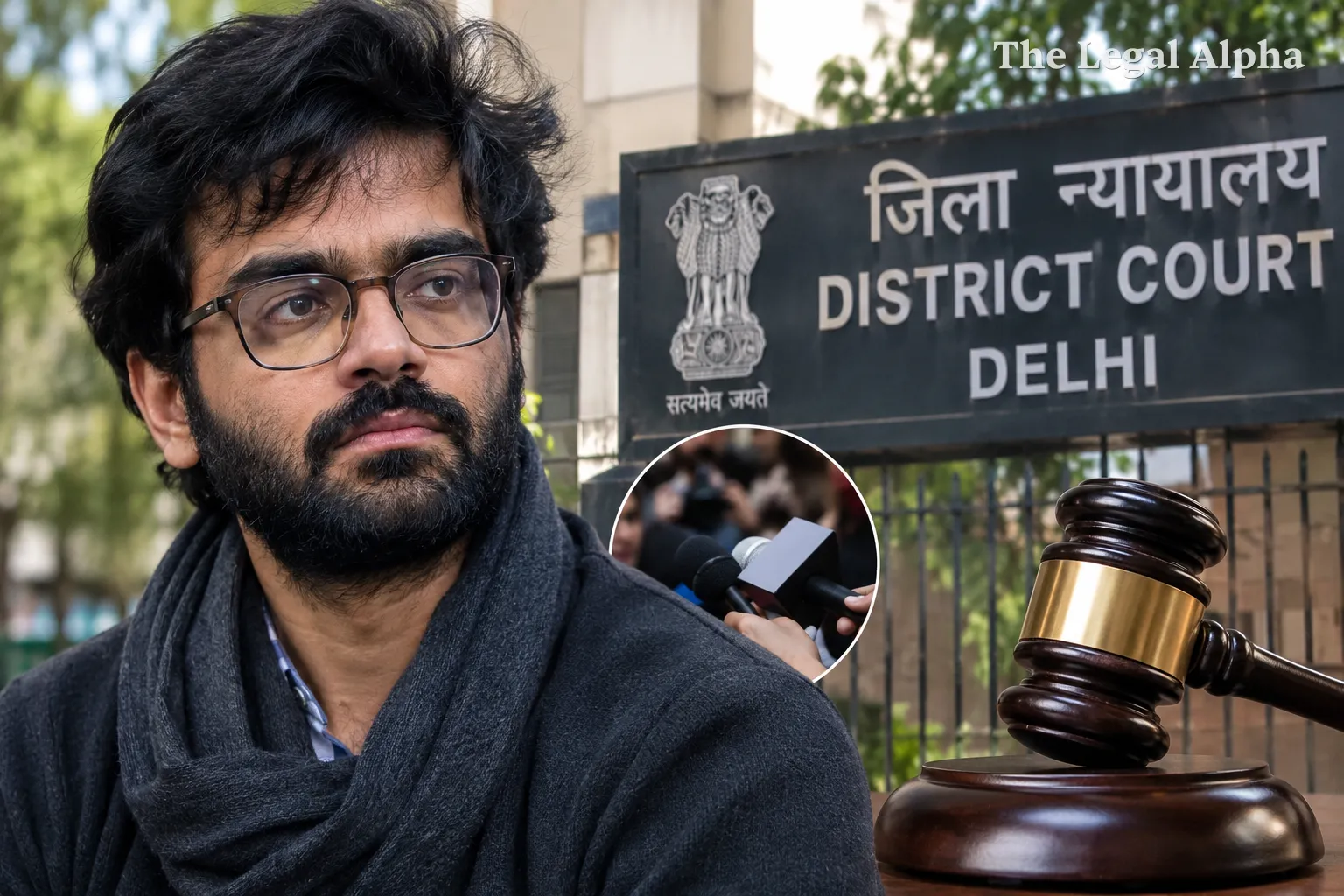
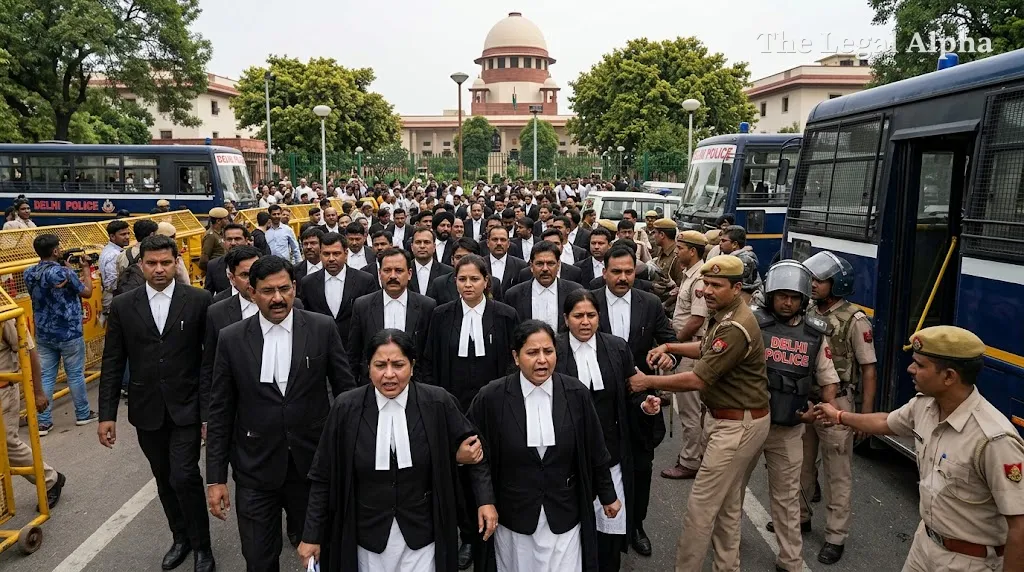
Delhi Court Rejects CJP Legal Head Ratna Singh’s Plea Seeking FIR Against Police Over Preventive Detention
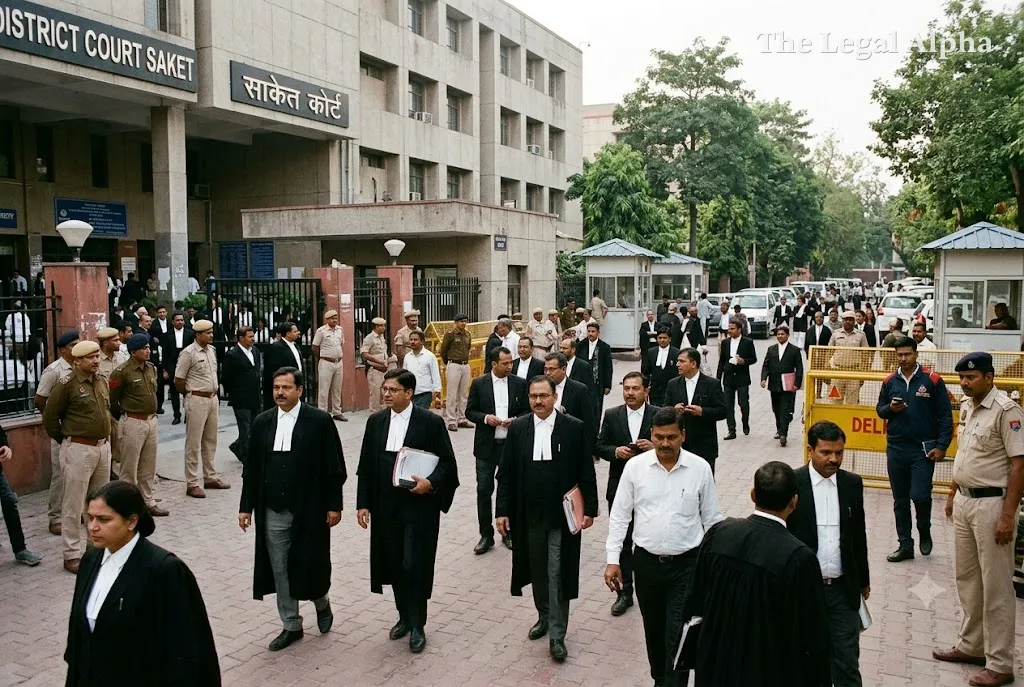
A Delhi court declined an application filed by Ratna Singh, the legal head of the Cockroach Janta Party (CJP), seeking directions for the registration of a First Information Report (FIR) against Delhi Police personnel. Singh alleged that she and fellow advocates were unlawfully intercepted and confined outside her residence to prevent them from participating in a planned demonstration demanding the resignation of Chief Election Commissioner Gyanesh Kumar.
The matter came before Chief Judicial Magistrate Abhinav Pandey at the Saket District Court, who dismissed the plea. The development highlights the strict procedural requirements complainants must satisfy before a magistrate invokes judicial powers to direct criminal investigations against law enforcement officers executing preventive measures.
Legal Topic
Area of Law: Criminal Procedure / Constitutional Law
Sub-topic: Judicial Direction for FIR Registration / Procedural Maintainability
Core Legal Issue
The court had to determine whether an application under criminal procedure seeking directions for the registration of an FIR against police officers—alongside immediate judicial intervention for release from alleged wrongful confinement—was procedurally maintainable without essential factual details and an accompanying affidavit on oath.
Beyond the immediate facts, the issue concerned the threshold conditions required before a magistrate can invoke supervisory powers to order an FIR against public officials conducting preventive policing.
What Did the Court / Authority Decide?
Chief Judicial Magistrate Abhinav Pandey dismissed Singh’s application in its entirety.
The court observed that the application for directing an FIR was defective and not maintainable in its present form because it lacked key factual particulars and had not been supported by a mandatory supporting affidavit. Addressing the plea regarding her alleged detention and release, the Magistrate emphasized that a formal complaint submitted on oath is a statutory prerequisite for the court to exercise its jurisdictional authority.
Key Legal Points
-
Mandatory Affidavit on Oath: An application seeking judicial directions for the registration of a criminal case against public servants must be supported by an affidavit to ensure legal accountability for the averments made.
-
Maintainability Threshold: A court cannot order an investigation or direct the registration of an FIR on vague or incomplete pleadings lacking precise particulars of the alleged offence.
-
Scope of Summary Intervention: Judicial magistrates are bound to determine matters strictly based on the formal pleadings and record before them, rather than shifting external ground developments during oral arguments.
-
Procedural Safeguards for Police Personnel: Complaints alleging wrongful restraint or unlawful detention by police officers during preventive deployment require adherence to established procedural checks before criminal machinery is set in motion.
Relevant Law
-
Section 156(3) / Section 175(3) of Criminal Procedure (CrPC / BNSS): Power of a magistrate to order an investigation into a cognizable offence.
-
Section 190 / Section 200 CrPC (and corresponding BNSS provisions): Procedure governing private complaints and examination of the complainant on oath.
-
Priyanka Srivastava & Anr. v. State of U.P. (2015): The Supreme Court ruling mandating that applications seeking registration of an FIR must be supported by a sworn affidavit to deter vexatious litigation.
-
Sections 339 & 340 IPC (or corresponding BNS provisions): Offences relating to wrongful restraint and wrongful confinement.
Arguments of the Parties
Petitioner / Applicant
Advocate Adit S. Pujari, appearing for Ratna Singh, submitted that she was subjected to arbitrary and unlawful confinement when police personnel surrounded her vehicle outside her residence in Jangpura Extension. The applicant argued that the officers blocked her movement without serving any formal order, written notice, or valid legal justification, stating only that they were acting on higher instructions. She contended that such restraint violated her personal liberty and warranted both a police status report and the registration of an FIR for wrongful restraint.
Respondent / State
While the order was dictated primarily on technical and procedural maintainability, law enforcement agencies maintain that restrictions placed on political functionaries ahead of unpermitted protests at sensitive zones constitute lawful preventive action intended to preserve public order, regulate traffic, and prevent unauthorized assemblies.
Why Does It Matter?
This ruling reiterates a fundamental safeguard in criminal jurisprudence: courts will not bypass statutory procedure, even when urgent violations of fundamental liberties or police excess are alleged. By refusing to entertain an unsworn, defectively drafted application, the court reinforced established precedent that criminal petitions seeking an FIR must be backed by a sworn affidavit to ensure verifiability and prevent procedural abuse.
For practitioners and civil liberties advocates, the decision demonstrates that claims of illegal detention and police misconduct must be accompanied by strict formal compliance and complete evidential particulars before seeking magisterial directions.
Legal Takeaway
An application seeking an FIR or court-mandated investigation cannot be entertained if it lacks material particulars and a verified affidavit on oath. Procedural discipline remains mandatory, even when urgent relief against executive or police action is sought.
Sources
Primary Source:
-
Ratna Singh v. State (NCT of Delhi), Application for Registration of FIR and Release, Saket District Courts, New Delhi (Order of Chief Judicial Magistrate Abhinav Pandey, October 10, 2026).
Additional Sources:
-
Bar & Bench, Reporting on the Saket Court proceedings and dismissal of CJP Legal Head’s plea (October 10, 2026).
-
The Print & Daily Pioneer, Coverage of detention and court application regarding CJP demonstrations (October 10, 2026).