Federal Court Rejects Justice Department Bid to Segregate California Mail Ballots Ahead of Election
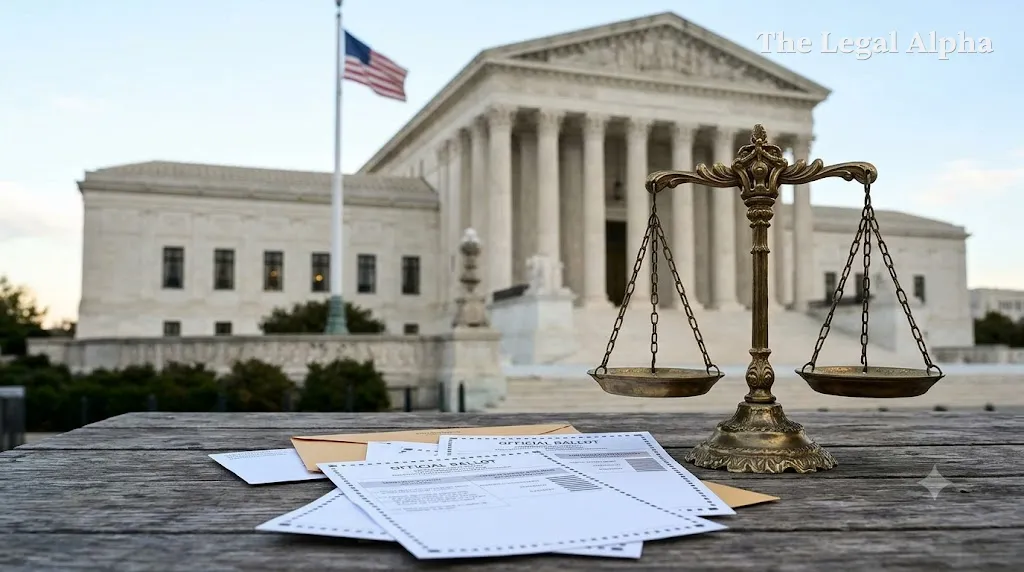
A federal district court in California has denied an emergency effort by the U.S. Department of Justice to compel state and local election officials to set aside and segregate approximately 20,000 mail-in ballots.
The Justice Department sought an eleventh-hour court order directing election administrators to impound ballots cast by individuals the federal government flagged as suspected noncitizens. U.S. District Judge David O. Carter of the Central District of California denied the request, holding that the federal government failed to demonstrate the reliability of its data and that granting the relief on the eve of an election would violate federal statutory safeguards protecting eligible voters. The court also reprimanded federal officials for warning state election personnel of potential criminal exposure if they failed to comply.
Legal Topic
-
Area of Law: Constitutional & Election Law
-
Sub-topic: Federal Preemption / Voter Roll Maintenance & National Voter Registration Act (NVRA)
Core Legal Issue
The legal question before the court was whether the executive branch, acting through the Department of Justice, can obtain an emergency judicial mandate directing state election officials to systematically isolate and hold provisional or mail-in ballots within 90 days of a federal election based on federal data matches, without violating the National Voter Registration Act and constitutional boundaries governing election administration.
The dispute centered on whether federal statutory remedies for individual voter fraud allow the federal government to compel states to institute systematic, aggregate ballot-segregation mechanisms outside the framework established by Congress.
What Did the Court Decide?
Judge Carter denied the Justice Department's motion for emergency relief, refusing to order California officials to isolate the 20,000 ballots:
-
Denial of Emergency Measures: The court held that the Department of Justice did not substantiate the accuracy or reliability of its noncitizen suspect list, making the sweeping segregation of ballots legally untenable.
-
Application of the 90-Day Quiet Period: The court concluded that imposing such broad voter restrictions days before the election runs afoul of federal election statutes prohibiting systematic voter list purges and challenges immediately prior to balloting.
-
Limits on Executive Remedy: The court determined that while federal prosecutors maintain statutory authority to investigate and prosecute individual instances of illegal voting, the executive branch cannot craft unilateral administrative procedures that displace the election administration processes established by Congress and state law.
-
Reprimand on Criminal Intimidation: The court addressed threats of criminal prosecution directed toward local election workers, explicitly noting that coercive pressure on election administrators must cease.
The underlying proceedings continue in district court, with the Justice Department retaining the option to seek appellate review.
Key Legal Points
-
Protection of the Statutory "Quiet Period": The National Voter Registration Act strictly bars systematic removals or wholesale challenges within 90 days of a federal election to prevent disenfranchisement of eligible citizens caused by bureaucratic or data errors.
-
Separation of Executive and Legislative Remedies: The executive branch cannot circumvent legislative remedies by creating ad-hoc judicial mandates that bypass Congressionally enacted frameworks governing voter registration and ballot counting.
-
Evidentiary Threshold for Balloting Injunctions: Emergency motions seeking to segregate or discount thousands of registered voters' ballots require clear, reliable, and verified evidence rather than speculative, automated data cross-referencing.
-
Integrity of State Election Operations: Threatening state election administrators with criminal liability for carrying out standard statutory balloting procedures undermines cooperative federalism and lawful election administration.
Relevant Law
-
The National Voter Registration Act of 1993 (NVRA), 52 U.S.C. § 20507(c)(2)(A): The 90-Day "Quiet Period" provision, requiring states to complete any systematic voter removal programs not later than 90 days before a primary or general federal election.
-
U.S. Constitution, Article I, Section 4 (Elections Clause): Grants states primary authority to prescribe the times, places, and manner of holding elections, subject to explicit congressional legislation.
-
Title 18, U.S. Code, § 611: Federal criminal statute penalizing voting by noncitizens in federal elections, which provides individual enforcement mechanisms rather than pre-election aggregate ballot impoundment.
Arguments of the Parties
The Department of Justice
The Justice Department argued that immediate intervention was necessary to prevent unlawful votes from being tabulated alongside valid ballots in the upcoming federal election. Federal attorneys submitted that their investigative data indicated noncitizens had registered or submitted mail-in ballots, asserting that isolating these specific 20,000 ballots pending citizenship verification was an essential measure to protect the integrity of the election.
State Election Officials
California officials contended that the federal government’s demands were unverified, untimely, and legally baseless. They maintained that ordering the segregation of thousands of ballots days before the election would disrupt orderly certification, risk disenfranchising lawful citizens through flawed federal matching data, and directly breach the NVRA's 90-day prohibition against systematic voter eligibility challenges.
Why Does It Matter?
This decision clarifies the legal threshold required when the federal government attempts to alter state ballot-handling practices shortly before an election. By enforcing the NVRA's 90-day quiet period against federal executive demands, the ruling restricts the government from relying on broad, unvetted data-matching exercises to impound votes on the eve of balloting.
For state election officials nationwide, the ruling provides protection against executive pressure and threats of federal criminal liability for adhering to routine state verification statutes. It establishes that federal agencies seeking to challenge voter eligibility must comply with statutory notice windows, procedural safeguards, and verified individual evidentiary standards rather than relying on late-stage emergency motions that disrupt state election workflows.
Legal Takeaway
The executive branch cannot use eleventh-hour emergency court motions or administrative mandates to force states to isolate large tranches of ballots based on unverified matching lists. Pre-election ballot challenges must respect the statutory quiet periods established under federal law and proceed through the verified legislative remedies enacted by Congress.
Sources
Primary Source:
-
Order Denying Emergency Relief, United States v. California, No. 2:26-cv-12025 (C.D. Cal. Oct. 29, 2026).
Additional Sources:
-
Docket & Decisions, U.S. District Court for the Central District of California.
-
Statutory text of the National Voter Registration Act of 1993, 52 U.S.C. § 20507.