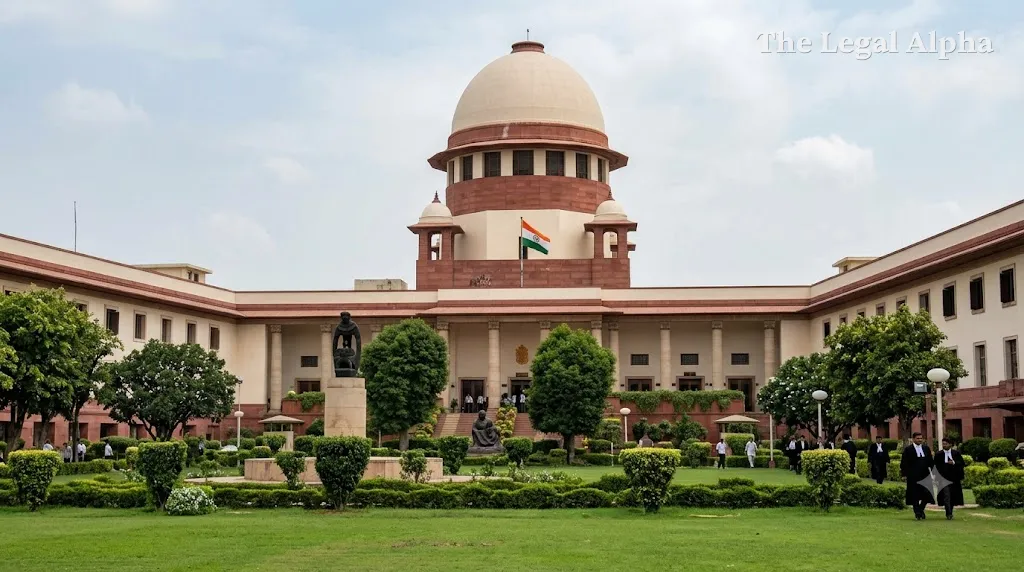
Supreme Court Scrutinises Election Commission Over Forcing Existing Voters to File Form 6 and Use of 'Logical Discrepancies' in Electoral Roll Revision
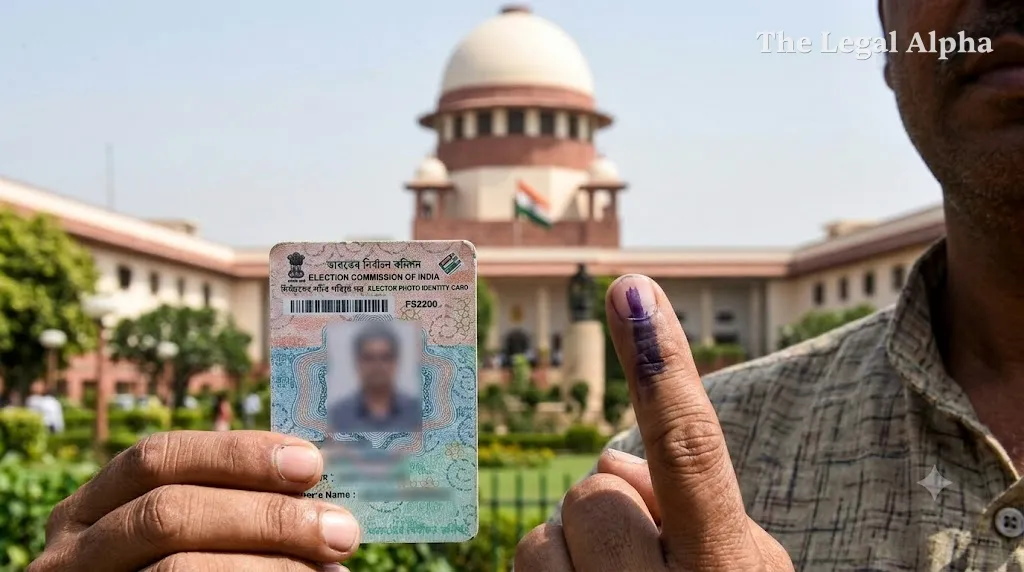
The Supreme Court of India questioned the Election Commission of India (ECI) regarding procedural mechanisms deployed during the ongoing Special Intensive Revision (SIR) of electoral rolls. During hearings focused on voter exclusions across Delhi and earlier exercises in West Bengal, a three-judge bench headed by Chief Justice Surya Kant and comprising Justices Joymalya Bagchi and V. Mohana raised concerns over directing millions of previously registered voters to submit Form 6—a statutory declaration reserved exclusively for first-time voter registrations.
The court pointed out that requiring previously registered voters whose residential addresses shifted to file Form 6 creates an unnecessary legal barrier, suggesting instead the acceptance of enumeration forms or Form 8. Concurrently, the bench clarified that it has not granted final legal approval to the ECI’s algorithmic classification of voters under "logical discrepancies", warning that automated pattern matching without human application of mind warrants deeper constitutional scrutiny.
Legal Topic
-
Area of Law: Constitutional & Election Law
-
Sub-topic: Electoral Roll Revisions / Right to Vote / Statutory Form Compliance
Core Legal Issue
The principal legal issue is whether the Election Commission can administratively compel citizens already enrolled on prior electoral rolls to register via Form 6—which mandates a statutory declaration that the applicant has never been enrolled before—instead of utilizing Form 8 or ongoing enumeration forms designed for corrections and shifts of residence.
A secondary question is whether the ECI's reliance on software-driven pattern generation under the head of "logical discrepancies" to flag and potentially disenfranchise electors without individualized human application of mind satisfies constitutional due process and statutory revision rules.
What Did the Court Decide?
The Supreme Court did not quash the revision exercise but issued strong verbal observations and sought concrete solutions from the ECI:
-
Reconsideration of Form 6 Mandate: The bench asked the ECI why electors whose names featured on the latest rolls cannot be permitted to submit late enumeration forms or Form 8 for address modifications, emphasizing that statutory forms cannot be arbitrarily interchanged.
-
Legality of 'Logical Discrepancy' Open: Justice Bagchi clarified that earlier permissions granted during the West Bengal revision were strictly interim measures and that the final legality of using automated "logical discrepancy" categories remains undecided.
-
Timeline Extension Assured: In response to concerns regarding the looming October 30 deadline for claims in Delhi, senior counsel representing the Commission assured the bench that deadlines would be extended as necessary so excluded voters are not prejudiced.
-
Next Steps: The bench directed the ECI to review the suggestions and return with detailed steps in two weeks.
Key Legal Points
-
Forms 6 and 8 Serve Mutually Exclusive Statutory Purposes: Form 6 strictly applies to initial voter registration, whereas Form 8 governs intra-constituency shifting and record updates. Forcing an existing voter into Form 6 imposes a false legal pretense that they are first-time entrants.
-
Right to Franchise Requires Administrative Due Diligence: The court reiterated that voting rights cannot be forfeited merely because a citizen missed initial enumeration forms sent to outdated addresses; administrative agencies bear an affirmative duty to reach electors before disenfranchising them.
-
Automated Profiling vs. Human Application of Mind: Discrepancy checks flagged en masse by software routines (such as ERONet) cannot automatically justify exclusion unless backed by reasoned human scrutiny.
-
Interim Clearances Do Not Equal Precedent: The bench explicitly ruled that interim administrative accommodations in state revisions (such as in West Bengal or Bihar) do not constitute binding judicial approvals of underlying categorisation mechanisms.
Relevant Law
-
Constitution of India: Article 324 (Superintendence, direction, and control of elections vested in the Election Commission) and Article 326 (Elections to the House of the People and Legislative Assemblies to be on the basis of adult suffrage).
-
Representation of the People Act, 1950: Section 21 (Preparation and revision of electoral rolls) and Section 22 (Correction of entries in electoral rolls).
-
Registration of Electors Rules, 1960: Rule 13 (Application for inclusion of name, specifying Form 6), Rule 26 (Correction of entries and transposition of names, specifying Form 8), and statutory declarations attached to individual schedules.
Arguments of the Parties
Petitioners Appearing for petitioners, Advocate Prashant Bhushan submitted that requiring excluded citizens to file Form 6 forces voters to make a legally flawed declaration that they were never enrolled. He contended that many electors missed initial draft lists because enumeration notices were dispatched to outdated addresses. Counsel argued that the poll body should accept enumeration forms even after draft publication and route address changes through Form 8, preventing widespread disenfranchisement ahead of impending cut-offs.
Election Commission of India Senior Advocate Dama Seshadri Naidu, representing the ECI, submitted that the Special Intensive Revision is a large-scale "clean-slate" exercise being executed after more than two decades. He maintained that the term "first-time inclusion" in Form 6 during this exercise refers to fresh incorporation into the newly constituted rolls, assuring that no voter has faced penal consequences for filing Form 6 under this process. Counsel added that 95% of verified electors in disputed categories had been restored in earlier exercises, exclusions are not permanent, and revision timelines would be extended to accommodate genuine voters.
Why Does It Matter?
This scrutiny underscores the boundary between administrative digitization and basic democratic rights. When election management bodies switch to algorithmic voter roll sanitisation, automated flags can misidentify millions of genuine voters who move residences, share names, or fall into algorithmic anomaly brackets.
By insisting that statutory forms like Form 6 and Form 8 maintain their distinct legal roles, the Supreme Court is checking the risk of administrative overreach. It prevents the state from placing the burden of proof entirely on ordinary citizens to re-establish their citizenship and voter bona fides from scratch simply due to an address shift or database anomaly.
Legal Takeaway
Statutory election forms retain fixed, non-interchangeable purposes under the Registration of Electors Rules, and administrative roll revisions cannot treat existing, shifted voters as first-time registrants. Furthermore, algorithmic discrepancy flagging by poll bodies remains subject to judicial review and cannot substitute for individual, human application of mind.
Sources
-
Primary Source: Supreme Court of India, Bench comprising Chief Justice Surya Kant, Justice Joymalya Bagchi, and Justice V. Mohana (Proceedings in Delhi and West Bengal SIR matters, October 28, 2026).
-
Additional Sources: Filings and verified reporting on the Special Intensive Revision proceedings, Registration of Electors Rules, 1960.