Judicial Courtesy Is Not Optional: Supreme Court Warns Lower Courts and Tribunals That Its ‘Requests’ Carry Mandatory Force
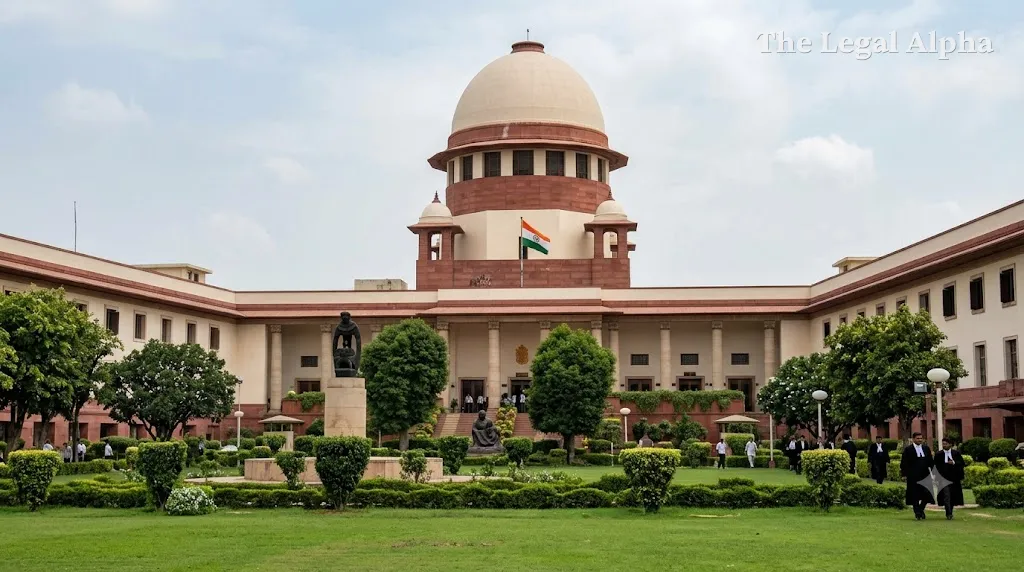
The Supreme Court of India expressed sharp disapproval over the National Company Law Appellate Tribunal's failure to take up an urgent corporate dispute despite a direct judicial request from the apex court.
While disposing of earlier appeals in July, the Supreme Court had asked the appellate tribunal to ensure the case was heard on an expedited date. The urgency arose because the National Company Law Tribunal had reserved its verdict on an insolvency petition against the corporate debtor, which carried the risk of triggering corporate insolvency resolution before the appellate forum could examine the underlying rights issue.
Despite the top court's explicit timeline, the appellate tribunal failed to hear the matter and deferred proceedings into November. During that delay, the original company tribunal pronounced its reserved order and admitted the company into insolvency. Taking grave view of the lapse, a bench of Justices J.B. Pardiwala and K. Vinod Chandran halted the formation of the Committee of Creditors and demanded a formal explanation from the appellate tribunal.
Legal Topic
-
Area of Law: Constitutional & Insolvency Law
-
Sub-topic: Judicial Discipline, Hierarchy of Courts, and Corporate Insolvency Resolution Process
Core Legal Issue
The primary issue before the apex court centers on judicial hierarchy and institutional discipline: whether a polite "request" issued by the highest constitutional court to subordinate courts or statutory tribunals carries binding legal force or functions merely as an advisory recommendation.
Alongside this institutional question is the procedural dilemma created when an appellate authority's inaction directly permits an original forum to admit a corporate debtor into insolvency, thereby altering legal rights and status before the appellate review can take place.
What Did the Court / Authority Decide?
The Supreme Court laid down an unequivocal rule on judicial hierarchy, holding that any "request" made by the top court to lower judicial or quasi-judicial bodies must be treated strictly as a mandatory direction, and warned that any failure to comply will be treated with utmost gravity. The bench clarified that using polite phrasing is an act of institutional courtesy and respect toward judicial offices, not a sign of weakened authority.
To safeguard the subject matter while examining the lapse, the Court:
-
Issued formal notice returnable on November 19, directing the appellate tribunal to explain why it did not hear the dispute despite the top court's express July direction.
-
Restrained the constitution of the Committee of Creditors, freezing a crucial next stage of the corporate insolvency resolution process.
-
Left the broader factual merits of the rights issue dispute open for determination after the procedural failure is addressed.
Key Legal Points
-
Courtesy vs. Command: Deference shown by a superior court through courteous language such as a "request" does not diminish its binding authority; subordinate tribunals must treat it as an enforceable order.
-
Institutional Discipline: Tribunals cannot ignore expedited hearing timelines set by the Supreme Court, particularly when parallel proceedings risk rendering the pending appeal infructuous.
-
Interim Insolvency Shield: To prevent irreparable administrative consequences when a company is admitted to insolvency amidst procedural failure, the top court may exercise its plenary powers to pause key statutory milestones, such as forming a creditors' committee.
Relevant Law
-
Constitution of India — Article 141: Dictates that the law declared by the Supreme Court is binding on all courts and tribunals within the territory of India.
-
Constitution of India — Article 142: Empowers the apex court to pass necessary orders and directions to ensure complete justice between parties.
-
Insolvency and Bankruptcy Code, 2016 — Section 7: Governs the initiation of the Corporate Insolvency Resolution Process by a financial creditor against a corporate debtor.
-
Insolvency and Bankruptcy Code, 2016 — Section 21: Pertains to the mandatory constitution and functioning of the Committee of Creditors.
Arguments of the Parties
The Applicant / Corporate Debtor Senior counsel appearing for the applicant submitted that the top court had specifically asked the appellate tribunal to hear the dispute on July 23 to avoid prejudice from a reserved Section 7 ruling. The counsel argued that the appellate body neglected this expedited schedule, allowing the lower tribunal to pronounce its reserved order and admit the firm into insolvency while pushing the appeal hearing to November, thereby frustrating the applicant’s legal remedies.
The Financial Creditor / Respondents The proceedings before the lower forum were initiated on the grounds of an actionable default under the statutory insolvency framework, leading to the reserved order of admission under Section 7 of the Insolvency and Bankruptcy Code. The creditors maintained their entitlement to pursue insolvency resolution against the debtor firm.
Why Does It Matter?
This development reinforces judicial discipline across India's regulatory and tribunal ecosystem. In commercial litigation, appellate tribunals frequently handle high-volume dockets and occasionally interpret polite phrasing from constitutional courts as non-binding scheduling requests. The ruling removes any ambiguity: institutional civility cannot be used as an excuse for delay.
For businesses and lenders navigating the Insolvency and Bankruptcy Code, the ruling provides crucial clarity on systemic accountability. Insolvency proceedings carry severe, often irreversible commercial consequences once a debtor is admitted. By freezing the constitution of the creditors' committee due to the tribunal's administrative default, the Supreme Court demonstrated that procedural fairness and compliance with apex court directions take precedence over mechanical timelines in statutory insolvency processes.
Legal Takeaway
Politeness in judicial orders must never be mistaken for procedural leniency. When the Supreme Court frames a timeline as an earnest request, subordinate courts and tribunals are bound under the constitutional framework to treat it as a mandatory directive.
Sources
-
Primary Source: Supreme Court of India Order / Judicial Record (Bench of Justices J.B. Pardiwala and K. Vinod Chandran, October 2026).
-
Additional Sources: Proceedings arising out of NCLAT Principal Bench, New Delhi (Section 7 IBC Application); Reporting by Hindustan Times (Utkarsh Anand, October 2026).