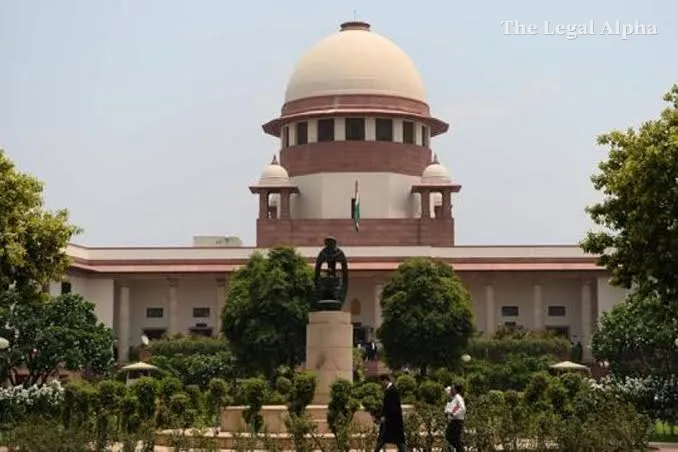
Supreme Court to Examine Legality of Automated ‘Logical Discrepancy’ Category in Electoral Roll Revisions
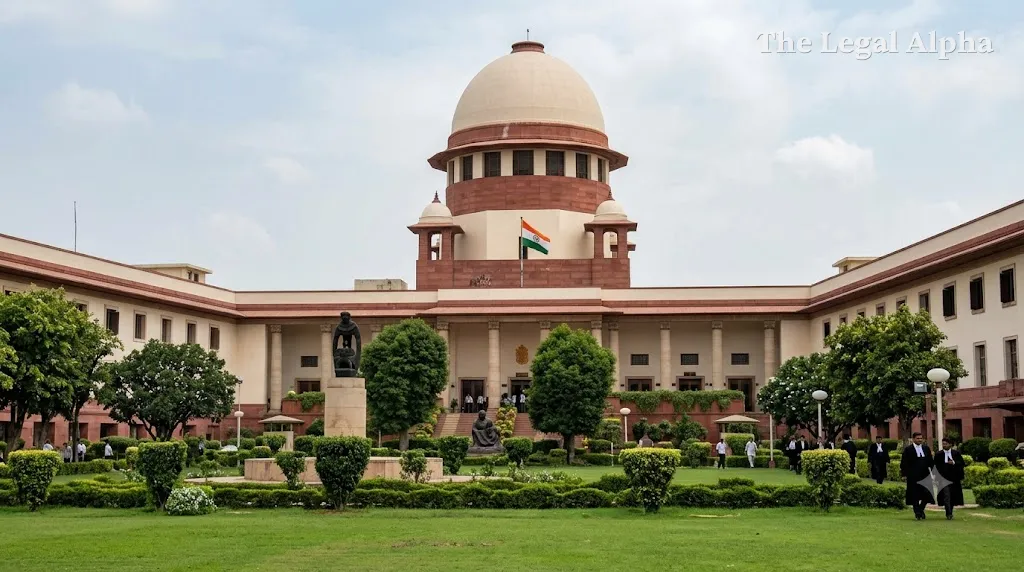
The Supreme Court clarified that it has not yet validated the legal validity of the Election Commission of India’s use of the "logical discrepancy" classification during the Special Intensive Revision of electoral rolls. The clarification arose during proceedings reviewing the Special Intensive Revision in Delhi, where petitioner counsel highlighted that over 19 lakh voters received scrutiny notices based on automated data mismatches generated through the poll body's centralised platform, ERONet.
A bench comprising Chief Justice Surya Kant and Justice Joymalya Bagchi clarified that although the mechanism had been permitted earlier as an interim measure in West Bengal, the court has never conclusively adjudicated its legality. The bench questioned the mass reopening of decades-old voter registrations based strictly on algorithmic patterns and directed the poll panel to explain whether adequate human agency and mind were applied before issuing verification notices.
Legal Topic
Area of Law: Election Law / Constitutional Law
Sub-topic: Electoral Roll Revisions / Algorithmic Decision-Making and Due Process
Core Legal Issue
The core issue is whether the Election Commission possesses statutory and constitutional authority to reopen, flag, and scrutinise settled voter entries based purely on automated data pattern matching—termed "logical discrepancies"—under the guise of an intensive electoral roll revision.
A secondary question is whether issuing mechanical, automated notices to registered voters without individual application of human mind complies with the rules governing electoral roll maintenance and procedural fairness under administrative law.
What Did the Court / Authority Decide?
The Supreme Court clarified that its earlier rulings, including the judgment concerning the Bihar revision, did not settle or endorse the legality of using algorithmic "logical discrepancy" filters. The court made it clear that allowing the category in West Bengal was strictly an interim arrangement, leaving the substantive question open for determination.
The bench declined to draw definitive conclusions in oral observations and scheduled the matter for substantive hearing after two weeks, directing the Election Commission to demonstrate how human discretion is exercised before notices are dispatched.
Key Legal Points
-
Interim arrangements granted in regional proceedings do not constitute binding constitutional precedents or final determinations on the legality of an administrative process.
-
Automated pattern recognition and machine-generated flags do not inherently satisfy the legal test of "application of mind by human agency" required before altering or questioning settled public records.
-
The authority of an administrative body to verify credentials does not automatically confer unchecked discretion to reopen settled historic registrations dating back to earlier revisions without statutory backing.
-
Algorithmic classifications that carry potential disenfranchisement risks remain fully subject to judicial review under fair procedure principles.
Relevant Law
-
Article 324 of the Constitution of India (Superintendence, direction, and control of elections vested in the Election Commission)
-
Representation of the People Act, 1950 (Statutory framework governing voter qualifications and preparation of electoral rolls)
-
Registration of Electors Rules, 1960 (Prescribed procedural rules for enumeration, inquiry, claims, and objections during roll revisions)
-
Administrative Law Principles on Non-Arbitrariness and Independent Human Application of Mind (Article 14 of the Constitution of India)
Arguments of the Parties
Petitioners
Counsel for the petitioners argued that the Election Commission operated without transparent criteria, deploying unverified technical filters that arbitrarily flagged millions of voters under the nebulous label of "logical discrepancy". They submitted that sending bulk verification notices mechanically without individual human verification causes widespread harassment and risks wrongful exclusion of genuine voters.
Election Commission of India
Counsel representing the Election Commission contended that the process is aimed at cleansing the electoral roll of clerical inconsistencies, mathematical impossibilities, and irregular demographic relationships. The poll panel submitted that the notices served merely as a verification step, pointing out that an overwhelming majority of the flagged electors were subsequently verified and cleared for retention in the roll following local inquiry.
Why Does It Matter?
This scrutiny directly impacts the intersection of automated public administration and citizens' constitutional franchise. As government agencies increasingly adopt algorithmic screening and automated systems like ERONet to manage civic registries, the absence of human checks creates procedural vulnerability for ordinary citizens.
If the Supreme Court restricts or regulates the unilateral deployment of "logical discrepancy" filters, electoral authorities across India will be obligated to institute clear, transparent statutory criteria and manual verification before issuing intrusive notices or initiating deletion proceedings.
Legal Takeaway
Automated data filters and algorithmic patterns cannot displace the mandatory legal requirement of reasoned, human application of mind by administrative authorities. Reopening settled civic registrations requires transparent statutory standards and procedural fairness rather than opaque machine-generated discrepancy flags.
Sources
Primary Source:
Supreme Court of India, Proceedings and Oral Directions in the Special Intensive Revision (Delhi & West Bengal) Petitions (Bench of Chief Justice Surya Kant and Justice Joymalya Bagchi, October 2026).
Additional Sources:
-
Election Commission of India, ERONet Operational Guidelines and Registration of Electors Rules, 1960.
-
Supreme Court Observer & National Law Reports on Special Intensive Revision Proceedings (October 2026).