Policy Domain Trumps Fee Challenge: Delhi High Court Affirms Revised Passport Charges for Overseas Indians

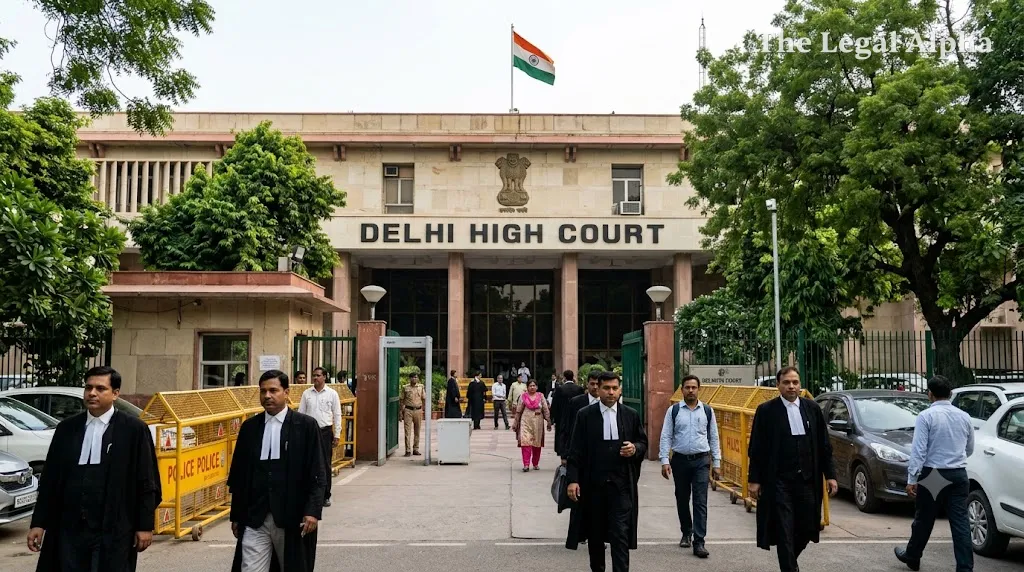
The Delhi High Court dismissed a public interest litigation challenging the Union Government’s decision to hike passport processing fees for Non-Resident Indians (NRIs). A division bench comprising Acting Chief Justice Nitin Wasudeo Sambre and Justice Sanjay Sharma declined to interfere with the revision, holding that a 67% increase implemented after a 14-year hiatus cannot be deemed arbitrary or exorbitant. The court noted that fee structures and economic categorizations fall squarely within executive policy discretion, thereby warranting judicial restraint.
Legal Topic
-
Area of Law: Constitutional Law / Administrative Law
-
Sub-topic: Judicial Review of Fiscal Policy / Delegated Legislation under the Passports Act
Core Legal Issue
The petition centered on whether the Union Government's decision to sharply revise passport fees for overseas citizens violates Article 14 of the Constitution by creating an unreasonable financial disparity between resident citizens and overseas Indians.
A secondary question was whether courts exercising writ jurisdiction under Article 226 can mandate an income-based fee concession mechanism for low-income migrant workers living in foreign jurisdictions.
What Did the Court Decide?
The High Court dismissed the petition at the threshold, holding that the pricing adjustment did not warrant judicial intervention.
The bench observed that an upward revision of approximately 67% after 14 years is a reasonable operational measure. Crucially, the court questioned how an applicant's low-income or economically weaker status abroad could be reliably verified by Indian missions, noting that financial assessments issued by foreign entities cannot automatically bind the Indian state. The bench held that structuring exemptions or determining consular tariffs is exclusively the government's policy domain.
Key Legal Points
-
Presumption of Policy Competence: Fiscal decisions, consular charges, and fee determinations under statutory rules are policy matters where the constitutional court will generally exercise judicial self-restraint.
-
Temporal Justification: A fee hike introduced after a 14-year interval does not suffer from arbitrariness merely because the cumulative percentage increase appears substantial.
-
Limits on Judicially Created Concessions: The court cannot fashion a bespoke economic-status verification regime for overseas workers, as extraterritorial income certifications pose significant administrative and evidentiary hurdles.
Relevant Law
-
The Passports Act, 1967: Section 24 (power of the Central Government to make rules, including prescribing fees for applications and renewals).
-
The Passports Rules, 1980: Schedule IV (prescribed fee schedules for passport and consular services rendered within India and at Indian missions abroad).
-
Constitution of India: Article 14 (equality before law and reasonable classification) and Article 226 (power of High Courts to issue writs).
Arguments of the Parties
Petitioner (Pravasi Legal Cell)
Counsel for the petitioner submitted that the revised fee imposes an unjustifiable financial burden on low-wage Indian migrants abroad, including construction workers, plumbers, and mechanics in Gulf countries. The petitioner highlighted that overseas applicants are required to pay roughly ₹11,900—up from around ₹7,000—whereas domestic residents pay only ₹2,500 for standard passport services. It was argued that this disparity penalizes vulnerable blue-collar workers working overseas.
Respondent (Union of India)
The position maintained by the framework—and accepted by the bench—is that fee schedules at diplomatic missions reflect administrative costs, currency valuations, and operational overheads associated with delivering consular services overseas. The state contended that revising statutory consular fees after more than a decade falls strictly within sovereign executive domain and does not violate fundamental rights.
Why Does It Matter?
This ruling underscores the high threshold required to challenge administrative fee structures in court. For the vast diaspora—particularly blue-collar workers in the Middle East—the decision confirms that consular processing fees will remain pegged to standard foreign-mission rates without income-tiered discounts, unless the Ministry of External Affairs voluntarily introduces a differentiated policy. Administratively, the judgment safeguards the Union's prerogative to adjust charges for overseas public services without having to create parallel means-testing frameworks abroad.
Legal Takeaway
High Courts will not invoke judicial review under Article 226 to recalculate administrative service fees or mandate cross-border income-verification mechanisms. Absent clear evidence of constitutional illegality, fee revisions implemented after long intervals remain protected under executive policy discretion.
Sources
-
Primary Source: Order of the High Court of Delhi in Public Interest Litigation filed by Pravasi Legal Cell v. Union of India & Ors. (Bench comprising Acting Chief Justice Nitin Wasudeo Sambre and Justice Sanjay Sharma, decided on October 28, 2026).
-
Additional Sources: The Passports Act, 1967; The Passports Rules, 1980; High Court proceedings records.