Statutory Rules Trump Executive Orders: Allahabad High Court Affirms Unmarried Sister’s Right to Family Pension
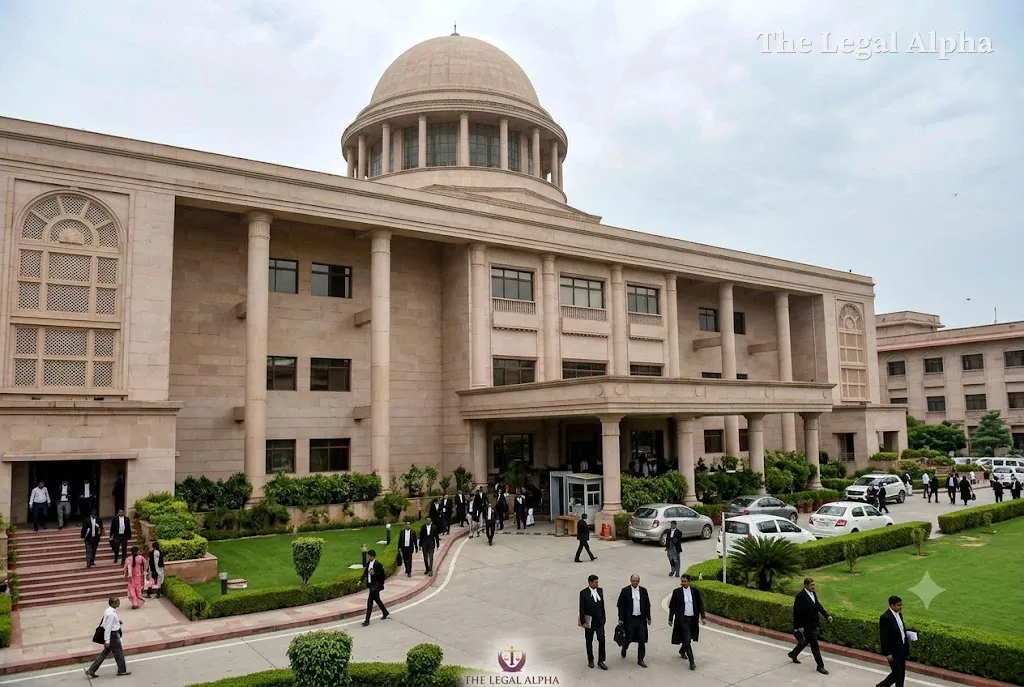
The Lucknow Bench of the Allahabad High Court held that an unmarried sister is legally entitled to receive a family pension following the death of an unmarried government employee. Ruling on a petition filed by Shameen Khan, Justice Manish Kumar quashed a departmental decision that had rejected her claim.
Khan’s late brother, an employee of the Food and Civil Supplies Department, passed away while unmarried and had formally nominated her in his official service records. When she sought disbursement of the family pension, the authorities rejected her application citing an executive notification issued in 2016 that omitted unmarried sisters from the scope of "family". The High Court ruled against this exclusion, instructing the state administration to clear all pending pension dues from the date of the employee's death with interest.
Legal Topic
-
Area of Law: Service Law / Administrative Law
-
Sub-topic: Family Pension Eligibility / Hierarchy of Statutory Rules over Executive Orders
Core Legal Issue
The core question before the court was whether an executive circular or Government Order (G.O.) can override, dilute, or restrict the definition of "family" enacted under statutory service rules framed under the proviso to Article 309 of the Constitution of India. Specifically, the bench examined whether the State could rely on an administrative directive from 2016 to deny pensionary benefits to an unmarried dependent sister when the principal statutory rules expressly include her within the definition of eligible beneficiaries.
What Did the Court Decide?
Justice Manish Kumar allowed the writ petition, holding that:
-
Administrative orders and executive directives cannot amend, override, or supersede statutory rules framed under Article 309 of the Constitution.
-
The impugned administrative rejection dated December 5, 2025, was legally unsustainable and stood quashed.
-
The Principal Secretary of the Food and Civil Supplies Department must release Khan’s family pension arrears effective from May 15, 2024—the date of her brother’s death—along with interest calculated at 6% per annum until realization.
Key Legal Points
-
Supremacy of Constitutional Service Rules: Service rules enacted under Article 309 carry legislative character and statutory force; their express terms cannot be neutralized or restricted by executive fiats.
-
Statutory Definition of "Family": Under Rule 3(5) of the Uttar Pradesh Retirement Benefits Rules, 1961, unmarried and widowed sisters fall squarely within the definition of family.
-
Due Process for Amendments: Any modification to service rules must follow the prescribed constitutional and legislative procedures for statutory amendment rather than administrative shortcuts.
Relevant Law
-
Uttar Pradesh Retirement Benefits Rules, 1961 (Rule 3(5)): Defines "family" to include parents, minor brothers, and unmarried or widowed sisters.
-
Article 309 of the Constitution of India: Confers rule-making power upon the executive to regulate the recruitment and conditions of service of government employees, subject to acts of the appropriate legislature.
-
Government Order dated December 23, 2016: An executive order issued by the state government attempting to restrict pension eligibility by omitting unmarried sisters.
Arguments of the Parties
The Petitioner:
Shameen Khan submitted that her brother died unmarried and had designated her as his nominee in the official service book. Her counsel argued that the UP Retirement Benefits Rules, 1961 explicitly recognize an unmarried sister as a dependent family member entitled to pensionary benefits, and an administrative notification cannot extinguish a right grounded in statutory rules.
The State Government:
The respondents contended that the rejection was justified under the Government Order dated December 23, 2016, which excluded unmarried sisters from the entitlement schedule for family pensions. However, the State conceded that the petitioner was indeed the unmarried sister of the deceased employee.
Why Does It Matter?
This ruling enforces a crucial administrative and constitutional boundary: executive circulars cannot silently rewrite statutory service conditions.
Across state departments, pension authorities frequently rely on internal circulars or subsequent Government Orders to restrict welfare outlays, often leaving vulnerable and unmarried dependents without financial recourse. By reiterating that Article 309 rules remain paramount until formally amended under due process, the decision strengthens protections for dependent nominees and curbs administrative arbitrariness in pension distribution.
Legal Takeaway
Executive orders cannot curtail statutory service rights. If statutory pension rules encompass an unmarried sister within the definition of "family," departmental authorities cannot invoke contrary administrative circulars to deny her benefits.
Sources
Primary Source:
-
High Court of Judicature at Allahabad (Lucknow Bench), Shameen Khan v. State of Uttar Pradesh & Ors. (Single Bench, Justice Manish Kumar, October 2026).
Additional Sources:
-
The Uttar Pradesh Retirement Benefits Rules, 1961 (Rule 3(5)).
-
The Constitution of India (Article 309).