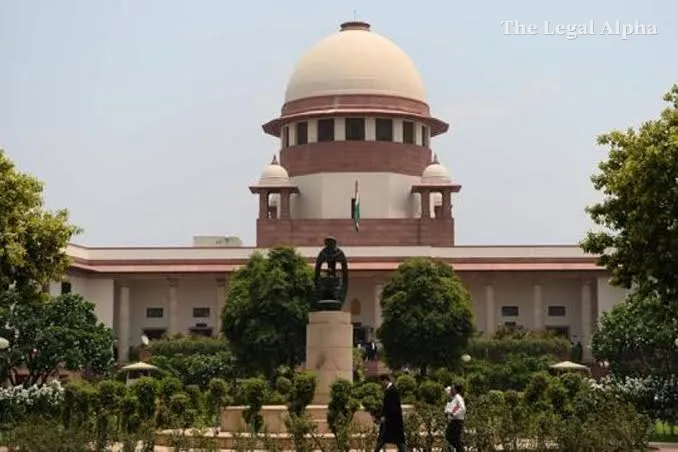
Written Grounds of Arrest Not an Automatic Ticket to Bail Without Demonstrating Prejudice, Rules Supreme Court
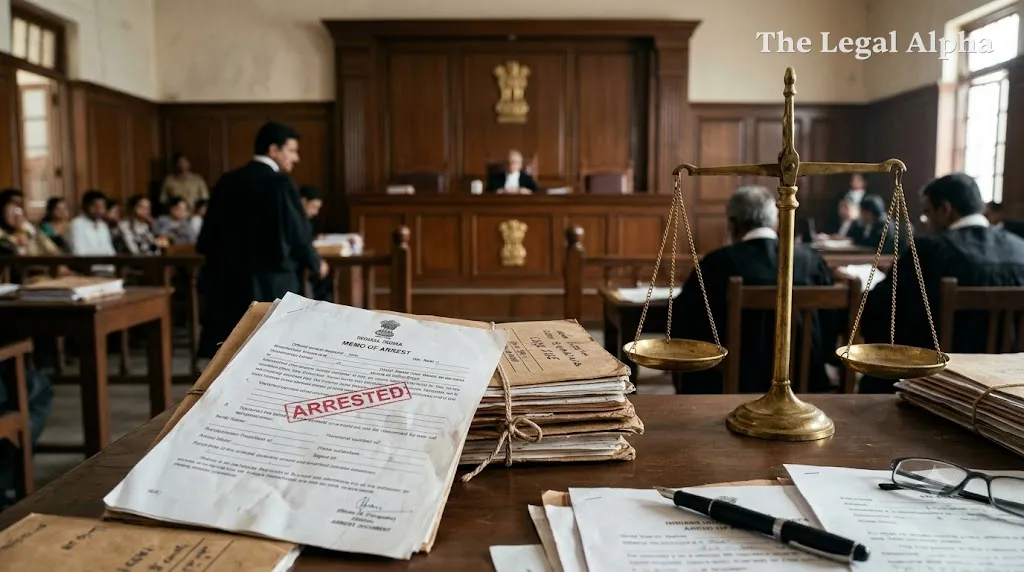
The Supreme Court of India cancelled the regular bail granted to an espionage accused, holding that a procedural lapse in serving written grounds of arrest does not automatically invalidate detention or mandate bail unless demonstrable prejudice is shown.
A Division Bench comprising Justice M.M. Sundresh and Justice Prasanna B. Varale overturned an earlier Rajasthan High Court order that had released respondent Jhabra Ram exclusively on the premise that authorities failed to furnish him grounds of arrest separately in writing. The accused, implicated in sharing classified military information with foreign handlers, had been made aware of the allegations via a detailed arrest memo and preliminary notices, and his counsel had raised no grievance concerning the lack of written grounds during the initial remand proceeding before the magistrate. Finding substantial and effective compliance with constitutional norms, the Supreme Court ordered the respondent to surrender within two weeks.
Legal Topic
-
Area of Law: Criminal Law & Constitutional Law
-
Sub-topic: Arrest Procedures / Personal Liberty / Bail Jurisprudence
Core Legal Issue
The fundamental legal question was whether any departure from the procedural mandate of serving written grounds of arrest—laid down under Article 22(1) of the Constitution and recent apex court precedents—acts as a self-executing ground for immediate release on bail, irrespective of the gravity of the offense, evidence on record, and absence of tangible prejudice to the accused.
Specifically, the court examined whether substantial compliance, wherein an accused is demonstrably aware of the core factual allegations and represented by counsel without raising contemporaneous objections, cures an omission to furnish independent written grounds prior to the initial remand hearing.
What Did the Court Decide?
The Supreme Court allowed the State of Rajasthan’s appeal and revoked the bail order granted by the High Court.
-
No Blanket Ticket to Bail: The Bench observed that hyper-technical objections regarding the form or method of communicating grounds of arrest cannot function as an automatic key to unlock regular bail.
-
Prejudice Test Applied: In the absence of a demonstrable impairment of the accused’s right to defend himself or oppose custody, a procedural defect in the mode of service cannot per se vitiate detention.
-
Substantial Compliance Found: The record established that the respondent was informed of the allegations, executed a signed arrest memo detailing his alleged role, had family notified, and engaged legal counsel who argued remand on merits without flagging the absence of written grounds.
-
Surrender Direction: The court directed the accused to surrender before the jurisdictional trial court or the investigating agency within two weeks, failing which law enforcement authorities must take him into custody.
Key Legal Points
-
Substantial Compliance Over Hyper-Technicality: A mere procedural irregularity in delivering grounds in a standalone written format does not eclipse substantive awareness where the facts are recorded in the arrest memo and acknowledged by the arrestee.
-
Reaffirmation of Standard Bail Parameters: Statutory and judicial grounds for regular bail—such as the severity of the offense, national security implications, and tampering risks—cannot be subordinated entirely to procedural omissions during arrest.
-
Requirement of Showing Prejudice: An accused challenging arrest or seeking release must establish that the mode of communication caused genuine prejudice or crippled their capacity to seek legal counsel and oppose remand.
-
Timing of Objections: The court emphasized that failure to raise any contemporaneous objection regarding grounds of arrest before the remand magistrate weighs heavily when evaluating claims of procedural violation retrospectively.
Relevant Law
-
Constitution of India, Article 22(1): Guaranteeing the fundamental right to be informed, as soon as may be, of the grounds of arrest and the right to consult legal counsel.
-
Bharatiya Nagarik Suraksha Sanhita, 2023 (BNSS):
-
Section 47: Mandatory obligation to inform the arrested person of grounds of arrest and right to bail.
-
Section 483: Powers of the High Court or Court of Session regarding bail.
-
-
Judicial Precedents Considered:
-
Pankaj Bansal v. Union of India (2023) and Prabir Purkayastha v. State (NCT of Delhi) (2024): Mandating written communication of arrest grounds under special statutes like PMLA and UAPA.
-
Mihir Rajesh Shah v. State of Maharashtra (2025): Setting timelines for written grounds across criminal statutes.
-
State of Karnataka v. Sri Darshan (2026) and Kasireddy Upender Reddy v. State of Andhra Pradesh (2026): Assessing procedural defects against demonstrable prejudice.
-
Arguments of the Parties
Appellant (State of Rajasthan): The State argued that the High Court completely overlooked the grave nature of the allegations involving cross-border espionage and transmission of military intelligence. Counsel submitted that the accused was fully apprised of the factual allegations through prior notices and a signed arrest memo, and that no prejudice had been caused since his counsel actively contested remand proceedings without raising any procedural defect.
Respondent (Jhabra Ram): Counsel for the respondent relied on established apex court rulings, including Pankaj Bansal, Prabir Purkayastha, and Mihir Rajesh Shah, contending that supplying written grounds of arrest at least two hours prior to the remand hearing is a non-negotiable constitutional guarantee. It was urged that oral intimation or case diary entries cannot bypass the statutory commands of Section 47 BNSS, rendering the detention illegal.
Why Does It Matter?
This decision injects a critical qualification into the Supreme Court's recent line of personal liberty jurisprudence. While cases from Pankaj Bansal to Mihir Rajesh Shah appeared to make the non-delivery of standalone written grounds an absolute constitutional defect that vitiates remand, this ruling clarifies that procedural form cannot serve as an automatic passport out of custody.
For lower trial courts and High Courts, this creates an operational boundary: magistrates must ascertain whether the arrestee suffered concrete, demonstrable prejudice rather than mechanically releasing individuals accused of grave offenses on technical paperwork defects. Conversely, it places an evidentiary burden on defense counsel to state and record objections concerning non-receipt of written grounds at the earliest possible stage—namely, the initial remand hearing.
Legal Takeaway
A procedural defect in serving separate, written grounds of arrest does not automatically grant an accused an absolute right to bail where the factual basis was otherwise effectively communicated and no real prejudice is demonstrated. Criminal courts must balance procedural safeguards with conventional bail considerations, including offense gravity and the contemporaneous conduct of the defense.
Sources
-
Primary Source: Supreme Court of India, State of Rajasthan v. Jhabra Ram, Criminal Appeal arising out of SLP (Crl.) No. 13374 of 2026, Decided on October 28, 2026 (Coram: M.M. Sundresh and Prasanna B. Varale, JJ.).
-
Additional Sources: Orders and records from the High Court of Judicature for Rajasthan in Bail Application under Section 483 BNSS (decided May 18, 2026); Judicial precedents in Mihir Rajesh Shah v. State of Maharashtra (2025), Prabir Purkayastha v. State (NCT of Delhi) (2024), and Pankaj Bansal v. Union of India (2023).