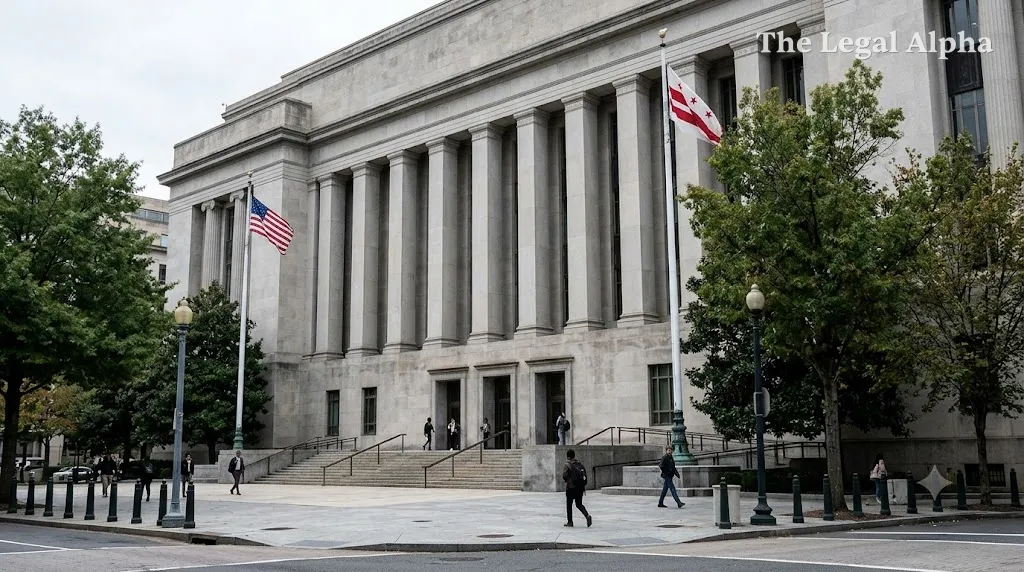
Federal Government Takes D.C. Golf Course Injunction to Appeals Court
The Department of Justice has lodged an appeal with the U.S. Court of Appeals for the District of Columbia Circuit, challenging an injunction that halted key renovation work at Washington, D.C.’s historic East Potomac Golf Course.
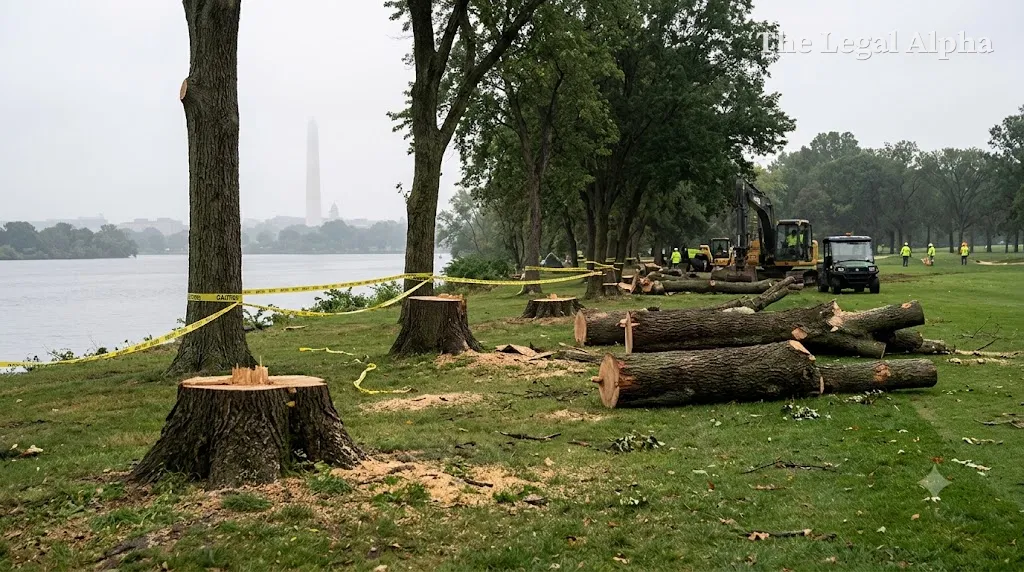
The legal battle escalated after the Trump administration initiated a multi-phase redevelopment intended to turn the 106-year-old public facility into a championship-grade golf venue. Following the rapid felling of over 400 mature trees over a single weekend, local preservationists and recreational golfers sought emergency judicial intervention. U.S. District Judge Ana Reyes issued a comprehensive 70-page order halting further tree clearing and requiring the federal government to provide advance written notice before making any permanent alterations to the park. In response, government attorneys filed a notice of appeal seeking to overturn the district court’s restrictions.
Legal Topic
Area of Law: Environmental and Administrative Law
Sub-topic: National Environmental Policy Act (NEPA) Review / Preliminary Injunctions against Federal Agency Action
Core Legal Issue
The primary legal dispute centers on whether federal agencies violated the National Environmental Policy Act (NEPA) and the Administrative Procedure Act (APA) by engaging in improper "segmentation" of a major federal project.
Under federal environmental law, an agency cannot divide a connected, large-scale federal undertaking into smaller, piecemeal tasks—such as labeling tree clearing and construction material staging as basic "maintenance" or "landscaping"—to avoid conducting a formal, unified environmental impact review. The dispute also questions whether the administration's actions constituted a "final agency action" under the APA, particularly when public declarations by executive leadership diverge from sworn representations made by agency officials in court.
What Did the Court Decide?
U.S. District Judge Ana Reyes granted a preliminary injunction against the federal authorities, barring any additional tree felling across East Potomac Golf Course.
Under the terms of the injunction, the government is prohibited from executing any irreversible modifications to the park's physical layout without first providing 10 business days of written notice to the plaintiffs and the court. Judge Reyes concluded that the challengers had demonstrated a strong likelihood of success on the merits regarding their NEPA claims. While the injunction remains operative, the Justice Department's notice of appeal transfers the dispute to the D.C. Circuit to determine whether the district court exceeded its discretion in enjoining the administration's project.
Key Legal Points
-
Prohibition of Project Segmentation: Federal environmental jurisprudence strictly disallows agencies from carving up connected developmental phases into distinct administrative buckets to bypass full NEPA assessment.
-
Evidentiary Weight of Executive Statements: The court addressed the evidentiary friction between sworn agency declarations stating plans were purely exploratory and executive-level public announcements stating the redevelopment was final and immediate.
-
Irreparable Harm Standard: Cutting down mature canopy trees constitutes permanent ecological and aesthetic injury that cannot be remedied by monetary damages or post-hoc restoration, fulfilling the cornerstone requirement for preliminary injunctive relief.
-
Standard of Review on Appeal: Because the notice of appeal targets a preliminary injunction, the D.C. Circuit will review the district court's factual findings for clear error and its legal conclusions regarding NEPA compliance de novo.
Relevant Law
-
National Environmental Policy Act (NEPA), 42 U.S.C. § 4321 et seq.: Mandates that federal agencies assess the environmental consequences of major federal actions prior to implementation.
-
Council on Environmental Quality (CEQ) Regulations, 40 C.F.R. §§ 1501.9 & 1508.25: Prohibits improper segmentation by requiring connected, cumulative, and similar actions to be discussed within the same environmental review document.
-
Administrative Procedure Act (APA), 5 U.S.C. §§ 704 & 706: Governs judicial review of final agency actions, authorizing courts to set aside agency conduct found to be arbitrary, capricious, or contrary to law.
-
National Historic Preservation Act (NHPA), 54 U.S.C. § 306108 (Section 106): Requires federal bodies to account for the impact of their undertakings on historic properties and cultural landscapes.
Arguments of the Parties
Petitioners (D.C. Preservation League & Course Users)
The challengers argued that the government committed significant administrative and environmental violations by beginning aggressive demolition without an environmental assessment or environmental impact statement. They submitted that classifying the removal of over 400 trees and the importation of tens of thousands of cubic yards of construction debris as ordinary maintenance constituted an unlawful attempt to evade statutory oversight under NEPA and the NHPA. Furthermore, they pointed out that executive statements announcing an immediate multi-year closure and redesign demonstrated that a final, concrete plan had already been adopted without the required public comment and review procedures.
Appellants / The Government (Department of Justice)
The Justice Department contended that the district court intervened prematurely in administrative matters that had not reached the stage of a final, reviewable agency action. Government counsel maintained that ongoing work was authorized under routine maintenance, landscape management, and safety protocols administered on federal parklands. In court submissions, the government maintained that broad architectural concepts remained preliminary and that the administration had not bypassed statutory review mechanisms, arguing that the district court's restrictive injunction infringed upon legitimate executive property management.
Why Does It Matter?
This litigation carries important ramifications for administrative practice and federal land redevelopment projects. It reinforces the legal principle that agencies cannot shield expansive structural overhauls from statutory review by disaggregating preparatory demolition from broader project blueprints.
Additionally, the case highlights an emerging administrative law issue: how federal courts evaluate executive directives and public statements when they directly contradict official agency filings. If the D.C. Circuit affirms the injunction, it will solidify judicial willingness to scrutinize whether early-stage site clearance constitutes an impermissible commitment of resources before mandatory environmental evaluations are complete.
Legal Takeaway
Agencies cannot bypass statutory environmental review under NEPA by labeling initial structural changes or clearing operations as routine maintenance. Where site modifications risk irreparable environmental and historical loss, federal courts will issue injunctions to enforce administrative transparency and compliance before ground is broken.
Sources
Primary Source:
-
D.C. Preservation League et al. v. National Park Service et al., Memorandum Opinion & Preliminary Injunction Order, U.S. District Court for the District of Columbia (per Reyes, J.); Notice of Appeal to the U.S. Court of Appeals for the District of Columbia Circuit.
Additional Sources:
-
National Environmental Policy Act, 42 U.S.C. § 4321 et seq.; Administrative Procedure Act, 5 U.S.C. § 701 et seq.; D.C. Circuit case records and associated filings.