Federal Grand Jury Rebuffs Justice Department Attempt to Indict Former White House Aide Cassidy Hutchinson
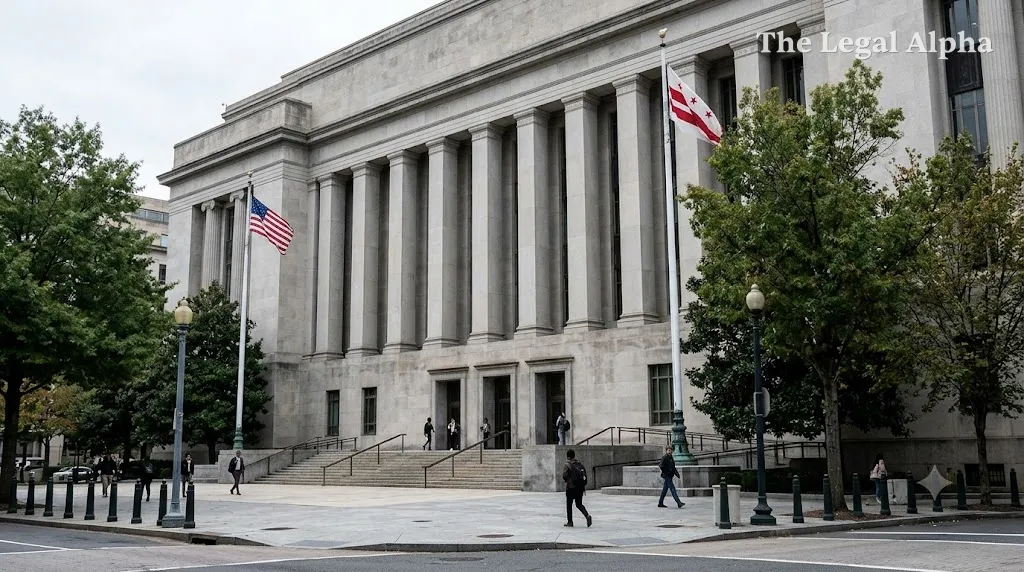
A federal grand jury in Washington, D.C., has declined to approve criminal charges sought by the U.S. Department of Justice against Cassidy Hutchinson, an aide to former White House Chief of Staff Mark Meadows. Prosecutors sought an indictment against Hutchinson on allegations of making false statements during her high-profile 2022 testimony before the U.S. House Select Committee investigating the January 6, 2021, attack on the U.S. Capitol.
The matter came to light after federal prosecutors informed a magistrate judge in the U.S. District Court for the District of Columbia that the grand jury had voted against returning a true bill of indictment. The decision represents a rare and consequential procedural defeat for federal prosecutors, resolving the immediate threat of criminal prosecution against a key congressional witness.
Legal Topic
Area of Law: Criminal Law and Constitutional Procedure
Sub-topic: Federal Grand Jury Indictments / False Statements and Perjury
Core Legal Issue
The primary legal issue before the grand jury was whether the Department of Justice presented sufficient evidence to establish probable cause that Hutchinson knowingly and willfully made materially false statements to a congressional committee.
Under federal criminal practice, prosecutors must convince an independent grand jury that there is probable cause to believe both that the statements made were factually false and that the witness intended to deceive or mislead Congress, rather than recounting events to the best of her recollection or repeating information provided by colleagues.
What Did the Court / Authority Decide?
The grand jury refused to return an indictment against Hutchinson, effectively issuing a "no true bill." Following the vote, a senior Department of Justice attorney formally reported the grand jury's rejection to a federal magistrate judge in Washington, D.C.
Because the grand jury found probable cause lacking, no formal criminal charges were filed. While federal prosecutors technically retain the discretion under double jeopardy jurisprudence to present allegations to a different grand jury if new evidence emerges, a grand jury rejection typically halts federal criminal proceedings unless substantial new proof is uncovered.
Key Legal Points
-
The Probable Cause Standard: A grand jury operates on a standard of probable cause—a significantly lower threshold than the "beyond a reasonable doubt" standard required for a trial conviction—making an outright refusal to indict an exceptional legal event.
-
Constitutional Screening Role: The Fifth Amendment's Grand Jury Clause functions as an independent citizen safeguard designed to protect individuals from unsubstantiated or overreaching government prosecutions.
-
Materiality and Intent under 18 U.S.C. § 1001: Establishing criminal liability for false statements requires proof of deliberate falsehood and material deception, which cannot be satisfied merely by conflicting recollections or contested secondhand hearsay.
-
Finality of Grand Jury Determination: The grand jury's refusal prevents the government from arraigning the defendant or proceeding toward trial under the proposed indictment.
Relevant Law
-
Fifth Amendment to the U.S. Constitution: Guarantees that no person shall be held to answer for an infamous crime unless on a presentment or indictment of a grand jury.
-
18 U.S.C. § 1001: Prohibits knowingly and willfully making materially false, fictitious, or fraudulent statements in any matter within the jurisdiction of the legislative, executive, or judicial branch.
-
18 U.S.C. § 1621 & § 1623: Federal perjury provisions governing false statements made under oath before tribunals and congressional proceedings.
-
Federal Rules of Criminal Procedure, Rule 6: Governs the organization, proceedings, secret deliberation, and voting mechanisms of federal grand juries.
Arguments of the Parties
Prosecution / Department of Justice:
Prosecutors contended that certain details in Hutchinson's congressional testimony—specifically regarding statements and movements inside the Executive Office of the President on January 6, 2021—were contradicted by accounts from other officials and records, allegedly providing a basis for criminal false-statement charges.
Target / Defense:
Hutchinson and her legal counsel have consistently maintained that her testimony before the House committee was delivered truthfully, under oath, and in good faith based on her direct knowledge and what was conveyed to her by senior White House staff at the time. They asserted that discrepancies in recollections between officials do not amount to criminal deceit.
Why Does It Matter?
Federal grand juries historically return indictments in the overwhelming majority of cases presented by government prosecutors because proceedings are ex parte and prosecutors set the evidentiary narrative. A grand jury's refusal to indict illustrates the constitutional vitality of the grand jury as a citizen buffer against state power.
Beyond the immediate case, the outcome reinforces the high evidentiary burden required to criminalize witness testimony delivered in legislative inquiries. It signals to prosecutors that proving criminal intent and deliberate deception under federal false-statement statutes requires incontrovertible proof, particularly when witness testimony involves fast-evolving crisis events and secondhand conversations.
Legal Takeaway
A federal grand jury refusal demonstrates the constitutional role of the grand jury as an independent check on executive authority. For criminal false-statement allegations to survive grand jury review, prosecutors must demonstrate clear, willful deception rather than relying on disputed recollections of political events.
Sources
Primary Source:
-
Proceedings and Grand Jury Return before the U.S. District Court for the District of Columbia (Report of Grand Jury Action to the Presiding Magistrate Judge, October 2026).
Additional Sources:
-
Associated Press, Grand jury refuses to indict former White House aide Cassidy Hutchinson (October 2026).
-
U.S. Department of Justice Justice Manual, Title 9: Criminal Resource Manual (Grand Jury Practice and 18 U.S.C. § 1001).