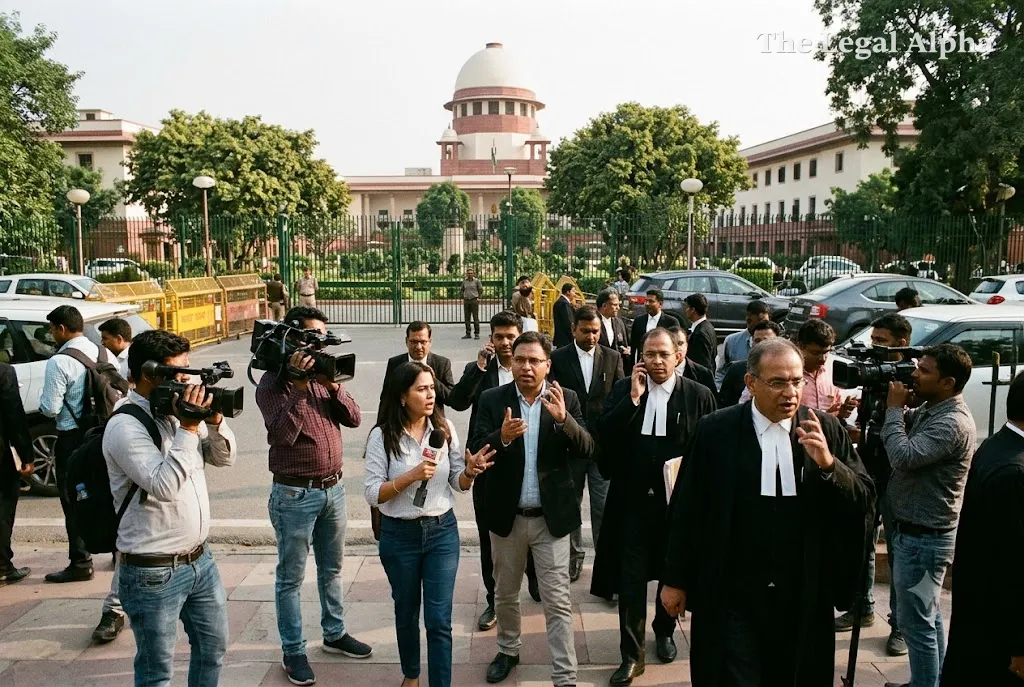
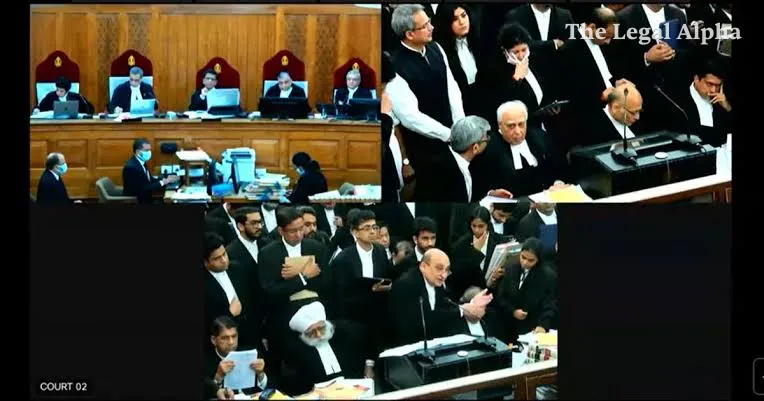
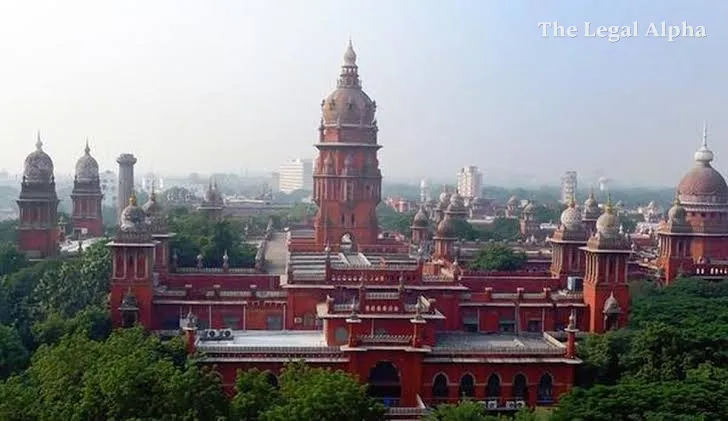
Allahabad High Court Courtroom Vandalised as Bar Escalates Confrontation Over Judicial Demeanour
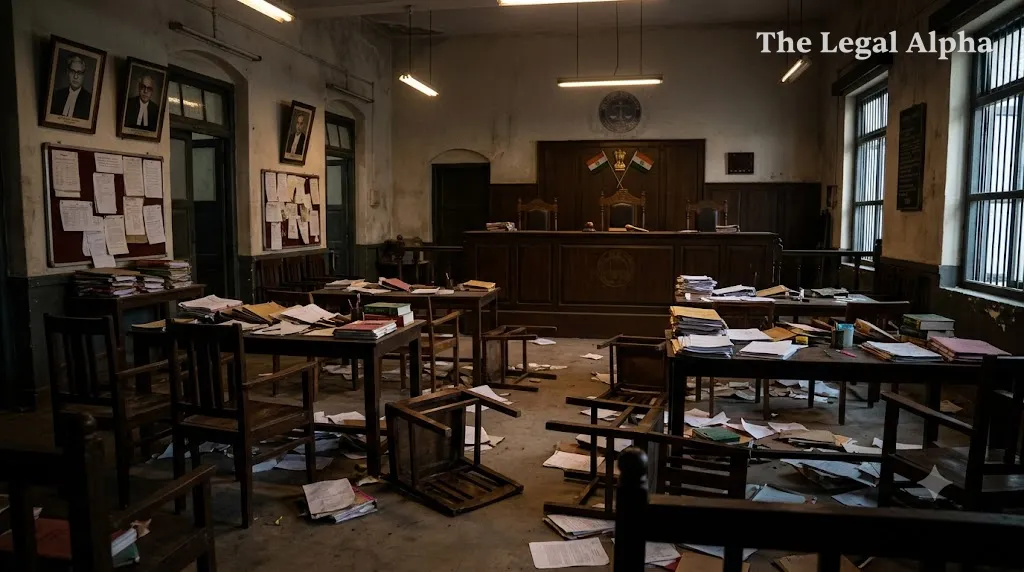
High drama unfolded at the Allahabad High Court on Wednesday after an escalating standoff between members of the bar and the bench turned violent. A section of practicing advocates allegedly entered Courtroom Number 68, presided over by Justice Ajay Bhanot, raised slogans, and vandalised judicial furniture, overturning tables and chairs.
The physical confrontation was the culmination of an altercation that originated during court proceedings a day prior. Tensions mounted after the High Court Bar Association lodged a formal complaint with Chief Justice Arun Bhansali, alleging that Justice Bhanot had publicly humiliated a counsel and threatened him with custody following a dispute over courtroom seating involving a police official. When the judge took his seat on Wednesday morning, protesting lawyers disrupted court business, leading to an abrupt suspension of proceedings and property damage inside the chamber.
Legal Topic
Area of Law: Judicial Administration & Constitutional Law
Sub-topic: Contempt of Court / Bar-Bench Relations & Court Decorum
Core Legal Issue
The controversy centres on the statutory and professional boundary between judicial authority inside a courtroom and the ethical protections afforded to practicing advocates. Specifically, it questions whether verbal confrontations and threats of summary punitive detention against an advocate violate judicial decorum, while simultaneously raising critical questions about criminal contempt, public property damage, and obstruction of justice when bar members disrupt proceedings through collective physical force.
What Did the Court / Authority Decide?
The judicial and administrative response is currently unfolding:
-
The High Court Bar Association formally transmitted a resolution and letter through the Registrar General to Chief Justice Arun Bhansali, demanding administrative cognizance and appropriate intervention regarding Justice Bhanot’s courtroom demeanour.
-
Following the disruption and destruction of court infrastructure, immediate judicial work in the concerned court was stalled.
-
While the bar leadership has sought internal regulatory intervention, the administrative side of the High Court is examining the incident of vandalism and security breaches within the high-security premises. No formal contempt notice or punitive administrative order against the errant advocates had been publicly notified at the time of reporting.
Key Legal Points
-
Institutional Immunity vs. Due Process: A presiding judge holds inherent powers to maintain order and court decorum, but threats of summary incarceration without following statutory procedure under the Contempt of Courts Act, 1971, trigger institutional pushback.
-
Criminal Contempt of Court: Disrupting a sitting bench, entering the well of the court, shouting slogans, and damaging public infrastructure constitutes prima facie criminal contempt by scandalising the court and obstructing the administration of justice.
-
Bar Council Professional Standards: Advocates are officers of the court; resorted violence and destruction of court property run contrary to the Bar Council of India Rules on duty towards the court and public order.
-
Master of the Roster Jurisdiction: Redressal for perceived judicial overreach or misbehaviour by a sitting High Court judge lies exclusively through representations to the Chief Justice as administrative head, or through constitutional channels, not physical protest.
Relevant Law
-
Article 215 of the Constitution of India: Vests the High Court with powers as a court of record, including the power to punish for contempt of itself.
-
Section 2(c) of the Contempt of Courts Act, 1971: Defines criminal contempt as any act or publication that prejudices, interferes, or obstructs judicial proceedings and the administration of justice.
-
Advocates Act, 1961 (Section 35): Governs misconduct of advocates and disciplinary oversight under the Bar Council.
-
The Prevention of Damage to Public Property Act, 1984 (Sections 3 & 4): Penal provisions governing destruction and vandalism of public buildings and court infrastructure.
Arguments of the Parties
The High Court Bar Association
The Bar Association contended that the dignity of the legal profession had been severely compromised by the sitting judge’s conduct. According to their representation, a counsel had politely requested an off-duty Superintendent of Police—seated directly behind the Additional Government Advocate—to vacate an advocate-designated chair. The Bar alleged that upon entering the court, Justice Bhanot unduly sided with the police officer, pointed a finger at the advocate, ordered in harsh language that he be jailed, and compelled him to tender an apology to the officer. They also alleged that senior counsel was mocked, asserting that such judicial high-handedness undermines advocates' statutory right to practice without intimidation.
Bench Administration & Prosecution Stand
While the judge did not issue a formal media statement, the administrative perspective holds that court officers and the presiding judge are entitled to complete institutional security and unfettered authority to conduct daily lists. From the standpoint of judicial administration, violent entry into a courtroom, sloganeering against a sitting constitutional judge, and damaging state furniture exceed the ambit of legitimate bar grievance and strike at the core of the rule of law.
Why Does It Matter?
The event marks a serious breakdown in the institutional checks and balances between the bar and the bench in India’s largest High Court. While judges are expected to exercise restraint and avoid humiliating lawyers appearing before them, physical vandalism inside a courtroom erodes public confidence in the judicial mechanism.
The Supreme Court of India has held in multiple precedents—including Ex-Capt. Harish Uppal v. Union of India—that lawyers have no right to strike, boycott courts, or obstruct proceedings, emphasizing that grievances against judicial officers must strictly follow structured administrative complaints. This incident highlights ongoing vulnerabilities in court security and tests how firmly the judiciary will enforce contempt jurisprudence against members of its own bar.
Legal Takeaway
Advocates possess legitimate mechanisms to place grievances regarding judicial conduct before the Chief Justice, but weaponising physical disruptions or vandalising courtrooms constitutes criminal contempt and an actionable penal offence. For the legal system to retain credibility, disputes over judicial temperament must be addressed through institutional protocol rather than coercive confrontation inside the courtroom.
Sources
Primary Source:
-
Letter and Resolution of the High Court Bar Association, Allahabad, addressed to the Chief Justice of the Allahabad High Court via the Registrar General (Dated October 27–28, 2026).
Additional Sources:
-
High Court Security and Administrative Reports, Allahabad High Court (October 28, 2026).
-
Press Trust of India (PTI) coverage on court proceedings and bar developments at Prayagraj.