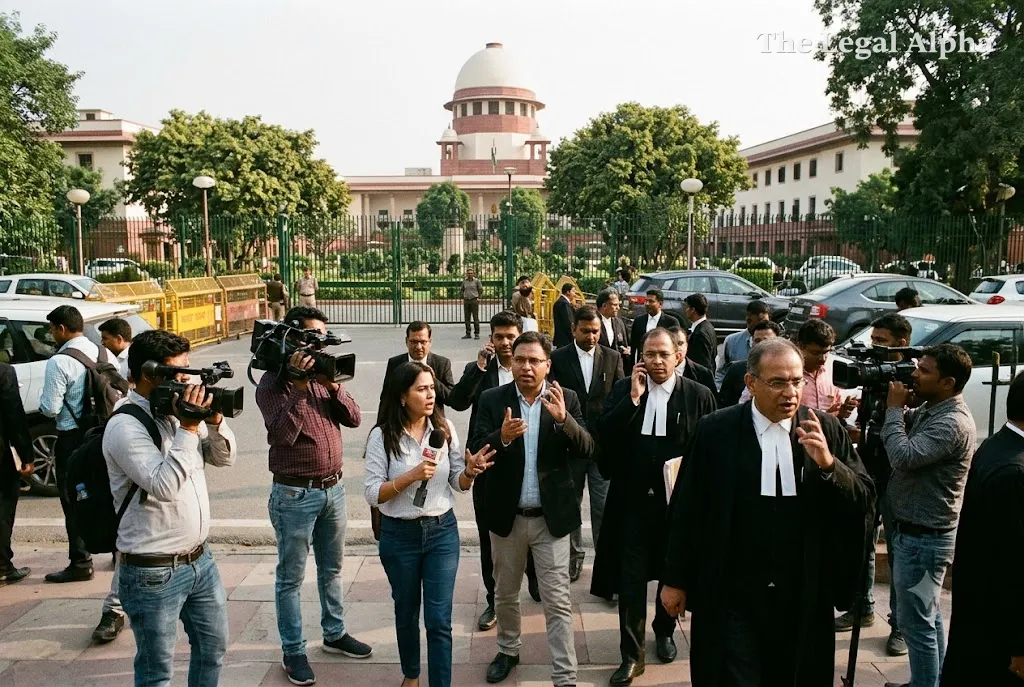
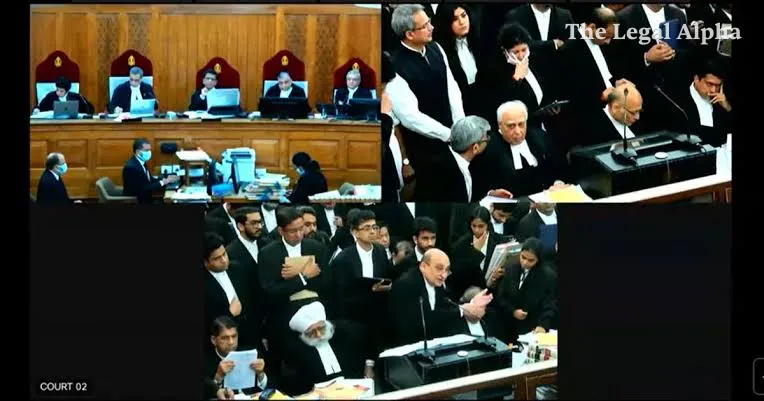
Supreme Court Directs Personal Appearance of Sanjay Raut and Virtual Presence of Nikhil Wagle in Contempt Proceedings Over Remarks on the CJI
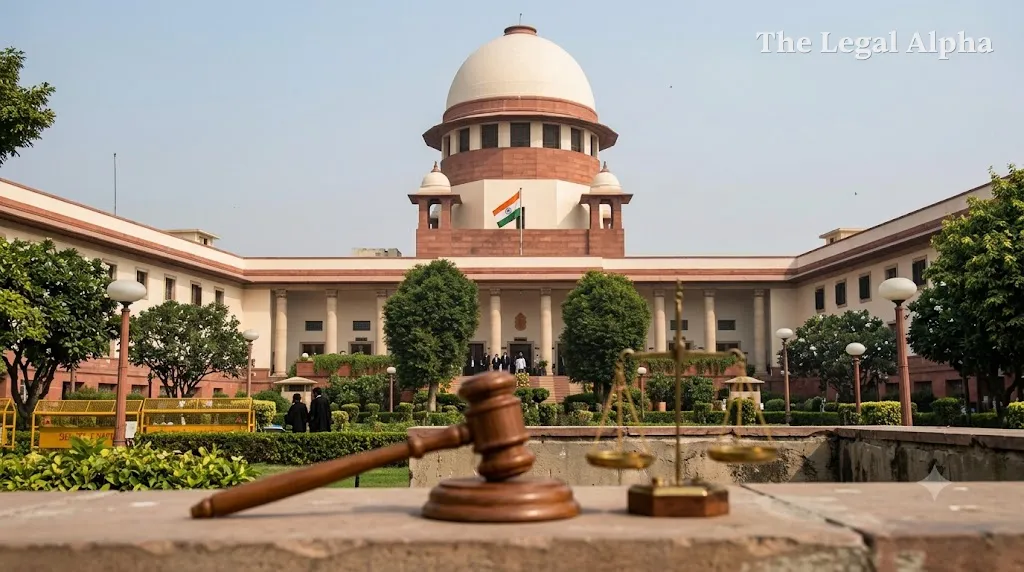
The Supreme Court of India directed Shiv Sena (UBT) Member of Parliament Sanjay Raut to physically appear before the bench on November 17 in connection with a criminal contempt case. Concurrently, the bench instructed veteran journalist Nikhil Wagle to appear virtually on the same date after taking his unconditional apology on record.
The proceedings stem from public statements and social media posts published by both individuals concerning Chief Justice of India Surya Kant. The remarks were made in the backdrop of the Chief Justice declining an audience with opposition leaders citing the doctrine of separation of powers and sub-judice issues. The Supreme Court Bar Association (SCBA) moved a criminal contempt petition against both figures after securing statutory consent from the Attorney General for India.
Legal Topic
-
Area of Law: Constitutional & Contempt Law
-
Sub-topic: Criminal Contempt / Scandalising the Court / Section 15 of the Contempt of Courts Act, 1971
Core Legal Issue
The fundamental legal question before the Supreme Court is whether critical public statements and allegations targeting the Chief Justice of India regarding administrative and judicial independence cross the threshold of fair criticism to constitute criminal contempt under Section 2(c) of the Contempt of Courts Act, 1971.
The court must also determine whether an unconditional apology accompanied by the retraction of remarks warrants the discharge of a criminal contempt show-cause notice, or if the magnitude of institutional harm requires further judicial scrutiny and deterrence.
What Did the Court Decide?
A bench comprising Justice Aravind Kumar and Justice Vipul M. Pancholi heard the matter and passed procedural directions regarding the appearance of both respondents:
-
The court directed Sanjay Raut to remain present in person before the Supreme Court at 2:00 PM on November 17.
-
The bench permitted Nikhil Wagle to appear virtually via video conference on November 17, taking into account his location in Mumbai and his affidavit tendering an unconditional apology.
-
The bench recorded that Wagle had deleted the contentious post and expressed remorse, but declined to immediately discharge the contempt notice, stating that the seriousness of the issue required the respondents to be present when the matter is considered further.
-
The underlying question of whether criminal contempt has been committed remains pending for substantive hearing on the next date.
Key Legal Points
-
Requirement of Prior Consent: Contempt petitions brought by private bodies or bar associations require written consent from the Attorney General or Solicitor General under Section 15(1)(b) of the Contempt of Courts Act, 1971, which operates as a statutory gatekeeper against frivolous actions.
-
Scandalising the Authority of the Court: Under Section 2(c)(i), communications that impute improper political motives to sitting judges or deliberately undermine public confidence in the judicial branch constitute prima facie criminal contempt.
-
Impact of an Unconditional Apology: An apology under the proviso to Section 12(1) of the Act does not automatically discharge a contemnor; the court exercises judicial discretion to evaluate whether it is bona fide and sufficient to restore institutional dignity.
-
Procedural Flexibility in Appearances: The Supreme Court demonstrated calibrated procedural directions by allowing an apologetic senior journalist to appear virtually while mandating physical presence for a lawmaker whose remarks remain unretracted on record.
Relevant Law
-
Contempt of Courts Act, 1971:
-
Section 2(c): Definition of "criminal contempt," including acts that scandalise or tend to lower the authority of any court.
-
Section 15(1)(b): Cognizance of criminal contempt on a motion brought with the written consent of the Attorney General.
-
Section 12: Punishment for contempt of court and conditions governing court acceptance of an apology.
-
-
Supreme Court Rules, 1975: Rules regulating proceedings for contempt of the Supreme Court.
-
Article 129 of the Constitution of India: Constitutional power of the Supreme Court as a court of record with inherent jurisdiction to punish for contempt of itself.
Arguments of the Parties
Petitioner (Supreme Court Bar Association)
-
The SCBA contended that the public posts and statements by the respondents were deliberate, defamatory, and calculated to erode public trust in the judiciary.
-
It submitted that imputing political bias and levelling unsubstantiated claims against the Chief Justice of India cross the boundaries of fair critique and constitute direct institutional scandalisation.
-
The petitioner relied on the Attorney General’s formal consent note, which found the comments prima facie scandalous and aimed at lowering the judicial standing of the apex court.
Nikhil Wagle (Respondent)
-
Senior Advocate Indira Jaising, appearing for Wagle, submitted that her client had filed a detailed reply affidavit tendering an unqualified, unconditional apology.
-
Counsel stated that the social media post was an emotional outburst, had since been taken down, and that the journalist had no intention of defying or diminishing the authority of the court.
-
The respondent sought complete discharge of the show-cause notice and requested an exemption from physical appearance citing age, residence in Mumbai, and a five-decade career in journalism.
Sanjay Raut (Respondent)
-
Raut's legal team has previously noted that the remarks were made as political commentary on executive-judicial optics and interactions.
-
His formal reply to the contempt notice remains subject to consideration during the upcoming hearing on November 17.
Why Does It Matter?
This development highlights the delicate legal tension between Article 19(1)(a) freedom of speech and the protection of judicial institutions under contempt jurisprudence. By directing personal and virtual appearances, the Supreme Court signals that public personalities—particularly lawmakers and senior journalists with substantial audience reach—bear a heightened legal responsibility when commenting on sitting judges.
The case also underlines the strict adherence to statutory screening under Section 15, reaffirming that bar bodies cannot bypass the Attorney General's oversight when initiating criminal contempt actions. Furthermore, the court's refusal to immediately drop proceedings upon an apology indicates that social media retractions may not always confer an instant exit from contempt liability where institutional credibility is alleged to have been compromised.
Legal Takeaway
Public commentary attributing political bias to judges risks crossing from legitimate critique into criminal contempt under Section 2(c) of the Contempt of Courts Act. Tendering an apology and deleting published remarks does not extinguish contempt proceedings as a matter of right, as courts retain full discretion to evaluate the institutional impact before discharging a notice.
Sources
-
Primary Source: Supreme Court of India, Supreme Court Bar Association v. Nikhil Wagle & Anr., Order dated October 28, 2026 (Bench of Justices Aravind Kumar and Vipul M. Pancholi).
-
Additional Sources: Section 15 Consent Order of Attorney General for India R. Venkataramani (dated October 15, 2026); Contempt of Courts Act, 1971; Bar & Bench and LiveLaw reporting on the October 28, 2026 proceedings.