Supreme Court Grants AAP MLA Chaitar Vasava Three-Day Temporary Bail to Visit Critically Ill Relative
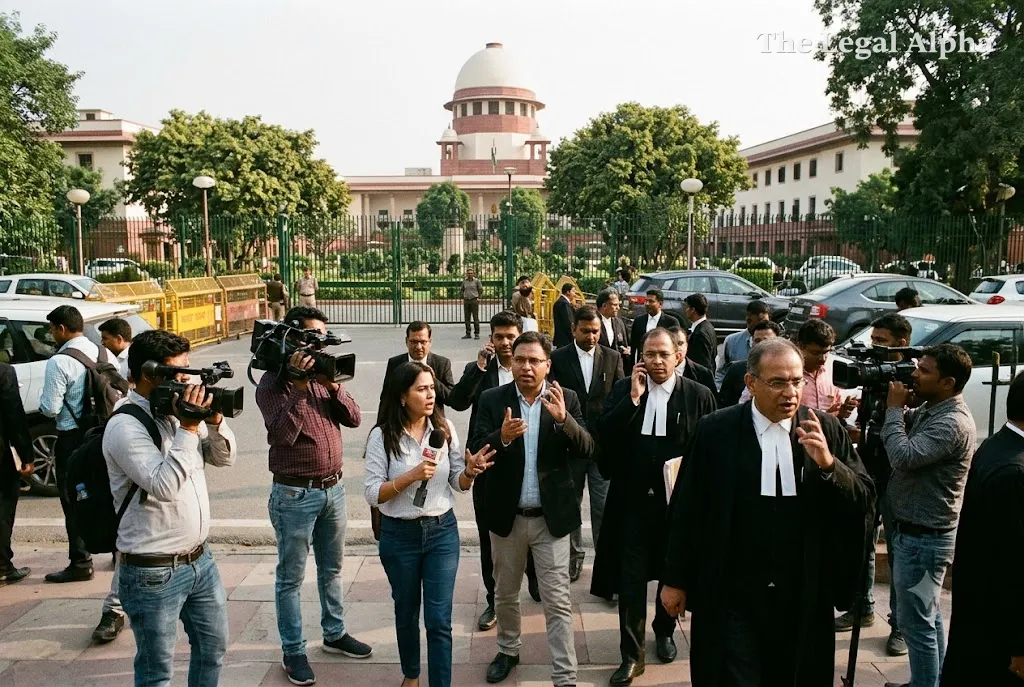
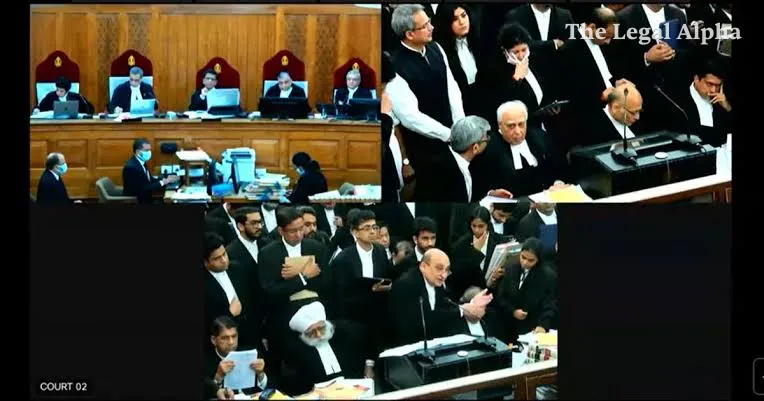
The Supreme Court of India granted a three-day temporary release on humanitarian grounds to Aam Aadmi Party (AAP) MLA Chaitar Vasava, who is serving a seven-year prison sentence in Gujarat. Vasava had approached the apex court seeking relief after the Gujarat High Court granted him only a single 12-hour window (7:00 AM to 7:00 PM) to visit his critically ill step-brother undergoing hospital treatment in Surat.
Modifying the High Court’s order, a three-judge bench held that the medical emergency justified a slightly longer release under strict custodial supervision to allow him sufficient transit and visiting time without prejudicing his sentence.
Legal Topic
-
Area of Law: Criminal Law / Procedure
-
Sub-topic: Temporary Bail / Suspension of Sentence / Humanitarian Parole
Core Legal Issue
The core issue was whether an appellate court exercising constitutional and criminal jurisdiction should extend temporary bail to a convicted prisoner whose substantive sentence suspension had been declined, specifically on humanitarian grounds to visit a critically ill immediate family member, and how to calibrate the duration of relief against security and public interest safeguards.
What Did the Court Decide?
A three-judge bench comprising Justice Vikram Nath, Justice Sandeep Mehta, and Justice Aparesh Kumar Singh allowed Vasava’s petition in part by modifying the Gujarat High Court’s single-day arrangement.
-
Release Duration: Granted temporary bail for a continuous span of three days, calculated from the actual date and time of release from prison.
-
Bail Conditions: Conditioned on the execution of a personal bond of ₹25,000 before the jail authorities.
-
Escort & Cost: Directed that Vasava remain under minimum police escort during his transit from jail to Surat and back, with all logistical and escort expenses borne entirely by him.
-
Restraints on Conduct: Explicitly barred Vasava from addressing public meetings, engaging in political events, giving interviews, or making public statements during the release window.
-
Surrender: Ordered him to surrender unconditionally to the jail superintendent immediately upon the expiry of the three-day window without awaiting further court notices.
Key Legal Points
-
Scope of Humanitarian Indulgence: The existence of a serious medical emergency involving an immediate family member serves as a valid circumstance warranting judicial discretion for temporary interim release, even when substantive post-conviction bail is not granted.
-
Balancing Practical Feasibility Against Custodial Restraints: The court recognised that rigid daytime-only windows (e.g., 12 hours) can defeat the practical purpose of humanitarian relief when travel distances between correctional facilities and healthcare institutions require realistic transit windows.
-
Precautionary Curbs on Convicted Lawmakers: When temporarily releasing elected representatives undergoing sentence, courts can impose tailored restrictions to insulate the humanitarian relief from political activity and public mobilization.
Relevant Law
-
Section 389 of the Code of Criminal Procedure, 1973 (CrPC) / Section 430 of the Bharatiya Nagarik Suraksha Sanhita, 2023 (BNSS): Governs the suspension of sentence pending appeal and the release of an appellant on bail.
-
Article 136 of the Constitution of India: Special leave jurisdiction of the Supreme Court to modify interlocutory or discretionary bail orders passed by High Courts.
Arguments of the Parties
Applicant (Chaitar Vasava): Senior advocates Kapil Sibal and Shadan Farasat submitted that the High Court’s order restricting relief to a single 12-hour period between 7:00 AM and 7:00 PM was practically unviable. Counsel emphasized the distance between the prison and the hospital in Surat, arguing that the restricted timeframe gave the applicant virtually no effective time to attend to his critically ill brother and organize necessary medical arrangements.
Respondent (State of Gujarat): Solicitor General Tushar Mehta opposed the relief on behalf of the State, contending that the applicant had already been convicted of serious criminal offences, including extortion and assaulting public servants. The State also argued against granting extended relief on the ground that the applicant and his step-brother were allegedly not on cordial terms.
Why Does It Matter?
The order highlights how appellate courts approach temporary compassionate release for convicted prisoners. While regular suspension of sentence post-conviction entails stringent statutory criteria, temporary bail on compassionate grounds functions as a distinct, equitable relief mechanism.
The decision demonstrates how higher courts balance individual familial exigencies against custodial mandates by coupling limited temporary liberty with strict logistical and behavioral controls—such as mandating self-funded police escorts and strict bans on political discourse.
Legal Takeaway
Conviction and refusal of regular sentence suspension do not extinguish a court's discretionary power to grant short-term temporary bail for verified medical emergencies in a prisoner's immediate family. However, such humanitarian liberty remains tightly controlled and is routinely conditioned on personal expense escorts and strict prohibitions on public and political conduct.
Sources
-
Primary Source: Supreme Court of India, Order dated October 27/28, 2026, in Chaitar Vasava v. State of Gujarat (Bench of Vikram Nath, Sandeep Mehta, and Aparesh Kumar Singh, JJ.).
-
Additional Sources: Gujarat High Court Order dated October 16, 2026; Trial Court Conviction Judgment dated June 23, 2024; Press Trust of India (PTI) court reporting.