Federal Appeals Court Affirms EPA Approval Granting Oklahoma Regulatory Reach Across Tribal Lands
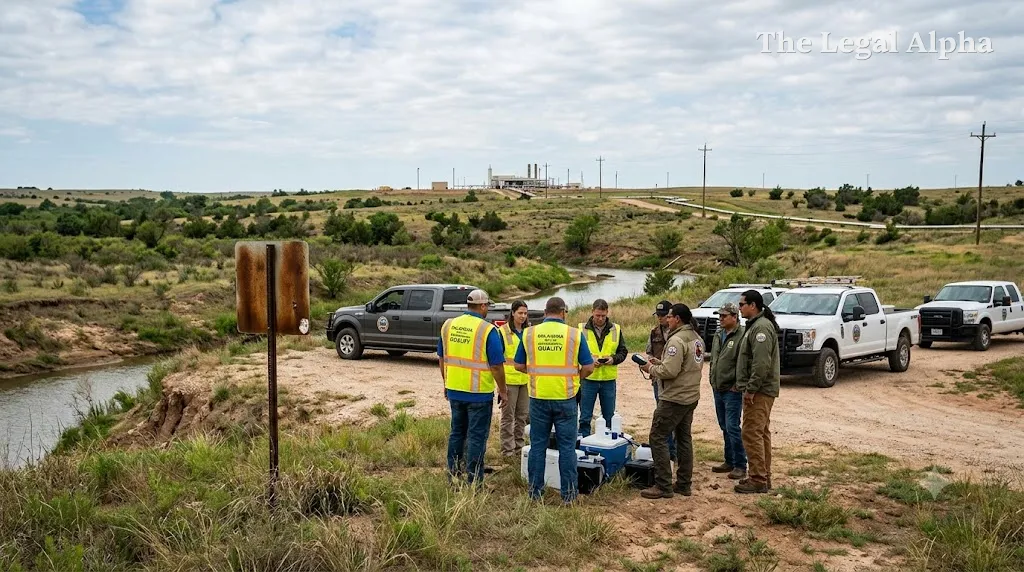
The U.S. Court of Appeals for the Tenth Circuit upheld a decision by the U.S. Environmental Protection Agency (EPA) authorizing the State of Oklahoma to administer its state environmental regulatory programs over tribal lands.
The ruling resolves a petition brought by the Pawnee Nation of Oklahoma, which challenged the federal agency's approval granting the state regulatory oversight without requiring formal tribal consultation protocols. The dispute stems from Oklahoma’s push to consolidate environmental authority following landmark tribal sovereignty litigation in the state. The appellate panel concluded that the EPA acted within its statutory mandate under a federal transportation statute enacted two decades ago.
Legal Topic
Area of Law: Environmental Law & Federal Indian Law
Sub-topic: Agency Jurisdiction / Tribal Sovereignty / Statutory Interpretation
Core Legal Issue
The Tenth Circuit addressed whether the EPA possessed statutory authority under Section 10211(a) of the Safe, Accountable, Flexible, Efficient Transportation Equity Act: A Legacy for Users (SAFETEA-LU) to grant Oklahoma regulatory power over environmental programs in "Indian country" without tribal consent or mandatory state-tribal consultation requirements.
The central controversy examined whether this special statutory provision had lapsed alongside the expiration of the broader highway spending act, and whether the EPA acted arbitrarily or exceeded its authority under the Administrative Procedure Act (APA) by approving Oklahoma's request.
What Did the Court Decide?
The Tenth Circuit denied the Pawnee Nation's petition for review and affirmed the EPA's final approval.
The panel held that Section 10211 of SAFETEA-LU remains operative federal law and did not sunset when the transportation spending authorizations expired. The court determined that the statutory text unambiguously permits Oklahoma to seek, and the EPA administrator to grant, approval to administer federal environmental programs throughout the state, including on tribal reservation lands.
Furthermore, the court ruled that the EPA was not legally required to condition its approval on state compliance with separate tribal engagement protocols. All challenged administrative actions by the agency were found to comply with procedural requirements under the APA.
Key Legal Points
-
Permanence of Substantive Riders: The court determined that substantive statutory provisions embedded within periodic spending legislation remain permanent law unless Congress includes explicit expiration dates or sunset clauses.
-
Statutory Exception to Tribal Presumptions: While federal Indian law generally presumes states lack civil regulatory jurisdiction over Indian country without clear congressional consent, Section 10211 provides such express statutory authorization for Oklahoma.
-
Administrative Procedure Act Compliance: Exercising independent statutory judgment without agency deference, the court held that the EPA acted within its express delegated authority when approving the transfer of program oversight.
-
Tribal Consultation Conditions: The court held that while federal agencies must fulfill their own tribal trust responsibilities, the EPA did not act arbitrarily by declining to force an independent, legally binding "State-Tribal Engagement Condition" upon the state as a prerequisite to approval.
Relevant Law
-
Statutory Authority: Safe, Accountable, Flexible, Efficient Transportation Equity Act: A Legacy for Users (SAFETEA-LU), Public Law 109-59, Section 10211.
-
Federal Administrative Standards: Administrative Procedure Act (APA), 5 U.S.C. § 706.
-
Judicial Review Precedents: Loper Bright Enterprises v. Raimondo, 603 U.S. 369 (2024) (requiring courts to exercise independent statutory judgment rather than deferring to agency interpretations).
-
Jurisdictional Precedents: McGirt v. Oklahoma, 140 S. Ct. 2452 (2020) (affirming reservation boundaries across eastern Oklahoma).
Arguments of the Parties
Petitioner (Pawnee Nation of Oklahoma) The petitioner argued that Section 10211 was a time-limited spending rider that expired alongside SAFETEA-LU's appropriations in 2009. The tribe contended that expanding state jurisdiction over tribal territory without dedicated tribal consultation violates sovereign rights, undermines self-governance, and removes critical indigenous voices from decisions governing local natural resources.
Respondent (Environmental Protection Agency & State Intervenors) The EPA argued that Section 10211 contains no sunset provision and remains valid permanent law authorizing state program administration upon request. The agency contended that it complied with all statutory requirements, conducted extensive tribal meetings, and was not mandated by statute to impose binding consultation rules directly onto the state government.
Why Does It Matter?
This decision cements Oklahoma's authority to enforce environmental regulations—covering air quality, wastewater disposal, and industrial pollution permits—across tribal reservation territories. In the wake of the Supreme Court's McGirt ruling, which recognized large swathes of eastern Oklahoma as historic reservation land, questions over state versus tribal civil authority have triggered significant jurisdictional friction.
For regulated industries and energy operators, the ruling provides regulatory continuity under a single state framework rather than a dual-track tribal permitting system. For Native nations, however, the precedent diminishes tribal oversight of environmental quality on ancestral lands and underscores how specific federal statutory riders can circumscribe tribal self-determination.
Legal Takeaway
Substantive statutory provisions inserted into federal spending legislation remain enduring law unless Congress includes explicit sunset language. Under SAFETEA-LU Section 10211, Oklahoma maintains federal authorization to administer environmental programs over tribal lands, bypassing the default presumption of tribal regulatory exclusivity.
Sources
Primary Source:
-
Pawnee Nation of Oklahoma v. Zeldin, No. 25-9548 (10th Cir. Oct. 16, 2026).
Additional Sources:
-
Safe, Accountable, Flexible, Efficient Transportation Equity Act: A Legacy for Users (SAFETEA-LU), Pub. L. No. 109-59, § 10211, 119 Stat. 1144 (2005).
-
McGirt v. Oklahoma, 140 S. Ct. 2452 (2020).
-
Reuters Legal News (Reporting on Tenth Circuit EPA Oklahoma Decision, Oct. 16, 2026).