Transgender Woman Not Covered Under Definition of ‘Woman’ in BNS Section 69, Rules Allahabad High Court
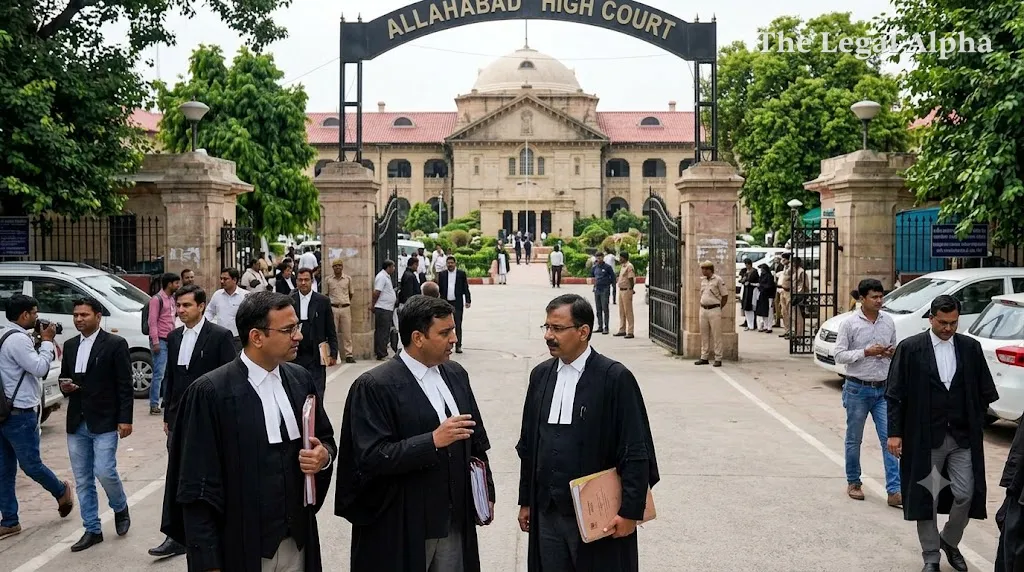
The Allahabad High Court held that a transgender woman, even after undergoing gender affirmation surgery, does not fall under the statutory definition of a "woman" for the purposes of Section 69 of the Bharatiya Nyaya Sanhita (BNS).
The ruling was delivered during the hearing of a bail application filed by an accused, Mohd Saakir, who was booked under Section 69 for allegedly engaging in sexual intercourse with a transgender woman through deceitful means and on the false promise of marriage. Justice Arun Kumar Singh Deshwal granted regular bail to the accused after observing that the statutory elements of Section 69 prima facie did not apply to the victim's legal classification.
Legal Topic
-
Area of Law: Criminal Law
-
Sub-topic: Sexual Offences / Gender Definition & Bail Jurisprudence
Core Legal Issue
The legal question before the High Court was whether a transgender woman—irrespective of whether gender reassignment surgery has been performed—can be recognized as a "woman" under Section 69 of the Bharatiya Nyaya Sanhita (BNS) to sustain a criminal charge of obtaining sexual consent through deceit or false promises to marry.
What Did the Court Decide?
The High Court granted bail to the accused after examining the textual definitions of gender under the new criminal code:
-
The court observed that Section 2(35) of the BNS explicitly defines a "woman" as a female human being of any age.
-
Section 2(10) of the BNS acknowledges three separate genders: male, female, and transgender.
-
The court ruled that Section 69 specifically penalizes deceitful sexual relations with a "woman" (biological female) and does not extend to transgender persons.
-
Consequently, the court found that a prima facie case under Section 69 was not made out against the applicant, entitling him to bail subject to furnishing appropriate sureties.
-
The court clarified that its observations were limited strictly to the scope of Section 69 BNS and the grant of bail, without commenting on liability under other special statutes.
Key Legal Points
-
Strict Statutory Interpretation: The definition of "woman" under Section 2(35) of the BNS remains restricted to biological females, and the judiciary cannot expand the penal scope beyond the legislative text.
-
Legislative Intent: The Parliamentary Standing Committee on Home Affairs (Report No. 246) had recommended including transgender individuals within the ambit of sexual offence protections under the BNS, but Parliament deliberately chose not to modify the definition of "woman" in the enacted code.
-
Distinction in Special Enactments: While transgender rights and protections against abuse are recognized under Section 18(d) of the Transgender Persons (Protection of Rights) Act, 2019, those provisions operate under a separate regulatory regime and cannot automatically alter the penal definitions within the BNS.
Relevant Law
-
Bharatiya Nyaya Sanhita (BNS), 2023: Section 69 (sexual intercourse by employing deceitful means, etc.), Section 2(35) (definition of woman), and Section 2(10) (definition of gender).
-
Transgender Persons (Protection of Rights) Act, 2019: Section 2(k) (definition of transgender person) and Section 18(d) (penalties for offences including physical or sexual abuse against transgender individuals).
Arguments of the Parties
-
The Applicant: Counsel for the accused submitted that medical examination records confirmed the complainant was biologically male who had undergone surgical modifications without possessing biological female reproductive organs. Therefore, the essential ingredient of Section 69—an offence committed against a "woman"—was legally absent.
-
The State: The prosecution opposed the bail application, arguing that the complainant identified as a female post-surgery and was exploited under a fraudulent promise of marriage, warranting strict deterrence under penal law.
-
Amicus Curiae: References were made to progressive rulings by other High Courts recognizing self-identified gender identity, though the bench noted that statutory limits under the new criminal code constrain such expansions in penal provisions.
Why Does It Matter?
This judgment exposes a critical legislative gap in India's updated criminal justice framework. While civil jurisprudence and the Transgender Persons Act of 2019 guarantee personal dignity and self-perceived gender identity, gender-specific sexual offences under the BNS remain tied to biological definitions. As a result, transgender women facing sexual exploitation through deceptive promises or fraudulent representations cannot invoke Section 69 BNS, leaving a void that can only be resolved through explicit parliamentary amendment or definitive Supreme Court clarification.
Legal Takeaway
Under the Bharatiya Nyaya Sanhita, the offence of obtaining sexual relations through deceitful means under Section 69 applies solely to biological females as defined in Section 2(35). Transgender women, regardless of medical transition, do not fall within this definition, precluding the invocation of Section 69 in cases involving transgender complainants.
Sources
-
Primary Source: High Court of Judicature at Allahabad, Mohd Saakir @ Mohd Sakir v. State of U.P., Criminal Misc. Bail Application No. 36167 of 2026, Single Bench of Justice Arun Kumar Singh Deshwal (Order dated October 15, 2026).
-
Additional Sources: Bharatiya Nyaya Sanhita, 2023; Transgender Persons (Protection of Rights) Act, 2019; Legal reporting from LiveLaw and Bar & Bench.