AAP Leader Dr Sunny Singh Ahluwalia Moves Chandigarh PMLA Court Alleging Illegal Search by Enforcement Directorate Officials
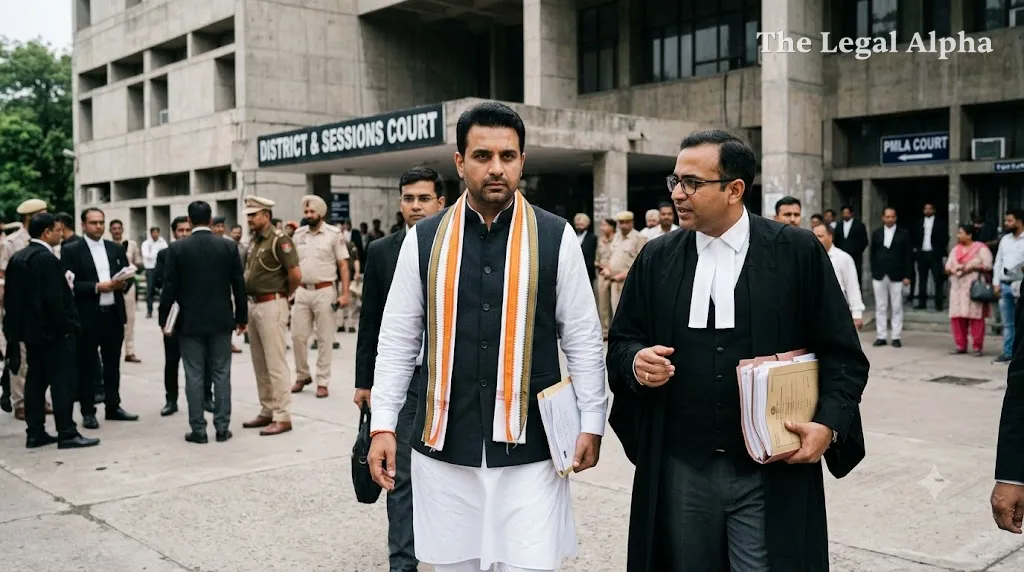
Dr Sunny Singh Ahluwalia, Punjab Water Supply and Sewerage Board Chairman and senior leader of the Aam Aadmi Party (AAP), has moved the Special PMLA Court in Chandigarh against four Enforcement Directorate (ED) officers. Ahluwalia alleged that the federal agency breached mandatory procedural safeguards when it carried out a search and seizure operation at his officially allotted government accommodation in Sector 39-A, Chandigarh.
According to the complaint filed through advocate Ginnijeet Malhotra, the residence had been formally allotted to Ahluwalia by the Punjab Government in April 2025. He alleged that ED investigators arrived on September 23, 2026, broke open the lock to enter the premises in his absence, and drew up a seizure memo that misidentified the property as belonging to an individual named Amarinder Singh Malhi. The plea asserts that the officers failed to communicate search authorisations or recorded reasons to the lawful occupant, urging the court to initiate penal inquiry proceedings against the concerned personnel.
Legal Topic
-
Area of Law: Criminal Law / Financial Crimes & Anti-Money Laundering
-
Sub-topic: Procedural Safeguards in Search and Seizure / Official Accountability under PMLA
Core Legal Issue
The application raises questions regarding the boundaries of investigatory discretion under Section 17 of the Prevention of Money Laundering Act, 2002 (PMLA) and the applicability of penal sanctions against investigating officers under Section 62 of the Act.
The primary legal issue centres on whether the Enforcement Directorate conducted a search without establishing jurisdictional prerequisites, recording reasons to believe, and serving the requisite authorization on the lawful occupant of the property. It further addresses the threshold required to initiate judicial scrutiny and punitive action against investigating officers for alleged vexatious entry and search under anti-money laundering legislation.
What Did the Court / Authority Decide?
The matter remains at the preliminary stage before the Special Court designated under the PMLA in Chandigarh.
The court has not yet adjudicated the substantive merits or returned findings on the allegations against the agency officials. The complaint is pending judicial examination to determine whether the court should summon the agency's records, review search memos and video logs, or initiate an inquiry under statutory provisions governing vexatious searches.
Key Legal Points
-
Allegation of Misattributed Premise Search: The complaint claims the agency entered a state-allotted government quarter and prepared a seizure memo naming a different person as the property holder, invalidating the factual basis of the search memo.
-
Absence of Recorded Grounds Communication: Statutory procedure under PMLA mandates that a search must be backed by "reason to believe" recorded in writing; the plea asserts these reasons and authorization documents were withheld from the occupant.
-
Invocation of Statutory Penal Sanctions Against Investigators: The complaint explicitly invokes Section 62 of the PMLA, which penalises vexatious search, seizure, or arrest conducted by agency officers.
-
Requisition of Evidentiary and Audio-Visual Material: The plea calls upon the Special Court to call for the complete search documentation, inventory logs, and mandatory videography/audio recordings of the September raid.
Relevant Law
-
Section 17, Prevention of Money Laundering Act, 2002: Prescribes powers, prerequisites, and protocols governing search and seizure operations, including the requirement of recorded "reason to believe."
-
Section 62, Prevention of Money Laundering Act, 2002: Provides punishment for vexatious search or seizure conducted by an authorized officer without recorded reasons or lawful basis.
-
Section 105 / Search Provisions, Bharatiya Nagarik Suraksha Sanhita (BNSS), 2023: Regulates the procedure of searches, independent witness participation, and inventory requirements applicable to criminal procedural investigations.
Arguments of the Parties
Complainant / Applicant
The complainant submitted that the search on September 23, 2026, was conducted entirely without jurisdiction and in direct contravention of established procedural mandates. He argued that officials forcibly broke the lock of a government-allotted bungalow in his absence and falsely recorded the identity of the premises in the seizure memo. He further argued that no underlying authorisation, grounds for belief, or freezing orders were served on him, warranting an inquiry into official excess and prosecution under Section 62 of the PMLA.
Enforcement Directorate / Agency Position
While the ED has not yet formally presented its counter-affidavit before the Special Court in this specific proceeding, investigative records in related proceedings maintain that the searches formed part of a lawful probe into irregularities connected with state authorities. The agency typically asserts that searches under Section 17 are backed by proper internal authorisations and executed within the statutory authority of the PMLA.
Why Does It Matter?
Special courts and constitutional benches frequently balance the wide powers granted to financial probe agencies with procedural compliance. While Section 17 grants significant latitude to conduct searches, Section 62 was specifically enacted by Parliament to serve as a statutory shield against arbitrary or vexatious enforcement actions.
If the court entertains the complaint and calls for the internal "reason to believe" notes and unedited recording logs, the case could provide judicial clarity on the minimum procedural thresholds required when investigating agencies enter premises without the occupant present, especially where property records and official allotments are in dispute.
Legal Takeaway
Under the Prevention of Money Laundering Act, investigative powers of search and seizure are strictly conditioned on recorded reasons and verifiable procedural safeguards. When agencies allegedly circumvent statutory rules or execute searches on misidentified premises, Section 62 provides an avenue for affected parties to petition the Special Court for judicial scrutiny and accountability against investigating officials.
Sources
-
Primary Source: Complaint filed under Section 62 of the Prevention of Money Laundering Act, 2002 before the Special Court (PMLA), Chandigarh (Dr. Sunny Singh Ahluwalia v. Enforcement Directorate Officials).
-
Additional Sources: Case filings and procedural reports reported via The Tribune India, Hindustan Times, and Babushahi News Network.