DOJ’s Epstein Files Disclosure Faces Fresh Legal Challenge Over Missing Declaration Formalities
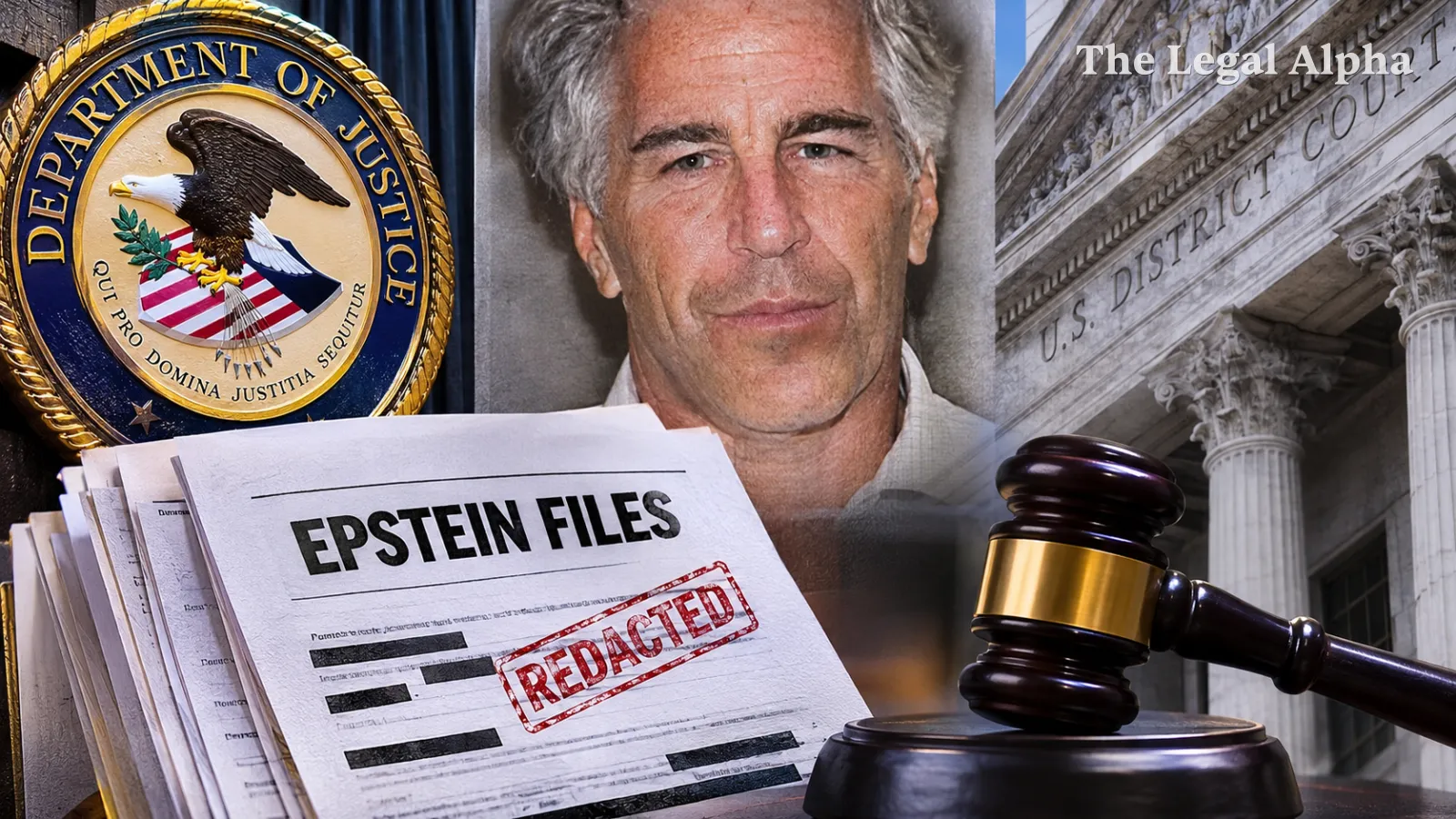
The US Department of Justice's handling of records connected to Jeffrey Epstein has come under renewed scrutiny following concerns about a declaration submitted in litigation brought by journalist and attorney Katie Phang.
The controversy centres on a declaration attributed to Shantrell Nicole Collier, a senior DOJ official, which reportedly accompanied a list of documents relied upon by the department in explaining its decisions concerning the release and redaction of Epstein-related records.
Attorney Michael Popok, speaking on his programme The Intersection with Michael Popok, questioned why the declaration did not contain an express statement that its contents were sworn under penalty of perjury. He also raised concerns about the completeness of the accompanying administrative record, particularly the absence of internal communications explaining how certain redaction decisions were made.
The dispute forms part of the wider legal proceedings in Katie Phang v. Todd Blanche, which concern the Justice Department's compliance with the Epstein Files Transparency Act.
Legal Topic
Area of Law: Administrative Law
Sub-topic: Judicial Review of Government Action / Transparency and Disclosure of Public Records
Core Legal Issue
The central legal question concerns whether the Justice Department has adequately documented and justified its decisions concerning the withholding and redaction of Epstein-related records.
A separate evidentiary question has also emerged regarding the legal sufficiency of the declaration submitted by the DOJ official. Under 28 U.S.C. § 1746, an unsworn declaration may be treated as having the same force and effect as a sworn statement when it contains the prescribed declaration under penalty of perjury and is properly executed.
The absence of such language could raise questions about the evidentiary value of the document. However, whether the particular submission is legally defective, and what consequences would follow, remain matters for the court rather than conclusions that can be drawn solely from an expert's criticism.
What Did the Court Decide?
The underlying litigation has already produced significant judicial directions.
In its September 16, 2026 memorandum opinion and order, the US District Court for the District of Columbia, presided over by Judge Emmet G. Sullivan, examined the Justice Department's compliance with an earlier preliminary injunction.
The court addressed several aspects of the DOJ's handling of the records:
-
Redacted names: The court accepted certain explanations concerning the protection of victims' identities but required further supporting documentation for other redactions.
-
FBI interview notes: The court rejected the DOJ's argument that handwritten interview notes could be withheld merely because they were substantially similar to typewritten FBI interview reports.
-
Foreign-language records: The court rejected administrative inconvenience as a sufficient justification for failing to initiate the review of relevant foreign-language documents.
-
Redaction explanations: The court examined whether the department had fulfilled its statutory obligations concerning written justifications for redactions.
-
Further judicial review: The DOJ was directed to submit specified FBI interview notes in both redacted and unredacted forms for confidential judicial examination.
The court also declined to find the government in civil contempt at that stage over its failure to initiate foreign-language document reviews, holding that such a finding would be premature.
Separately, on October 28, 2026, the US Court of Appeals for the District of Columbia Circuit rejected the government's request to stay the proceedings pending appeal. It found that the government had not demonstrated the irreparable harm necessary to obtain that relief.
The latest controversy surrounding Collier's declaration should therefore be distinguished from the earlier judicial findings. The reported criticism by Popok does not itself amount to a court ruling invalidating the declaration.
Key Legal Points
-
Section 1746 declarations: Federal law recognises qualifying unsworn declarations as alternatives to notarised affidavits when the statutory requirements are satisfied.
-
Administrative record: Government agencies must provide an adequate record supporting the decisions challenged in administrative law proceedings.
-
Judicial scrutiny: Courts can examine government documents confidentially through in-camera proceedings where necessary.
-
Statutory compliance: Administrative inconvenience does not automatically excuse failure to meet obligations imposed by Congress.
-
Transparency obligations: The Epstein Files Transparency Act establishes requirements concerning document disclosure and written explanations for redactions.
Relevant Law
28 U.S.C. § 1746: Governs unsworn declarations made under penalty of perjury and their recognition in federal proceedings.
Administrative Procedure Act, 5 U.S.C. §§ 701–706: Provides the framework for judicial review of federal agency action, including challenges involving unlawful, arbitrary or capricious decisions.
Epstein Files Transparency Act: Establishes disclosure requirements for specified records relating to Jeffrey Epstein, including statutory provisions governing redactions and reporting obligations.
Federal Rule of Civil Procedure 56(c)(4): Establishes requirements for affidavits and declarations used to support or oppose summary judgment, including personal knowledge, admissible facts and the declarant's competence to testify.
Shillitani v. United States, 384 U.S. 364 (1966): Recognises the inherent authority of courts to enforce compliance with their lawful orders through civil contempt.
Arguments of the Parties
Plaintiff – Katie Phang
Phang has challenged the Justice Department's compliance with the Epstein Files Transparency Act. Her litigation has raised concerns about excessive or insufficiently justified redactions, withheld documents, foreign-language records and the department's statutory reporting obligations.
Her position has also involved seeking adequate documentation explaining the department's decisions.
Defendant – Todd Blanche / Department of Justice
The Justice Department has defended aspects of its disclosure and redaction practices by relying on victim privacy, protection of law enforcement personnel, the department's review protocol and concerns about releasing sensitive information.
The government has also challenged aspects of the district court proceedings and pursued appellate relief.
Additional Legal Criticism
Michael Popok has separately questioned the formal validity and completeness of Collier's reported declaration. He has argued that the absence of an express declaration under penalty of perjury and the limited accompanying document list could create difficulties for the government's position.
These criticisms represent legal commentary and should not be treated as findings made by the court.
Why Does It Matter?
The dispute raises important questions about how federal agencies must justify decisions when complying with statutory disclosure obligations.
A government department cannot necessarily establish compliance simply by presenting a list of documents without adequately explaining the decisions behind their selection, withholding or redaction.
The issue also highlights the importance of properly executed declarations in federal litigation. Statements submitted by public officials can play an important role in establishing the factual basis for government action. Their legal form and evidentiary reliability may therefore become significant when those actions are challenged.
For journalists and members of the public, the proceedings are particularly relevant because they concern access to records involving a matter of substantial public interest.
However, the allegations concerning missing internal communications and the treatment of particular individuals' names must be independently established. Their absence from a particular submission does not, by itself, prove that records were deliberately withheld or that any individual received improper treatment.
Legal Takeaway
The proceedings underline that government transparency obligations require more than general assurances of compliance. Federal agencies must be prepared to support their disclosure decisions with adequate records and legally sufficient explanations. Whether the latest declaration meets the applicable evidentiary requirements remains a question that must be resolved through the judicial process.
Sources
Primary Sources:
-
Phang v. Blanche, Civil Action No. 26-1417 (EGS), Memorandum Opinion and Order, September 16, 2026, US District Court for the District of Columbia.
-
Phang v. Blanche, No. 26-5299, Order dated October 28, 2026, US Court of Appeals for the District of Columbia Circuit.
-
28 U.S.C. § 1746.
-
5 U.S.C. §§ 701–706.
-
Federal Rule of Civil Procedure 56(c)(4).
Additional Sources:
-
November 21, 2026 report concerning Michael Popok's criticism of the DOJ declaration and the Katie Phang litigation.
-
Michael Popok's legal commentary on The Intersection with Michael Popok.