Delhi Police Draws Line Between Professional Journalists and Social Media Reel-Makers Before Supreme Court
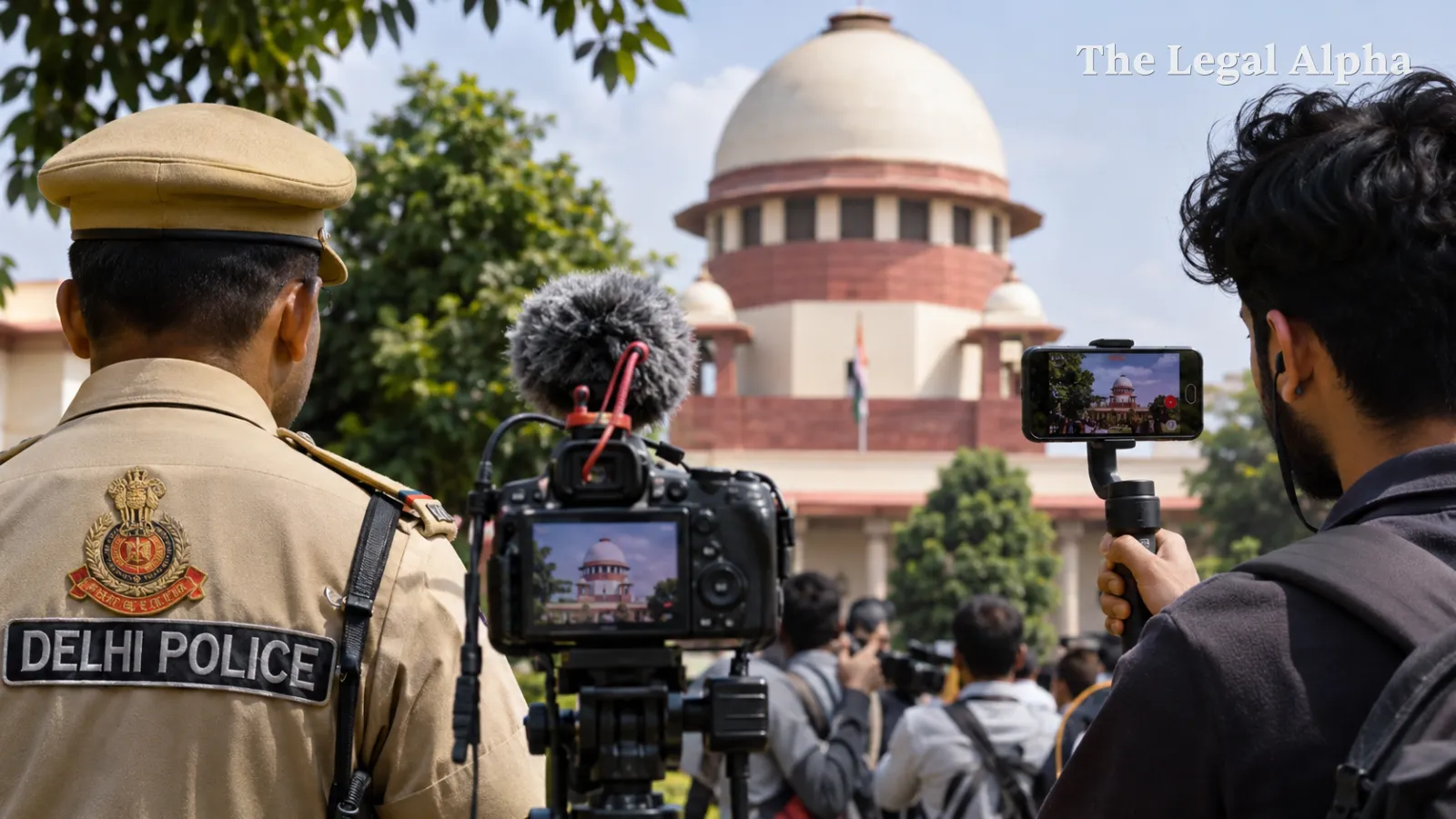
The Delhi Police has told the Supreme Court that social media content creators who record protests and produce reels cannot automatically claim the same protections available to journalists performing professional reporting duties.
The submission was made in an affidavit filed by Joint Commissioner of Police Surender Kumar in response to petitions raising concerns about alleged police interference with journalists covering protests against Chief Election Commissioner Gyanesh Kumar at Jantar Mantar, New Delhi.
The police maintained that it respects press freedom and has no intention of preventing journalists from gathering or publishing information. However, it argued that individuals who carry cameras and microphones primarily to create and monetise social media content cannot automatically be treated as professional journalists.
The controversy raises important questions about press freedom, the changing nature of digital journalism and the rights of independent content creators covering public events.
Legal Topic
Area of Law: Constitutional Law
Sub-topic: Freedom of Press, Freedom of Speech and Expression, and Media Rights
Core Legal Issue
The central legal question is whether social media content creators who record public demonstrations should receive the same legal protections as professional journalists, particularly when interacting with police authorities during protests and public gatherings.
The matter also raises questions about how the police can distinguish between journalists performing reporting duties and individuals participating in demonstrations while simultaneously creating online content, without violating the constitutional freedom to gather and disseminate information.
What Did the Court / Authority Decide?
The Supreme Court has not yet ruled on whether social media reel-makers should be treated as journalists for the purpose of protection while covering protests.
The Court's earlier order dated October 11, 2026, directed the authorities to ensure that lawyers, journalists and other professionals were not obstructed while performing their professional duties.
The Delhi Police has now explained its interpretation of that direction through its affidavit. It maintains that the protection was intended for journalists carrying out professional reporting and was not meant to provide immunity to social media influencers or other individuals from lawful police action.
In its order dated November 3, 2026, the Supreme Court placed petitions concerning journalists in a separate category and directed that the relevant matters be listed on November 26, 2026. The Court also issued notice in W.P.(C) No. 1373/2026.
Therefore, the distinction raised by Delhi Police remains an issue for consideration rather than an established judicial ruling.
Key Legal Points
-
Freedom of the Press: Journalists' ability to gather, record and publish information is connected with the fundamental right to freedom of speech and expression.
-
Digital Content Creation: The growing presence of independent content creators at public demonstrations raises questions about the scope of traditional journalistic protections.
-
Police Authority: Law enforcement agencies can impose lawful crowd-control measures, but such measures must operate within constitutional and legal limits.
-
Journalist Identification: Delhi Police has defended its requirement that journalists carry identification cards issued by their organisations or recognised accreditation authorities.
-
Professional Reporting: The police has argued that the purpose behind recording an event, including whether it involves journalistic reporting or commercial content creation, may be relevant when determining professional status.
Relevant Law
Constitution of India
- Article 19(1)(a): Guarantees freedom of speech and expression. Freedom of the press is protected as part of this constitutional guarantee.
Occupational Safety, Health and Working Conditions Code, 2020
- Contains the statutory definition of a working journalist, which the Delhi Police has referred to while explaining the distinction between professional journalists and content creators.
Central Media Accreditation Guidelines, 2022
- Provide the framework for accreditation of eligible media professionals and have been cited by the police in support of its position.
Press Council of India Guidelines
- Guidelines concerning journalistic conduct while covering protests and demonstrations are also relevant to the issues raised.
Arguments of the Parties
Delhi Police
The Delhi Police has maintained that professional journalists and social media content creators cannot automatically be placed in the same category.
It argued that some individuals participating in the Jantar Mantar demonstrations were carrying cameras and microphones while creating online content, making it difficult for police personnel to distinguish between journalists and protesters.
The police also submitted that its October 5 guidelines were intended to facilitate the identification and safety of journalists rather than restrict press freedom. It clarified that journalists without PIB accreditation could also establish their professional identity through identification issued by their respective media organisations.
Journalist Organisations and Petitioners
The petitions filed by the Network of Women in Media, Free Speech Collective, Delhi Union of Journalists and Kerala Union of Working Journalists raised concerns about alleged police interference with journalists covering the demonstrations.
Their broader concern is the protection of journalists performing their professional responsibilities, including their ability to access protest locations, record events and report without unlawful obstruction.
The allegations of police misconduct remain subject to judicial consideration and should not be treated as established findings.
Why Does It Matter?
The dispute highlights an important challenge for press freedom in the digital age. Journalism is no longer limited to traditional newspapers, television channels or formally accredited media organisations. Independent reporters, digital publishers and online content creators increasingly document public events and share information with large audiences.
If journalistic protection depends too heavily on formal accreditation, independent journalists and freelancers could face difficulties establishing their professional identity. At the same time, police authorities must be able to maintain public order and distinguish between reporting activities and participation in a prohibited assembly.
The Supreme Court's consideration of these issues could help clarify how constitutional press protections should operate in an environment where professional journalism and social media content creation increasingly overlap.
The central concern is ensuring that measures intended to maintain public order do not become a means of unnecessarily restricting legitimate reporting.
Legal Takeaway
The Delhi Police's affidavit raises an important distinction between professional journalism and commercial social media content creation, but this distinction has not yet received a final judicial determination in the present proceedings.
The constitutional freedom of speech and expression remains central to the debate, and the Supreme Court's forthcoming consideration of the journalists' petitions will be important in determining how these protections operate during public demonstrations.
Sources
Primary Source:
- Supreme Court of India – Order dated November 3, 2026.
Additional Sources: