Delhi High Court Carves Out Working-Day Relief for NCR Advocates and Staff Amid Winter Vehicle Restrictions
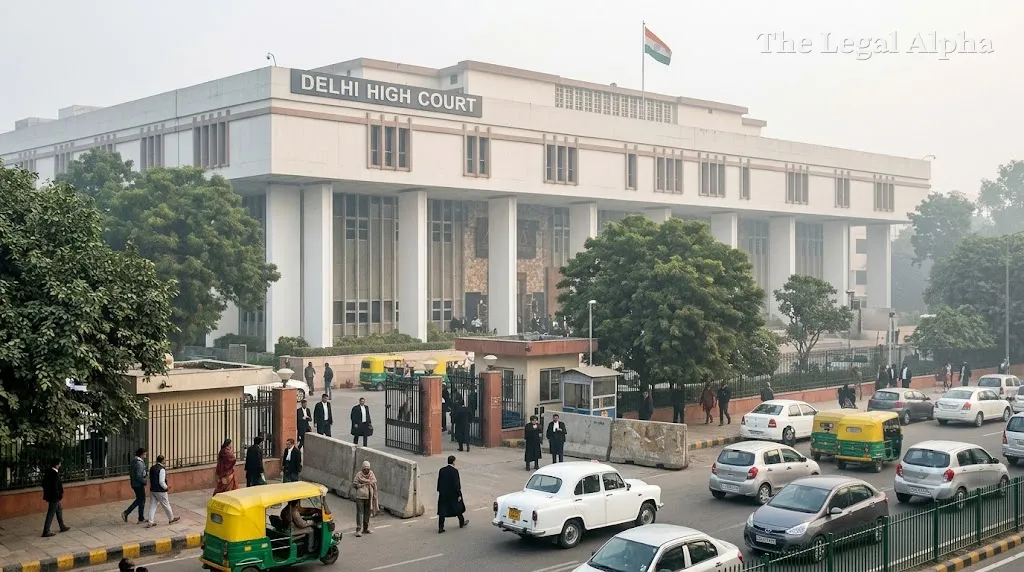
The Delhi High Court granted targeted interim relief to legal practitioners and judicial employees residing across the National Capital Region (NCR), allowing them to commute into Delhi on court working days regardless of their vehicle's emission standard.
The direction came in response to an urgent plea moved by the Delhi High Court Bar Association (DHCBA) after an anti-pollution notification issued by the Delhi government took effect on November 1, 2026. The executive order prohibited all outstation-registered vehicles failing to meet Bharat Stage VI (BS-VI) standards from entering the capital through January 31, 2027. Because a substantial portion of the legal workforce resides in neighboring satellite cities like Noida, Gurugram, and Ghaziabad due to capital housing constraints, the Association highlighted that blanket border restrictions were obstructing access to justice and leaving litigants unrepresented when matters were called for hearing.
Legal Topic
-
Area of Law: Administrative Law & Environmental Regulation
-
Sub-topic: Graded Response Measures / Access to Justice & Essential Services Exemption
Core Legal Issue
The matter required the High Court to balance urgent regional environmental interventions against the constitutional and statutory imperative of keeping the justice delivery mechanism operational.
Specifically, the court examined whether the Department of Environment and Forests' statutory notification permitted administrative discretion to exempt officers of the court performing judicial duties, and whether barring non-BS-VI vehicles used by lawyers and court staff caused disproportionate harm to the administration of justice without providing workable alternatives.
What Did the Court Decide?
Justice Amit Mahajan passed an interim order permitting advocates and judicial staff commuting from the NCR to operate their vehicles into Delhi strictly on court working days.
The court made it clear that the overall vehicular prohibition has not been struck down or stayed. Rather, the relief operates as a conditional administrative carve-out specifically tied to judicial duty. The broader policy challenges against the non-BS-VI restriction remain pending before a division bench, with further proceedings scheduled for later in November.
Key Legal Points
-
Functional Necessity of Justice Delivery: Advocates and court staff carry out essential institutional functions, and unexpected physical impediments to their court attendance directly risk procedural prejudice to litigants.
-
Conditional Exemption over Blanket Immunity: The relief does not suspend the environmental measure itself; it operates solely on designated working court days and does not insulate motorists from stricter emergency curbs under Stage-IV Graded Response Action Plan (GRAP) directives or Supreme Court mandates.
-
Application of Regulatory Discretion: The June 2026 notification already vested authority in the Department of Environment and Forests to exempt specific vehicle categories, affirming that executive pollution rules contemplate sector-specific accommodations.
-
Preservation of the Primary Challenge: The interim accommodation addresses immediate operational hardship without adjudicating the overarching constitutional challenge concerning the validity of state-border vehicle discrimination.
Relevant Law
-
Notification No. F.10(39)/ENV/2026 (Dated June 23, 2026): Issued by the Department of Environment and Forests, Government of NCT of Delhi, prohibiting non-BS-VI passenger and commercial vehicles registered outside Delhi between November 1, 2026, and January 31, 2027.
-
The Commission for Air Quality Management in NCR and Adjoining Areas Act, 2021: Governing air pollution abatement measures and coordinating emergency stage responses.
-
The Advocates Act, 1961: Establishing the status and duties of advocates as essential officers of the court aiding in the administration of justice.
Arguments of the Parties
Petitioner (Delhi High Court Bar Association)
The Bar Association, represented by Senior Advocate and DHCBA President N. Hariharan, submitted that thousands of practicing advocates, judicial registry employees, and court personnel have established residences across satellite towns in Haryana and Uttar Pradesh due to prohibitive real estate costs in Delhi. It contended that daily court listings require time-critical appearances, and sudden vehicular prohibitions directly disrupt judicial proceedings. The petitioner emphasized that it was not demanding total immunity from environmental law or emergency Supreme Court directives, but rather a structured exemption akin to past administrative accommodations granted during the pandemic to safeguard court operations.
Respondent (Government of NCT of Delhi / Authorities)
The state authorities maintained that seasonal vehicular restrictions represent vital preventive interventions to counter severe annual deterioration in air quality during the winter corridor. The administration asserted that vehicular emissions constitute a leading factor in regional pollution and that limiting out-of-state vehicles below the BS-VI emission benchmark forms an integral part of the broader clean-air action plan.
Why Does It Matter?
This interim ruling underscores an ongoing institutional tension between emergency environmental safeguards and the uninterrupted functioning of essential public institutions. While statutory authorities have sweeping powers to mitigate air pollution, regulatory frameworks must retain sufficient flexibility to account for essential service providers who cannot transition fleets or adopt alternate mass transit overnight.
The order also establishes a precedent for professional associations in the NCR seeking pragmatic accommodations during seasonal regulatory freezes. By tying the relief directly to court calendars and judicial business rather than granting unconditional vehicular liberty, the High Court demonstrated a calibrated approach: safeguarding litigants' access to their legal counsel while keeping the core anti-pollution framework intact.
Legal Takeaway
Anti-pollution vehicle restrictions cannot be applied so rigidly that they paralyze access to the justice system. While broad environmental bans remain legally enforceable, courts will step in to craft narrow, duty-bound exemptions when executive measures threaten to infringe on essential institutional functions and the rights of litigants.
Sources
-
Primary Source: Order of the Delhi High Court in Delhi High Court Bar Association v. Government of NCT of Delhi & Ors. (Pronounced by Justice Amit Mahajan on November 6, 2026).
-
Additional Sources: Notification of the Department of Environment and Forests (GNCTD) dated June 23, 2026; Graded Response Action Plan (GRAP) Guidelines issued by the Commission for Air Quality Management (CAQM).