Delhi High Court Draws Line on Political Satire, Directs Immediate Removal of Generative AI Videos Targeting Chief Minister Rekha Gupta
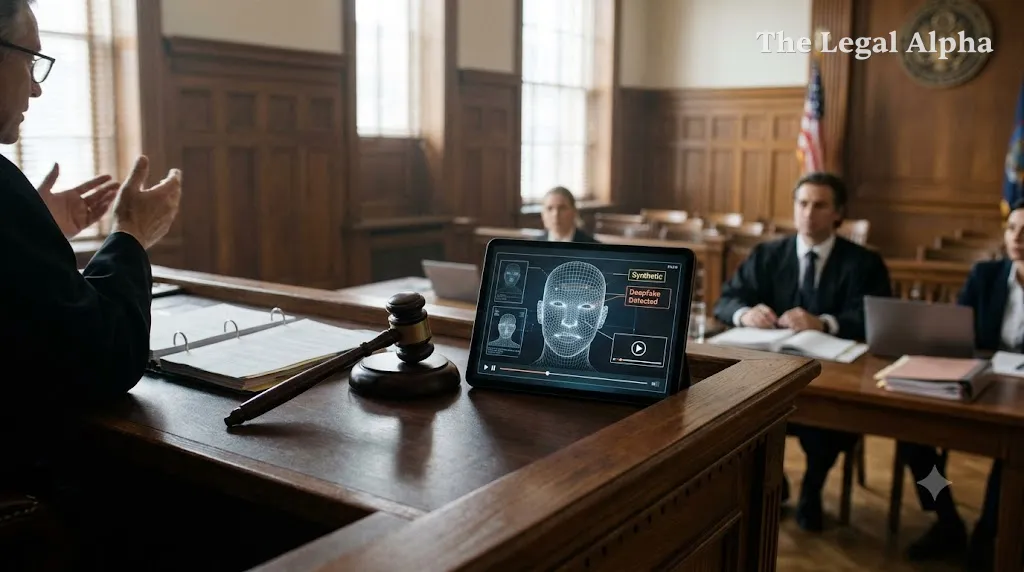
The Delhi High Court intervened to halt the digital circulation of artificial intelligence-generated media targeting Delhi Chief Minister Rekha Gupta. Hearing a civil defamation suit filed by Gupta against the Aam Aadmi Party and major social media platforms, the High Court directed the immediate removal of six specific web links hosting synthetic video and graphic content.
The contested material allegedly depicted the Chief Minister in a degrading manner as a liquor vendor. The development brings judicial scrutiny to the growing deployment of deepfakes and generative AI in political campaigning, clarifying that constitutional protections for political commentary cannot shield synthetic attacks on individual dignity.
Legal Topic
-
Area of Law: Media & Information Technology Law / Civil Defamation
-
Sub-topic: AI-Generated Deepfakes, Intermediary Liability, and the Right to Dignity
Core Legal Issue
The dispute centers on determining the precise constitutional boundary between protected political satire under Article 19(1)(a) and actionable defamation under common law and Article 19(2) when generative AI tools are used to fabricate visual depictions of public figures.
The court was tasked with deciding whether fabricating degrading synthetic videos of an elected constitutional functionary constitutes legitimate political humor, or if it crosses the line into an irreparable violation of personal reputation and bodily dignity warranting ex-parte interim injunctions against intermediary platforms.
What Did the Court Decide?
Justice Manoj Jain granted ad-interim relief to Chief Minister Rekha Gupta, instructing the social media intermediaries named as defendants to forthwith take down the six URLs identified in the suit.
The Court observed that while public figures and political leaders must expect scrutiny, rigorous criticism, and political humor, their fundamental dignity cannot be compromised under the guise of satire or free expression. Justice Jain emphasized that political satire cannot be permitted to inflict an irreparable wound on a person's standing.
The Bench formally issued summons to the defendants, directing them to submit written statements within 30 days of service, and instructed compliance with Order XXXIX Rule 3 of the Code of Civil Procedure. The substantive merits of the civil suit remain pending, with the next hearing scheduled for December 4, 2026.
Key Legal Points
-
Dignity Precedes Satirical License: The Court reaffirmed that while politicians must maintain a higher threshold of tolerance for public ridicule and criticism, this tolerance does not extend to synthetic fabrications designed to humiliate an individual.
-
Judicial Recognition of AI Harm: The ruling recognizes the capacity of generative artificial intelligence and deepfake tools to create immediate, irreparable harm to individual reputation through deceptive visual media.
-
Platform Takedown Obligations: Intermediary platforms are obligated to act promptly upon judicial identification of specific defamatory URLs to prevent viral dissemination.
-
Procedural Injunction Standards: The interim order applied established principles governing emergency injunctive relief under the Code of Civil Procedure to digital synthetic content.
Relevant Law
-
Constitution of India: Article 19(1)(a) (Freedom of Speech and Expression), Article 19(2) (Reasonable Restrictions including Defamation), and Article 21 (Right to Life, Personal Liberty, and Dignity).
-
Code of Civil Procedure, 1908 (CPC): Order XXXIX, Rules 1, 2, and 3 (Grant of temporary injunctions and procedure for ex-parte orders).
-
Information Technology Act, 2000 & IT (Intermediary Guidelines and Digital Media Ethics Code) Rules, 2021: Statutory frameworks governing safe-harbor immunity and the takedown of unlawful, non-consensual, or impersonating digital media.
Arguments of the Parties
Plaintiff (Rekha Gupta) Counsel for the plaintiff argued that the impugned material was neither genuine footage nor protected commentary, but deliberately engineered deepfake content designed to demean the Chief Minister. They contended that circulating synthetic imagery depicting an elected leader in inappropriate scenarios involving the liquor trade caused immediate, irreparable harm to both her personal character and her public office, necessitating an urgent takedown order.
Defendants (Aam Aadmi Party and Intermediary Platforms) While the intermediary platforms maintained their procedural role as neutral hosts bound by statutory notice mechanisms, political discourse surrounding the material framed the publication as political satire and fair commentary on public administration, maintaining that elected officials cannot invoke defamation to silence political criticism.
Why Does It Matter?
As generative AI tools become ubiquitous in political campaigns, the threshold separating clever political caricature from deceptive digital manipulation has blurred. This decision provides timely judicial guidance for Indian jurisprudence by establishing that technical synthesis cannot insulate defamatory speech under the banner of satire.
The ruling sets a precedent for how courts handle deepfake-driven political disputes. It underscores that while candidates and parties retain wide latitude to criticize policy and conduct, the visual fabrication of degrading acts crosses permissible legal boundaries, exposing creators and distributors to prompt injunctive remedies.
Legal Takeaway
Political satire enjoys robust constitutional protection, but it does not grant a license to deploy generative AI to fabricate demeaning falsehoods. When digital manipulation infringes upon personal dignity, courts will step in swiftly to mandate content takedowns.
Sources
Primary Source:
-
Order of the High Court of Delhi in Smt Rekha Gupta v. Aam Aadmi Party & Ors. (Decided on November 6, 2026; Coram: Justice Manoj Jain).
Additional Sources:
-
High Court Registry cause lists and proceedings of November 6–7, 2026.
-
Reporting by Asian News International (ANI) and regional legal news reporting services.