Delhi Court Allows Fresh Evidence in Complainant's Challenge Over Electoral Roll Entries
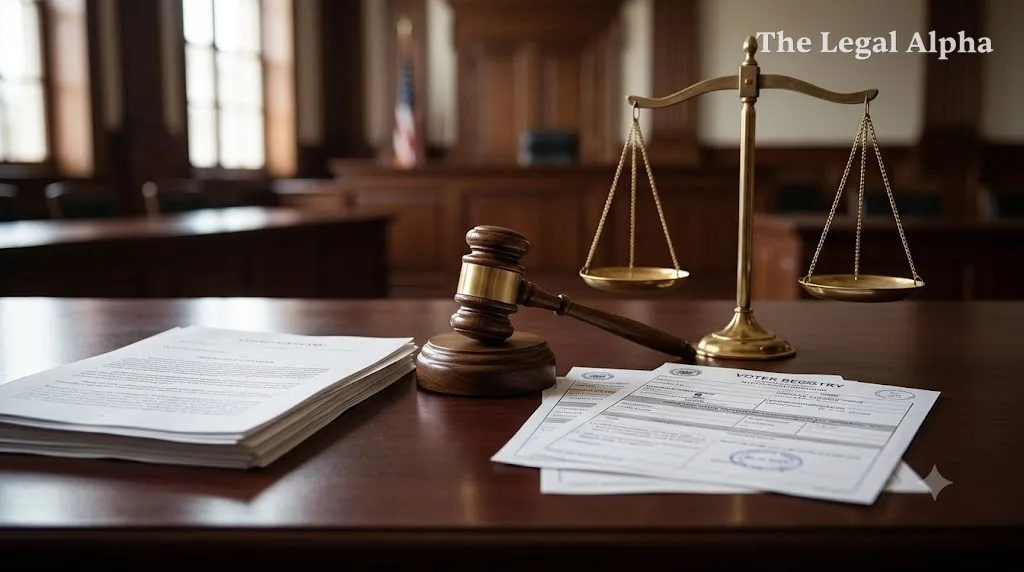
An Additional Chief Judicial Magistrate (ACJM) court in Delhi has granted permission to a complainant to place additional documents on record in a long-standing legal dispute concerning the inclusion of Congress leader Sonia Gandhi's name in electoral rolls prior to her acquisition of Indian citizenship.
What Happened?
Advocate Vikas Tripathi filed a criminal complaint alleging that Sonia Gandhi's name appeared on the electoral rolls for the New Delhi parliamentary constituency in 1980, and was subsequently re-entered in 1983 after being deleted in 1982. The crux of the grievance is that these electoral entries predated April 30, 1983—the date she officially acquired Indian citizenship.
The matter is currently being heard afresh by the Rouse Avenue court following a remand order from a sessions court. Earlier, the ACJM court had declined to order a First Information Report (FIR). However, in September 2026, Special Judge Vishal Gogne set aside that dismissal, criticizing it as an unreasoned or "non-speaking" order that improperly relied on an unverified photocopy. Following the remand, the ACJM court permitted the complainant's counsel to submit further supporting documents and scheduled the next hearing for November 18.
Legal Topic
Area of Law: Criminal Law / Criminal Procedure Sub-topic: Magistrate's Power to Order Investigation / Criminal Complaints (FIR Registration)
Core Legal Issue
The central question before the trial court is whether a magistrate, when evaluating a criminal complaint seeking a direction for police investigation and FIR registration under Section 156(3) of the Code of Criminal Procedure (CrPC) / Bharatiya Nagarik Suraksha Sanhita (BNSS), is justified in dismissing the plea on the basis of unverified preliminary copies, and whether pre-citizenship electoral roll entries warrant a formal criminal inquiry into potential statutory violations regarding voter eligibility.
What Did the Court / Authority Decide?
-
Permission Granted: The ACJM court allowed the complainant to file additional documentary evidence to substantiate the claims regarding the historical electoral roll entries.
-
De Novo Consideration: The trial court is reviewing the complaint afresh pursuant to the sessions court's directive, which mandated calling for a police status report and passing a reasoned ("speaking") order.
-
Next Steps: The proceedings have been adjourned to November 18, 2026, to allow the complainant's counsel to place the supplementary material properly on record.
Key Legal Points
-
Revisional courts cannot assume the role of the magistrate; matters requiring initial evaluation of a complaint must be remanded back for a fresh decision if the original order is unreasoned.
-
A judicial order declining to order an investigation must contain clear, reasoned justifications rather than relying on unverified photocopies.
-
Electoral rolls under statutory frameworks are meant exclusively for eligible citizens, forming the factual basis of the complainant's grievance.
Relevant Law
-
Representation of the People Act, 1950 & 1951: Provisions governing electoral rolls and qualifications for registration as a voter.
-
Code of Criminal Procedure, 1973 (CrPC) / Corresponding BNSS Provisions: Powers of a magistrate to order a police investigation upon receiving a criminal complaint.
-
Constitutional Provisions on Citizenship: Articles governing citizenship rights in India.
Arguments of the Parties
-
The Petitioner / Complainant Submitted: That official records demonstrate the appearance of the respondent's name on electoral rolls in 1980 and 1983 prior to the formal acquisition of Indian citizenship in April 1983, thereby justifying a police investigation and registration of an FIR.
-
The Responding Position: While the matter is at a pre-cognizance stage concerning whether an investigation should be ordered, previous judicial assessments scrutinized the evidentiary value of unverified photocopies and examined the respective statutory jurisdictions of the Election Commission and central authorities regarding citizenship verification.
Why Does It Matter?
This procedural development reinforces the judiciary's strict standard that criminal complaints cannot be dismissed summarily through unreasoned orders. By requiring magistrate courts to thoroughly evaluate records, call for police status reports, and issue reasoned rulings on pre-cognizance matters involving prominent public figures, the case underscores procedural accountability and transparency in criminal jurisprudence.
Legal Takeaway
A magistrate court cannot dismiss a complaint using unverified documents or unreasoned orders. When a higher court remands a matter back for fresh consideration, parties are given the procedural latitude to bring on record proper supplementary evidence for a judicious evaluation.
Sources
-
Primary Source: Court Orders and Revisional Judgments passed by the Delhi Sessions Court (Special Judge Vishal Gogne) and the ACJM Court, Rouse Avenue.
-
Additional Sources: Reports from The Times of India, The Economic Times, and ANI.